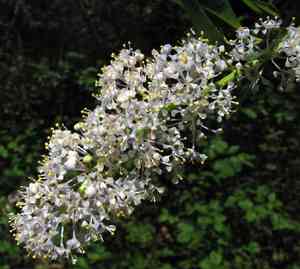
Redheart (Ceanothus spinosus)
Also known as: Spiny ceanothus
Ceanothus spinosus is a sizable, treelike shrub that can grow up to around 6 meters tall. Its leaves feature a prominent central vein starting at the base. The shrub produces inflorescences that can reach up to 15 cm in length, adorned with clusters of white to light blue flowers.
In This Article
Attributes of Redheart
Lifespan
Perennial
Plant Type
Shrub
Plant Height
3.5 m to 11 m
Spread
Approximately 2.5 to 3 meters (8 to 10 feet)
Leaf Color
Dark Green
Flower Size
Approximately 0.5 centimeters (0.2 inches)
Flower Color
White to Pale Blue
Images of Redheart
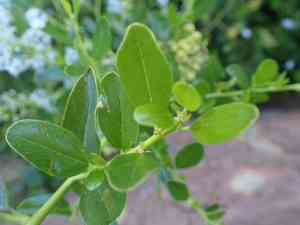
Quickly Identify Redheart
1
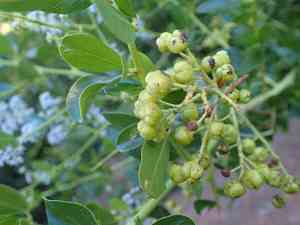
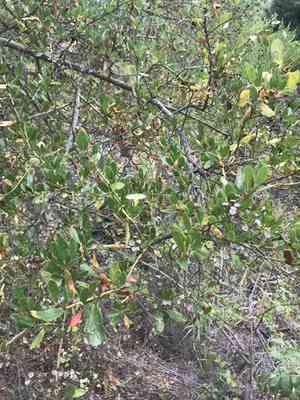
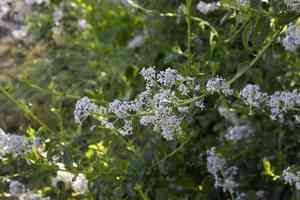
Ceanothus spinosus can be identified by its greenish bark, thorny spines, and the clusters of small, white to pale blue flowers. The leaves are dark green, glossy, and have a prominent midrib.
Scientific Classification of Redheart
Phylum
Vascular plants
Class
Dicotyledons
Order
Rosales
Family
Buckthorn
Genus
Redroots
Species
Redheart
Planting and Growing of Redheart
Care Difficulty
Moderate
Watering Schedule
Every 3 days
Sunlight Requirements
Full sun
Sunshine Duration
6-8 hours
Ideal Temperature
65-75℉
Soil Type
Potting Mix, Peat Mix
Soil pH
6.5-7.5
Fertilizer Type
Balanced
Pruning Season
Spring, Summer
Pruning Area
Branches, Leaves
Pruning Frequency
2 times a year
Repotting Season
Spring
Pot Type
Ceramic, Plastic
 How to Water Redheart?
Ceanothus spinosus, commonly known as the greenbark ceanothus, requires moderate watering. It prefers to be watered deeply, allowing the soil to become thoroughly moistened to about 500 ml for an established shrub. This ensures the water reaches down to the roots, encouraging deep root growth.
What are the symptoms of an underwatered Redheart?
›
What should I do if my Redheart is not getting enough water?
›
What are the symptoms of an overwatered Redheart?
›
How to save an overwatered Redheart?
›
 What Are the Sunlight Requirements for Redheart?
Ceanothus spinosus thrives best under full to partial sunlight. Optimal light conditions lead to vigorous growth, vibrant foliage, and prolific blooming due to enhanced photosynthetic efficiency and nutrient uptake.
What is the optimal location for light?
›
What if you can't provide full sun?
›
How does ideal lighting benefit this plant?
›
 What Is the Ideal Temperature Range for Redheart?
Ceanothus spinosus thrives best in temperatures ranging from 65°F to 75°F. This range ensures optimal growth and flowering, promoting vibrant and healthy plants. During this period, metabolic processes occur efficiently, supporting robust foliage and a strong root system. Consistent temperatures within this range also minimize stress and reduce the susceptibility to diseases caused by temperature fluctuations.
 What Soil is Best for Redheart?
Ceanothus spinosus thrives in soil that allows quick drainage, preventing waterlogging. Well-draining conditions promote healthy root growth and prevent root rot, which is crucial for the plant’s longevity. This plant prefers soil that has a moderate level of fertility. Excessive nutrients can lead to lush foliage at the expense of flowers, so balanced soil ensures optimal growth and blooming. Ceanothus spinosus does not require soils rich in organic matter. While some compost can be beneficial, too much can increase soil moisture retention, which this drought-tolerant plant does not tolerate well.
 How to Fertilize Redheart?
Ceanothus spinosus is a drought-tolerant plant, so it requires minimal fertilization. Use a balanced fertilizer with an N-P-K ratio of 10-10-10. For liquid fertilizers, dilute them to half-strength to avoid over-fertilization, applying about 1/2 gallon per mature plant.
 How to Prune Redheart?
Start by removing any dead or damaged branches to give the shrub a healthy structure. Use sharp, clean pruning shears to make clean cuts. Trim back any overly long or unruly branches to maintain the desired shape of the plant. It's best to prune right above a leaf node to encourage new growth in the right direction. In early spring, a heavier pruning is suggested to remove older growth and stimulate vibrant new shoots.
More About Pruning Techniques→
 How to Propagate Redheart plant?
1
Collect ripe seeds directly from the plant. Soak the seeds in water for 24 hours to break dormancy before planting. This ensures better germination rates.
2
Select healthy branches and cut 4-6 inch segments. Remove the lower leaves, leaving a few at the top. Dip the cut end in rooting hormone to promote root development.
3
Prepare seedling trays with a soilless mix, and sow seeds about 1-2 inches apart. Cover lightly with soil and water gently. Place trays in a warm location with indirect sunlight.
 How to Repot Redheart plant?
1
Ceanothus spinosus signals that it's time for repotting when you notice roots peeking out from the drainage holes or when growth slows down significantly. Ideally, repot in early spring or autumn when the plant isn't actively growing but can still establish before extreme weather.
2
Select a pot that's one size larger than the current one, with excellent drainage holes. A terracotta pot can be advantageous as it allows excess moisture to evaporate, preventing the root rot that Ceanothus spinosus may be prone to if the soil retains too much water.
3
Choose a well-draining sandy loam soil that closely mimics its natural habitat. This type of soil ensures adequate drainage while retaining some moisture, providing the perfect balance that Ceanothus spinosus prefers for healthy growth.



