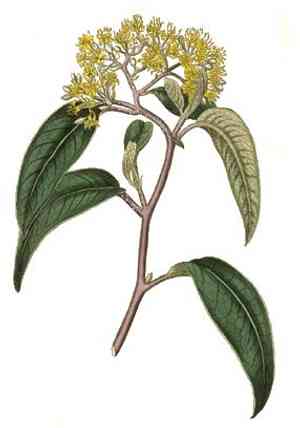
Carmel ceanothus (Ceanothus griseus)
Also known as: Carmel Ceanothus, Carmel Creeper
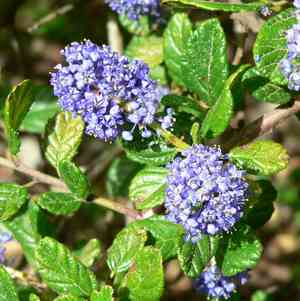
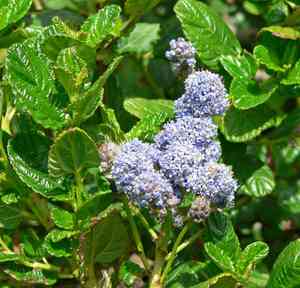
Ceanothus griseus can grow up to approximately 1.8 to 2 meters tall when it maintains an erect posture, though it often spreads wider than it stands tall. The shrub features evergreen leaves with ribbed surfaces, mildly serrated edges, and fuzzy undersides. It produces dense clusters of small blue or purple flowers on sturdy, short stalks.
In This Article
Attributes of Carmel ceanothus
Lifespan
Perennial
Plant Type
Shrub
Plant Height
91 cm to 1.8 m
Spread
1 m
Leaf Color
Green
Flower Size
1 inch (approx. 2.5 cm)
Flower Color
Blue
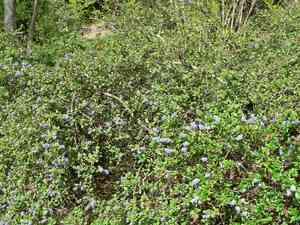
Images of Carmel ceanothus
Quickly Identify Carmel ceanothus
1
Look for evergreen shrubs with glossy, dark green leaves and bluish flower clusters that bloom in spring. The plants often spread as ground cover and feature arching stems.
Scientific Classification of Carmel ceanothus
Phylum
Vascular plants
Class
Dicotyledons
Order
Rosales
Family
Buckthorn
Genus
Redroots
Species
Carmel ceanothus
Planting and Growing of Carmel ceanothus
Care Difficulty
Moderate
Watering Schedule
Every 2 days
Sunlight Requirements
Full sun
Sunshine Duration
4-8 hours
Ideal Temperature
60-75℉
Soil Type
Potting Mix, Peat Mix
Soil pH
6.5-7.5
Fertilizer Type
Balanced
Pruning Season
Spring, Summer
Pruning Area
Branches, Leaves
Pruning Frequency
2 times a year
Repotting Season
Spring
Pot Type
Plastic, Ceramic
 How to Water Carmel ceanothus?
Ceanothus griseus prefers a moderate watering schedule. Ensure the soil is consistently moist but not waterlogged, and aim for about 500 ml per session. This amount provides enough moisture without saturating the roots, allowing the plant to thrive.
What are the symptoms of an underwatered Carmel ceanothus?
›
What should I do if my Carmel ceanothus is not getting enough water?
›
What are the symptoms of an overwatered Carmel ceanothus?
›
How to save an overwatered Carmel ceanothus?
›
 What Are the Sunlight Requirements for Carmel ceanothus?
Ceanothus griseus prefers full sun or partial sun. Optimal lighting encourages lush growth and prolific flowering, ensuring a healthy and aesthetically pleasing plant.
How much sun does it need?
›
What is the best solution for ideal light?
›
How does ideal light benefit the plant?
›
 What Is the Ideal Temperature Range for Carmel ceanothus?
The ideal temperature range for Ceanothus griseus is between 60°F and 75°F. This range allows the plant to maximize photosynthesis and growth, ensuring healthy foliage and flowering. Maintaining these temperatures helps avoid stress and encourages robust development.
 What Soil is Best for Carmel ceanothus?
Ceanothus griseus thrives in well-draining soil, which is essential to prevent waterlogging and root rot. Proper drainage ensures that the roots have access to oxygen and nutrients without being submerged in water, promoting healthy growth and flowering. This species does not require overly fertile soil, making it ideal for less nutrient-rich conditions. A moderate amount of organic matter is sufficient, providing enough nutrients for the plant without risking an imbalance that could affect its natural growth pattern. Ceanothus griseus prefers a slightly acidic to neutral pH range of 6.5 to 7.5. This pH level allows optimal nutrient uptake and supports the plant's overall health, ensuring vibrant blooms and robust foliage.
 How to Fertilize Carmel ceanothus?
For Ceanothus griseus, it is vital to be precise with fertilization amounts to prevent over-fertilization. A balanced fertilizer with an NPK ratio of 10-10-10 is often recommended, applied at about half the recommended rate on the label. This ensures that the plant receives the necessary nutrients without the risk of nutrient burn, as Ceanothus prefers a leaner soil condition.
 How to Prune Carmel ceanothus?
Begin by removing any dead, damaged, or diseased wood. Trim back branches to a healthy set of leaves or a budding pair. For shaping, prune just above a leaf node to encourage bushier growth. Aim to open up the center of the plant slightly to ensure enough light and air can penetrate throughout. The best time to prune Ceanothus griseus is after it finishes its flowering period in late spring or early summer. This minimizes the risk of cutting off flower buds for the next season, allowing you to enjoy a fuller bloom annually.
More About Pruning Techniques→
 How to Propagate Carmel ceanothus plant?
1
Choose semi-hardwood cuttings in the growing season. The cuttings should be healthy, disease-free, and about 10-12 cm in length, with several leaves.
2
Remove the leaves from the lower half of the cutting to reduce moisture loss. Dip the cut end in rooting hormone to enhance root growth.
3
Insert the prepared cutting into a pot filled with a well-draining rooting medium. Firm the medium around the cutting to remove air pockets.
 How to Repot Carmel ceanothus plant?
1
Ceanothus griseus signals its need for repotting when roots begin to circle the pot or emerge from drainage holes. This indicates limited space for growth, reducing soil nutrients access. Additionally, if the plant’s growth appears stunted or the soil drains more slowly than usual, it might be time for a new pot.
2
When selecting a pot for your Ceanothus griseus, opt for one that’s 1 to 2 inches larger in diameter than the current pot. This encourages root expansion without overwhelming with unused space, which can lead to moisture retention and root rot. Ensure the new pot has adequate drainage holes to avoid waterlogging.
3
Ceanothus griseus thrives in a loamy, well-draining soil mix, preferably one enriched with organic matter. Such soil emulates its natural habitat, offering the ideal balance of air and nutrients to the roots while preventing excess moisture that can cause root rot.



