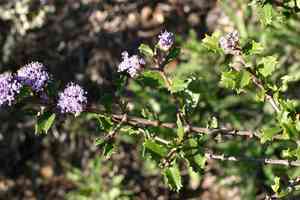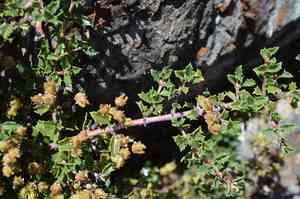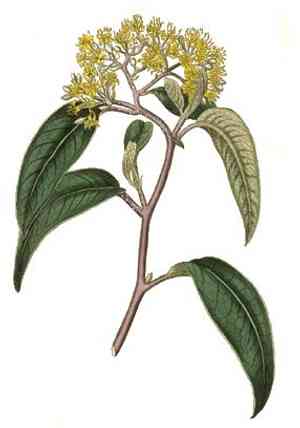
Calistoga ceanothus(Ceanothus divergens)

Calistoga ceanothus (Ceanothus divergens)

Also known as: Divergent Buckbrush

The Calistoga ceanothus (Ceanothus divergens) is a hardy, evergreen shrub native to the dry, rocky terrains of California's Napa County. It is notable for its vibrant clusters of blue to lavender flowers that bloom in the spring, attracting a variety of pollinators like bees and butterflies. The plant usually grows to about 1-2 meters (3-6 feet) in height, with dark green, leathery leaves that have serrated edges.

Key characteristics and adaptations include:
1. **Drought Tolerance**: Its leathery leaves minimize water loss, making it well-suited for arid conditions.
2. **Fire Resilience**: Equipped with a deep root system, the shrub can resprout following wildfires, a common occurrence in its native habitat.
3. **Poor Soil Adaptation**: The plant thrives in nutrient-poor soils by forming symbiotic relationships with nitrogen-fixing bacteria.

These features make the Calistoga ceanothus an enduring and adaptable species, capable of flourishing in the challenging environments of its native region.

Attributes of Calistoga ceanothus

Lifespan
Perennial
Plant Type
Shrub
Plant Height
0.5 to 2 meters (1.6 to 6.5 feet)
Spread
1 to 2 meters (3.3 to 6.5 feet)
Leaf Color
Shiny green
Flower Size
0.5 to 1 cm
Flower Color
Blue to white

ForwardPlant - Identify plants with a snap

Identify and diagnose plants, get toxicity alerts, and explore safety guides for all types of fungi.

Try for Free

Images of Calistoga ceanothus

Calistoga ceanothus(Ceanothus divergens)

Quickly Identify Calistoga ceanothus

1
Look for a sprawling shrub with thorny branches, small shiny green leaves, and clusters of tiny blue to white flowers. The leaves are evergreen, oval, and about 1 to 3 cm in length.

Scientific Classification of Calistoga ceanothus

Phylum
Vascular plants
Class
Dicotyledons
Order
Rosales
Family
Buckthorn
Genus
Redroots
Species
Calistoga ceanothus

Planting and Growing of Calistoga ceanothus

Care Difficulty
Easy
Watering Schedule
Every 2 days
Sunlight Requirements
Full sun
Sunshine Duration
6-10 hours
Ideal Temperature
65-75℉
Soil Type
Potting Mix, Peat Mix
Soil pH
6-7.5
Fertilizer Type
Balanced
Pruning Season
Spring, Summer
Pruning Area
Branches, Leaves
Pruning Frequency
2 times a year
Repotting Season
Spring
Pot Type
Plastic, Ceramic

water icon How to Water Calistoga ceanothus?

For Ceanothus divergens, water thoroughly to the point where the soil feels moist but not waterlogged. Ensure the first few inches of soil are saturated, which typically requires about 500 ml of water per session. This amount ensures that the roots get enough moisture without being drowned, thus supporting healthy growth.
What are the symptoms of an underwatered Calistoga ceanothus?
What should I do if my Calistoga ceanothus is not getting enough water?
What are the symptoms of an overwatered Calistoga ceanothus?
How to save an overwatered Calistoga ceanothus?

sunlight icon What Are the Sunlight Requirements for Calistoga ceanothus?

Sunlight Requirements: Full sun, Partial sun
Duration of light: 6 to 8 hours
Ceanothus divergens ideally requires full to partial sunlight, which nurtures robust flowering and foliage as adequate light supports photosynthesis, energy production, and overall plant vigor.
What is the best lighting condition for Ceanothus divergens?
How can I achieve ideal lighting for Ceanothus divergens?
What are the benefits of ideal lighting over other conditions?

temperature icon What Is the Ideal Temperature Range for Calistoga ceanothus?

Ideal Temperature: 65 ~ 75℉
Ceanothus divergens thrives best in an environment where the temperature range is between 65°F and 75°F. This range ensures optimal growth and flowering, as it closely mimics the plant's natural habitat. Maintaining these temperatures allows for proper metabolic functions and overall plant health.

soil icon What Soil is Best for Calistoga ceanothus?

Soil type: Sandy loam, Loam
Soil PH: 6 ~ 7.5
Ceanothus divergens thrives in well-drained soil that prevents waterlogging. Proper drainage ensures the roots breathe freely and stay healthy, contributing to robust plant growth. A nutrient-rich soil supports the vibrant foliage and abundant flowering of Ceanothus divergens. Adequate organic matter in the soil provides essential minerals and elements needed for vigorous plant health. Ceanothus divergens performs best when the soil maintains moderate moisture levels. This requirement helps prevent the stresses of drought while avoiding the potential for root rot from excessive water.

fertilize icon How to Fertilize Calistoga ceanothus?

Fertilizer type: Balanced
For Ceanothus divergens, the recommended fertilizer amount is moderate. Use approximately 1.0 to 1.5 pounds per 100 square feet of plant area. This helps to avoid any adverse effects from over-fertilization while providing essential nutrients.

prune icon How to Prune Calistoga ceanothus?

Pruning Time: Spring, Summer
Begin by assessing the shrub for any damaged or dead wood. Use sharp, clean pruning shears to cut these branches at the base. For shaping, identify branches that disrupt the desired structure and prune them back to a lateral shoot or bud, enhancing air circulation and sunlight penetration. Ceanothus divergens benefits from formative pruning to establish a strong framework. During the pruning process, choose 3-5 primary branches to form the main structure. Trim these branches to encourage branching and a denser form, maintaining plant balance and symmetry. More About Pruning Techniques

propagate icon How to Propagate Calistoga ceanothus plant?

Propagate Time: Spring,Early spring,Late spring
1
Choose a healthy plant with no signs of disease or pest infestation. This ensures the cuttings or seeds have the best chance for successful propagation.
2
Use a well-draining soil mix suitable for Ceanothus; mix equal parts of perlite, peat, and sand to provide adequate drainage and aeration.
3
For cuttings, plant the treated cut end in soil. For seeds, plant them below the soil surface. Water gently and place in a sunny location.
More About Propagating Techniques

repot icon How to Repot Calistoga ceanothus plant?

Repotting frequency: Every 2-3 years
1
Ceanothus divergens shows signs it needs repotting when its roots begin to encircle the pot or grow out of the drainage holes. This often happens every 2-3 years as the plant matures and needs more room for its root system.
2
Select a pot that is just one size larger than the current one, with ample drainage holes. A slightly larger pot prevents waterlogging and encourages healthy root spread without overwhelming the plant with too much soil.
3
Opt for a well-draining, sandy soil mix to mimic the plant’s natural habitat. This type of soil prevents root rot and ensures proper aeration, allowing the plant to thrive in its new home.

ForwardPlant - Identify plants with a snap

Find the best spots for them to optimize their health, simply using your phone.

Try for Free