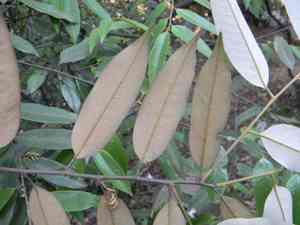
Bitter evergreen chinkapin (Castanopsis sclerophylla)
Also known as: Chinese Chinquapin, Tough Silkwood
The tree you're referring to is the Chinaberry tree (Melia azedarach). Native to tropical and subtropical climates, it can sometimes adapt to cooler temperatures. Its wood is known for being soft and easy to carve, making it ideal for furniture and shingles. The tree produces catkins with a distinct, often unpleasant odor that attracts midges, which are key to its pollination.
In This Article
Attributes of Bitter evergreen chinkapin
Lifespan
Perennial
Plant Type
Tree
Plant Height
5 m to 15 m
Spread
10-15 meters
Leaf Color
Dark Green
Flower Size
15 cm
Flower Color
Greenish-yellow
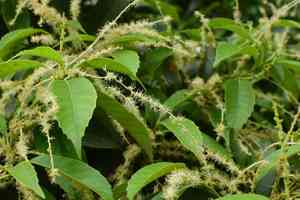
Images of Bitter evergreen chinkapin
Quickly Identify Bitter evergreen chinkapin
1
To identify Castanopsis sclerophylla, look for its thick, glossy, lance-shaped leaves which are dark green on the top and paler on the underside. The tree produces small, inconspicuous flowers and spiny fruits that contain nut-like seeds.
Scientific Classification of Bitter evergreen chinkapin
Phylum
Vascular plants
Class
Dicotyledons
Order
Beeches, walnuts, and allied trees
Family
Beech
Genus
Chinquapins
Species
Bitter evergreen chinkapin
Planting and Growing of Bitter evergreen chinkapin
Care Difficulty
Easy
Watering Schedule
Every 3 days
Sunlight Requirements
Partial sun
Sunshine Duration
6-10 hours
Ideal Temperature
60-77℉
Soil Type
Potting Mix, Peat Mix
Soil pH
6.5-7.5
Fertilizer Type
Balanced
Pruning Season
Spring, Summer
Pruning Area
Branches, Leaves
Pruning Frequency
2 times a year
Repotting Season
Spring
Pot Type
Terracotta, Plastic
 How to Water Bitter evergreen chinkapin?
Castanopsis sclerophylla requires approximately 500ml of water per watering session. The watering amount should ensure the soil is evenly moist but not waterlogged. Follow the principle of soaking the root zone thoroughly until water begins to drain from the bottom of the pot.
What are the symptoms of an underwatered Bitter evergreen chinkapin?
›
What should I do if my Bitter evergreen chinkapin is not getting enough water?
›
What are the symptoms of an overwatered Bitter evergreen chinkapin?
›
How to save an overwatered Bitter evergreen chinkapin?
›
 What Are the Sunlight Requirements for Bitter evergreen chinkapin?
Castanopsis sclerophylla prefers partial sun, ideally experiencing 4 to 6 hours of sunlight per day. Ideal lighting conditions enhance photosynthesis, resulting in robust growth, resilience, and a vibrant appearance.
How much sunlight does it need?
›
What are the solutions to get ideal lighting?
›
Why is ideal lighting important?
›
 What Is the Ideal Temperature Range for Bitter evergreen chinkapin?
The ideal temperature range for the growth of Castanopsis sclerophylla is between 60°F and 77°F. At these temperatures, the plant can effectively photosynthesize, which is crucial for healthy growth and development.
 What Soil is Best for Bitter evergreen chinkapin?
Castanopsis sclerophylla thrives in well-drained soil that allows water to percolate efficiently, preventing root rot. This feature is crucial for maintaining healthy roots and facilitating proper nutrient uptake. The plant prospers in nutrient-rich substrates that provide essential macro and micronutrients, promoting vigorous growth and enhancing the plant's resilience against diseases and pests. A balance is needed where the soil retains adequate moisture while also being aerated. This condition ensures that the roots have consistent access to water without suffocating, which is vital for steady growth.
 How to Fertilize Bitter evergreen chinkapin?
For Castanopsis sclerophylla, the ideal amount of fertilizer depends heavily on its age and soil fertility. Use a balanced fertilizer, such as a 10-10-10 NPK formulation, at a rate of about 1 pound per inch of trunk diameter. This should be evenly distributed under the full canopy to ensure optimal growth.
 How to Prune Bitter evergreen chinkapin?
Begin by examining the shape of the Castanopsis sclerophylla, identifying any dead or diseased branches. Use clean, sharp pruning shears to remove these first. Then, trim back any crossing branches to prevent damage and promote better air circulation. This will ensure dense, healthy foliage. Consider the natural form of the Castanopsis sclerophylla. To maintain its aesthetic, gently trim back branches to maintain its desired shape. Focus on balancing the crown and removing any overly long or out-of-place branches. Regular aesthetic pruning will enhance its beauty and overall appearance.
More About Pruning Techniques→
 How to Propagate Bitter evergreen chinkapin plant?
1
Gather ripe seeds in autumn and stratify them in a cold environment for several weeks. This cold stratification process helps break seed dormancy.
2
Select healthy branches from the current year's growth, usually in early summer. Make clean cuts just below a node to increase the likelihood of rooting.
3
Sow the stratified seeds in trays with a well-drained seedling mix. Cover lightly with soil and maintain consistent moisture until germination.
 How to Repot Bitter evergreen chinkapin plant?
1
Look for signs like roots protruding from drainage holes or soil that dries out quickly, indicating the need for repotting. It usually happens every 2-3 years, when the tree shows slow growth or restricted root development, signaling that it requires more space.
2
Choose a pot that is 2-4 inches larger in diameter than the current one, made from breathable materials like terracotta. The pot should have ample drainage holes, ensuring both room for root expansion and preventing root rot, promoting healthier overall growth.
3
Opt for a well-draining loamy soil with a slightly acidic to neutral pH, abundant in nutrients. This soil mix improves aeration and helps retain enough moisture without waterlogging, providing a perfect environment for strong root development and plant vitality.
Learn More About Bitter evergreen chinkapin Diseases
Anthracnose
Bacterial Leaf Spot
Black Spot
Chemical Injury
Crown Gall
Damping-off
Downy Mildew
Drought Stress
Fusarium Wilt
Gray Mold
Leaf Curl
Leaf Spot
Mosaic
Nutrient Deficiency
Nutrient Toxicity
Powdery Mildew
Root Rot
Root-knot Nematode
Rusts
Sooty Mold
Spider Mites
Temperature Stress
Thrips Damage
White Mold



