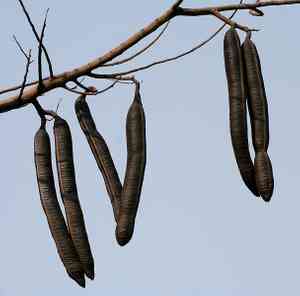
Roxburgh's cassia (Cassia roxburghii)
Also known as: Ceylon senna, Red laburnum
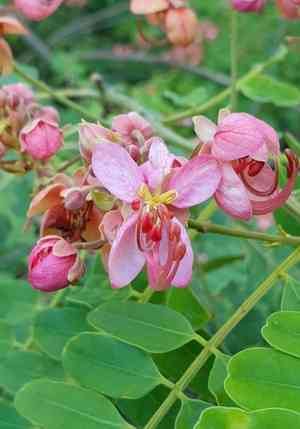
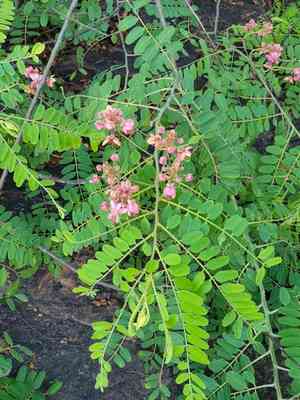
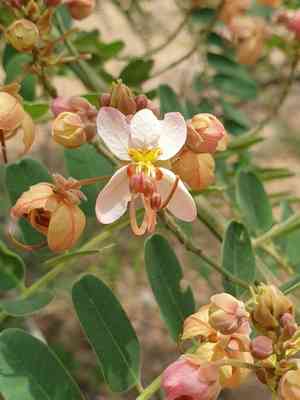
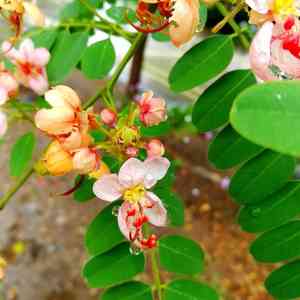
The red cassia tree is a medium-sized tree that typically reaches heights of 15–20 meters (49–66 feet) and has spreading, drooping branches. Its flowers, which can be pink, rose, or orange, form in clusters that range from 15 to 60 cm (5.9 to 23.6 inches) in length. The flowers are arranged in pendulous racemes, each measuring 20–40 cm (7.9–15.7 inches) long, and are 4–7 cm (1.6–2.8 inches) in diameter with red to pinkish petals. The leaves are pinnate, featuring three to eight pairs of leaflets, each leaflet being 7–21 cm (2.8–8.3 inches) long and 4–9 cm (1.6–3.5 inches) broad. The tree also produces legume fruits.
In This Article
Attributes of Roxburgh's cassia
Lifespan
Perennial
Plant Type
Tree
Plant Height
15 m to 20 m
Spread
6 to 8 meters
Leaf Color
Green
Flower Size
4 cm to 7 cm
Flower Color
Red Pink
Images of Roxburgh's cassia
Quickly Identify Roxburgh's cassia
1
Cassia roxburghii can be identified by its pinnate leaves, which have multiple pairs of leaflets. The tree produces bright pink to red flowers with yellow stamens, which grow in clusters. Its bark is typically grayish and its fruit are long, narrow pods.
Scientific Classification of Roxburgh's cassia
Phylum
Vascular plants
Class
Dicotyledons
Order
Fabales
Family
Legume
Genus
Cassias
Species
Roxburgh's cassia
Planting and Growing of Roxburgh's cassia
Care Difficulty
Moderate
Watering Schedule
Every 4 days
Sunlight Requirements
Full sun
Sunshine Duration
10-12 hours
Ideal Temperature
70-85℉
Soil Type
Potting Mix, Peat Mix
Soil pH
6.5-7.5
Fertilizer Type
Balanced
Pruning Season
Spring, Summer
Pruning Area
Branches, Leaves
Pruning Frequency
2 times a year
Repotting Season
Spring
Pot Type
Plastic, Ceramic
 How to Water Roxburgh's cassia?
Cassia roxburghii appreciates a consistent watering schedule that keeps the soil evenly moist, without waterlogging it. Each watering session should be around 500 ml, ensuring the water reaches the deep roots but does not leave the soil soggy. Always allow the top layer of soil to dry out between watering sessions to prevent root rot.
What are the symptoms of an underwatered Roxburgh's cassia?
›
What should I do if my Roxburgh's cassia is not getting enough water?
›
What are the symptoms of an overwatered Roxburgh's cassia?
›
How to save an overwatered Roxburgh's cassia?
›
 What Are the Sunlight Requirements for Roxburgh's cassia?
Cassia roxburghii prefers full sun to partial shade exposure, benefitting from 6-8 hours of direct sunlight. Adequate light supports photosynthesis, promotes vibrant flowering, and strengthens the plant’s resilience against pests.
What are the ideal lighting conditions?
›
How can you ensure optimal lighting?
›
What benefits does optimal lighting provide?
›
 What Is the Ideal Temperature Range for Roxburgh's cassia?
For Cassia roxburghii, the ideal temperature range is between 70°F and 85°F. This temperature range ensures optimal growth and flowering, facilitating proper physiological processes. Maintaining this range is crucial for the plant's health and productivity.
 What Soil is Best for Roxburgh's cassia?
Cassia roxburghii thrives in well-drained soils, preventing root rot and promoting healthy growth. Ensuring good drainage is crucial for water management and plant vitality. The plant benefits from soils with ample organic matter, providing essential nutrients for robust growth. This enriches the soil's health, aligning with the plant's nutritional needs. Maintaining moderate moisture in the soil is vital, as excessive drying or waterlogging can stress the plant. Balanced moisture supports steady growth and flowering periods.
 How to Fertilize Roxburgh's cassia?
Cassia roxburghii, also known as the Rose Cassia, requires careful fertilization. A balanced 10-10-10 NPK fertilizer is ideal. Use about 1/4 cup per mature plant during the growing season, adjusting based on plant size and growth conditions.
 How to Prune Roxburgh's cassia?
To prune Cassia roxburghii, begin by sterilizing your pruning shears to prevent disease spread. Start by removing any dead, damaged, or diseased branches to improve overall plant health. Next, thin out crowded areas to increase air circulation and light penetration, promoting a healthy growing environment. Trim back any branches that detract from the plant's natural shape, ensuring a balanced and aesthetically pleasing appearance. Finally, cut back any vigorous shoots that may be overshadowing other parts of the plant. Always make cuts just above a bud or branch for optimal healing.
More About Pruning Techniques→
 How to Propagate Roxburgh's cassia plant?
1
Start by collecting seeds from a mature Cassia roxburghii plant during late spring or early summer. Ensure that the seed pods are dry and mature; otherwise, the seeds may not germinate properly. Carefully extract the seeds from the pods and store them in a cool, dry place until you are ready to plant them.
2
Prepare a well-draining potting mix that is light and rich in organic matter. This can be achieved by mixing equal parts of sand, loam, and peat moss. A well-prepared soil promotes healthy root development and prevents root rot by providing good aeration and water drainage.
3
Choose healthy stems of about 4-6 inches long with several leaf nodes. Make a clean cut just below a node with sharp pruning shears. Remove the leaves from the bottom half of the cutting to reduce moisture loss and promote root initiation. You can dip the cut end in rooting hormone to enhance rooting.
 How to Repot Roxburgh's cassia plant?
1
Cassia roxburghii, commonly known as the 'Pink Shower Tree,' signals the need for repotting when you notice roots coming out of the drainage holes or if the plant's growth has significantly slowed. Early signs also include yellowing leaves or the plant becoming top-heavy and struggling to stand upright. The best time to repot is during the spring or autumn seasons when the plant can establish itself before peak growth periods.
2
When selecting a pot for Cassia roxburghii, opt for a container that is one size larger than the current one, with ample drainage holes to prevent waterlogging. The material of the pot can be terracotta or plastic, both offering different benefits. Terracotta allows for better air exchange, aiding root respiration, whereas plastic is lighter and retains moisture longer, reducing watering frequency. Ensuring adequate size and drainage prevents root rot and supports healthy growth.
3
For Cassia roxburghii, choosing a well-draining loamy soil is crucial. This mixture typically includes components like peat, sand, and compost. The loamy texture provides enough aeration while retaining necessary moisture and nutrients. Such a soil composition ensures robust root development and prevents issues like water stagnation and nutrient deficiencies, ultimately leading to a healthier, more vigorous plant.



