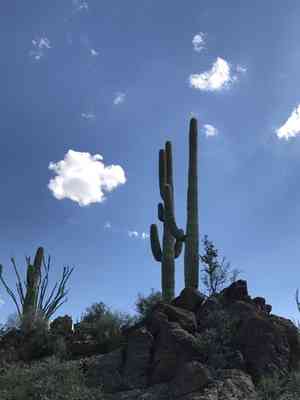
Saguaro (Carnegiea gigantea)
Also known as: Sage of the desert
The saguaro cactus (*Carnegiea gigantea*) is a prominent perennial plant in arid desert regions. Indigenous peoples historically consumed its fruit and utilized its structure for constructing fences and shelters. Additionally, various birds, including owls, carve out nests within the cactus for habitation.
In This Article
Attributes of Saguaro
Lifespan
Perennial
Plant Type
Tree
Plant Height
3 m to 16 m
Spread
15 cm
Leaf Color
No leaves; stems are green
Flower Size
7 cm to 9 cm
Flower Color
White Green
Images of Saguaro


Quickly Identify Saguaro
1
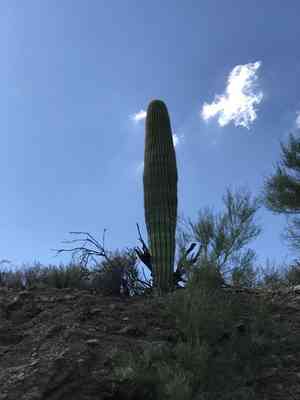
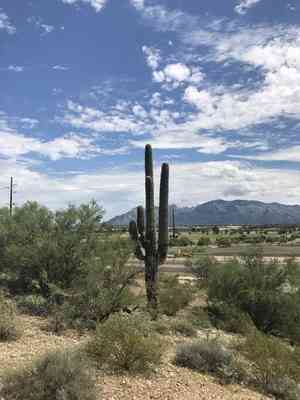
The saguaro cactus can be identified by its tall columnar structure, ribbed body, and characteristic upward-curving arms. It often has white, waxy flowers during its blooming period.
Scientific Classification of Saguaro
Phylum
Vascular plants
Class
Dicotyledons
Order
Pinks, cacti, and allies
Family
Cactuses
Genus
Saguaro
Species
Saguaro
Planting and Growing of Saguaro
Care Difficulty
Hard
Watering Schedule
Every day
Sunlight Requirements
Full sun
Sunshine Duration
4-6 hours
Ideal Temperature
65-85℉
Soil Type
Potting Mix, Peat Mix
Soil pH
6.5-7.5
Fertilizer Type
Balanced
Pruning Season
Spring, Summer
Pruning Area
Branches, Leaves
Pruning Frequency
2 times a year
Repotting Season
Spring
Pot Type
Plastic, Ceramic
 How to Water Saguaro?
For Carnegiea gigantea, known as the saguaro cactus, it is crucial to understand that it thrives in arid environments. Watering should be done in moderation, allowing the soil to dry out completely between sessions. This allows the roots to breathe and prevents rot. Watering to a depth of about 10-12 inches ensures the roots get enough moisture without waterlogging.
More About Watering Techniques→
What are the symptoms of an underwatered Saguaro?
›
What should I do if my Saguaro is not getting enough water?
›
What are the symptoms of an overwatered Saguaro?
›
How to save an overwatered Saguaro?
›
 What Are the Sunlight Requirements for Saguaro?
Carnegiea gigantea thrives best under full sun conditions, ideally receiving 8 to 10 hours of direct sunlight daily, which encourages strong, healthy growth and natural resilience.
More About Sunlight Requirements Techniques→
What is the best lighting condition for Carnegiea gigantea?
›
How to achieve the ideal lighting for Carnegiea gigantea?
›
What are the benefits of ideal lighting on Carnegiea gigantea?
›
 What Is the Ideal Temperature Range for Saguaro?
The ideal temperature range for Carnegiea gigantea is between 65°F and 85°F. This range ensures optimal metabolism and growth. When temperatures are maintained within this interval, the plant can efficiently carry out photosynthesis, supporting healthy structural development and vibrant color. Plant stress is minimized, contributing to disease resistance and overall vitality.
 What Soil is Best for Saguaro?
Carnegiea gigantea thrives in soil with excellent drainage. Adequate drainage prevents waterlogging, which can lead to root rot, supporting the plant's health and longevity. While Carnegiea gigantea is not nutrient-demanding, a sandy loam with mild enrichment supports growth. Such soil provides essential minerals and enhances the plant's structure without overwhelming it. The plant requires a loose, gritty texture to facilitate proper root expansion and aeration. This type of soil minimizes compaction, allowing roots to access nutrients more efficiently.
More About Soil→
 How to Fertilize Saguaro?
Carnegiea gigantea, commonly known as the saguaro cactus, requires cautious fertilization. Apply a balanced 5-10-5 liquid fertilizer at half strength to avoid nutrient overload. When using slow-release pellets, stick to a minimal quantity, similar to an amount that would fit on a spoon's tip, spread around the base.
 How to Prune Saguaro?
Examine the saguaro for any dead or diseased segments. Look for discoloration or areas that are soft to the touch, as these could indicate rotting or other issues that need to be addressed. With sterilized pruning shears, carefully cut away the damaged or diseased parts of the cactus. Make clean, precise cuts at the base of the affected section to prevent further damage and promote healthy growth.
 How to Propagate Saguaro plant?
1
To begin propagation through seeds, start by acquiring fresh seeds from a reputable source. Scarify the seeds by lightly sanding them to help with water absorption, which can improve germination rates. If available, soak the seeds in water for several hours to further encourage sprouting.
2
Once seeds are prepared, distribute them evenly over the surface of the seed tray filled with sterilized soil. Lightly cover the seeds with a thin layer of soil or sand. Ensure that they are not buried too deep, as they require light exposure for germination.
3
Water the seeds gently using a spray bottle to avoid displacing them. Maintain a level of humidity by covering the tray with a transparent plastic cover. Place the tray in a warm area with indirect sunlight to facilitate the germination process, which can take several weeks.
 How to Repot Saguaro plant?
1
Repotting is necessary when the plant outgrows its pot or becomes root-bound, indicated by roots growing through drainage holes. Spring and early summer are ideal times for this task as active growth facilitates adaptation to a new environment.
2
Choosing a pot slightly larger than the current one is essential to ensure healthy root development without excessive growth. A pot with drainage holes prevents root rot by allowing excess water to escape, contributing to the cactus's overall health.
3
Select a soil designed for cacti and succulents, which usually includes a mix of organic matter and sand or grit. This ensures excellent drainage, essential for preventing root rot and maintaining healthy growth in Carnegiea gigantea.



