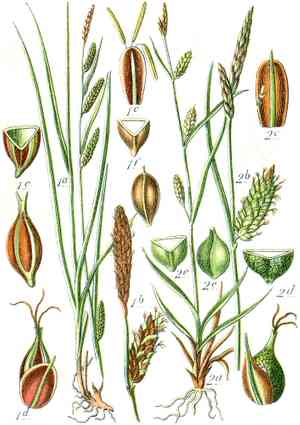
Wiegand's sedge (Carex wiegandii)
Also known as: Wiegand's Sedge
Wiegand's sedge (Carex wiegandii) is a perennial plant commonly found in wetlands, marshes, and wet meadows. It is characterized by its dense, clumped growth and narrow, bright green leaves that resemble grass. The plant has triangular stems that can feel rough. One of its distinguishing features is the flower spikes, with female spikes positioned above the male ones. The seed heads, enclosed in a sac-like structure known as a perigynium, are particularly notable for their inflated, veined appearance, aiding in seed dispersal. These traits help in identifying Wiegand's sedge in its natural wetland habitat.
In This Article
Attributes of Wiegand's sedge
Lifespan
Perennial
Plant Type
Grass
Plant Height
30 cm to 91 cm
Spread
10-20 cm
Leaf Color
Green
Flower Size
0.1-0.5 cm
Flower Color
Brownish or greenish
Images of Wiegand's sedge
Quickly Identify Wiegand's sedge
1
Carex wiegandii can be identified by its triangular stems and grass-like leaves which are arranged in three ranks. The plant produces clusters of small, inconspicuous flowers and is characterized by its dense tufts of stems.
Scientific Classification of Wiegand's sedge
Phylum
Vascular plants
Class
Monocotyledons
Order
Poales
Family
Sedge
Genus
True sedges
Species
Wiegand's sedge
Planting and Growing of Wiegand's sedge
Care Difficulty
Moderate
Watering Schedule
Every 4 days
Sunlight Requirements
Partial sun
Sunshine Duration
4-8 hours
Ideal Temperature
60-75℉
Soil Type
Potting Mix, Peat Mix
Soil pH
5.5-7.5
Fertilizer Type
Balanced
Pruning Season
Spring, Summer
Pruning Area
Branches, Leaves
Pruning Frequency
2 times a year
Repotting Season
Spring
Pot Type
Plastic, Ceramic
 How to Water Wiegand's sedge?
When watering Carex wiegandii, aim to moisten the soil thoroughly but not excessively. A good rule of thumb is to water until you see that the top layer of soil is damp but not waterlogged. This usually means about 250 ml per session, depending on the pot size.
What are the symptoms of an underwatered Wiegand's sedge?
›
What should I do if my Wiegand's sedge is not getting enough water?
›
What are the symptoms of an overwatered Wiegand's sedge?
›
How to save an overwatered Wiegand's sedge?
›
 What Are the Sunlight Requirements for Wiegand's sedge?
Carex wiegandii prefers partial sun, ideally benefiting from dappled or filtered light. The right light balance promotes healthy foliage, a lush appearance, and greater resilience to environmental stresses.
What is the most suitable light condition for Carex wiegandii?
›
How can you achieve the ideal lighting for Carex wiegandii?
›
What are the benefits of ideal lighting for Carex wiegandii?
›
 What Is the Ideal Temperature Range for Wiegand's sedge?
Carex wiegandii thrives best in a moderate temperature range between 60°F and 75°F. This range ensures proper photosynthesis and metabolic activities, allowing the plant to develop healthy foliage and robust growth.
 What Soil is Best for Wiegand's sedge?
Carex wiegandii thrives in soils that retain moisture well, ensuring that the roots are consistently hydrated. This kind of soil benefits the plant by preventing wilting and promoting lush growth, particularly in environments that may experience dry spells. A nutrient-rich soil is essential for Carex wiegandii, providing a steady supply of essential minerals needed for vigorous growth. The presence of organic matter in loam and peat soils typically provides these nutrients, leading to healthy foliage and robust plant structure. Adequate aeration in the soil is crucial for the oxygenation of roots, which assists in nutrient uptake and overall plant health. Sandy loam typically offers this benefit with its loose structure, reducing the risk of root rot and promoting healthy root systems.
 How to Fertilize Wiegand's sedge?
For Carex wiegandii, applying the right amount of fertilizer is crucial. Use a balanced fertilizer at half the recommended dosage for general plants. During the growing season, apply about 10 grams of slow-release fertilizer per square meter to avoid nutrient burn.
 How to Prune Wiegand's sedge?
Prune Carex wiegandii primarily in spring or early summer when the plant is actively growing, which encourages faster healing and reduces the risk of disease. When trimming down old or dead leaves, make clean cuts close to the base of the plant. This technique helps minimize visible damage and encourages new growth from the base. Prune moderately to prevent shock. Removing too much foliage can stress the plant, affecting its overall development and resilience. Ensure you leave a good portion of healthy leaves intact.
More About Pruning Techniques→
 How to Propagate Wiegand's sedge plant?
1
Sow the seeds in seed trays filled with a well-draining potting mix. Ensure seeds are covered lightly with soil and keep the trays in a warm, well-lit area to encourage germination.
2
Keep the soil consistently moist but not waterlogged. Using a spray bottle helps keep the surface even and avoids washing the seeds away.
3
Carefully dig up mature plants in early spring. Use a garden fork to separate the clumps, ensuring each division has a good portion of roots and shoots for successful replantation.
 How to Repot Wiegand's sedge plant?
1
Carex wiegandii shows signs it needs repotting when you notice roots circling the pot interior, or water takes longer to drain. These signals indicate it's time to provide more room for root growth, ensuring the plant remains healthy.
2
Select a pot that's 1-2 inches larger in diameter than the current one, ensuring it has proper drainage holes. This size increase prevents waterlogging and allows roots to spread, facilitating better growth and nutrient uptake.
3
Opt for a well-draining, rich loamy soil mix to prevent root rot and provide ample nutrients. This soil type enhances aeration and moisture retention, crucial for the healthy development of Carex wiegandii.
Learn More About Wiegand's sedge Diseases
Anthracnose
Bacterial Leaf Spot
Bacterial Soft Rot
Chemical Injury
Damping-off
Downy Mildew
Drought Stress
Fusarium Wilt
Gray Mold
Leaf Spot
Mosaic
Nutrient Deficiency
Nutrient Toxicity
Powdery Mildew
Root Rot
Root-knot Nematode
Rusts
Sooty Mold
Spider Mites
Temperature Stress
Thrips Damage
White Mold



