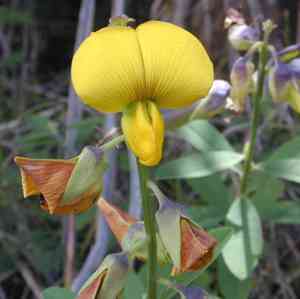
Chinese peashrub (Caragana sinica)
Also known as: Sinica Peashrub
In the spring, the Chinese peashrub (Caragana sinica) blooms with small, yellow, bell-shaped flowers. The plant's bruised bark emits a licorice-like scent. It is resilient to strong winds and draws wildlife and bees, which are its main pollinators. Additionally, it serves as a nitrogen fixer, converting atmospheric nitrogen into a form usable by itself and neighboring plants.
In This Article
Attributes of Chinese peashrub
Lifespan
Perennial
Plant Type
Shrub
Plant Height
1 m to 2 m
Spread
1.2 m to 1.8 m
Leaf Color
Green
Flower Size
2.5 cm to 8 cm
Flower Color
Yellow
Quickly Identify Chinese peashrub
1
Reddish-yellow 1.2 inches (3 cm) flowers bloom early summer with distinct petal arrangement.
2
Compound leaves with glossy dark green leaflets, each 0.2 to 0.7 inches (0.5 to 1.8 cm) long.
3
Trunk thickness ranges 4-8 inches (10-20 cm), with gray-brown bark emitting anise aroma when crushed.
Scientific Classification of Chinese peashrub
Phylum
Vascular plants
Class
Dicotyledons
Order
Legumes, milkworts and allies
Family
Legume
Genus
Peashrubs
Species
Chinese peashrub
Planting and Growing of Chinese peashrub
Care Difficulty
Easy
Watering Schedule
Every 2 days
Sunlight Requirements
Full sun
Sunshine Duration
4-8 hours
Ideal Temperature
50-77℉
Soil Type
Potting Mix, Peat Mix
Soil pH
6.5-7.5
Fertilizer Type
Balanced
Pruning Season
Spring, Summer
Pruning Area
Branches, Leaves
Pruning Frequency
2 times a year
Repotting Season
Spring
Pot Type
Plastic, Terracotta
 How to Water Chinese peashrub?
Caragana sinica thrives best when the soil is consistently moist but not waterlogged. It prefers thorough watering until the water drains out from the base of the pot. Aim to provide around 500 milliliters per session to satisfy its needs without drowning its roots.
What are the symptoms of an underwatered Chinese peashrub?
›
What should I do if my Chinese peashrub is not getting enough water?
›
What are the symptoms of an overwatered Chinese peashrub?
›
How to save an overwatered Chinese peashrub?
›
 What Are the Sunlight Requirements for Chinese peashrub?
Caragana sinica prefers full sun to partial sun environments. Ideal lighting conditions promote robust growth, vibrant foliage color, and enhanced resistance to pests and diseases.
More About Sunlight Requirements Techniques→
How much sunlight should Caragana sinica receive daily?
›
What is the best time of day for sunlight exposure?
›
How to optimize Caragana sinica's light exposure?
›
 What Is the Ideal Temperature Range for Chinese peashrub?
Caragana sinica thrives best in temperatures between 50°F and 77°F. Maintaining this temperature range ensures optimal growth and development by aligning with the plant’s natural habitat conditions.
 What Soil is Best for Chinese peashrub?
Caragana sinica flourishes in well-drained soil, which prevents waterlogging and assists in root aeration. Proper drainage ensures that roots receive adequate oxygen while minimizing the risk of root rot. This plant prefers soil that is rich in organic matter, promoting vigorous growth and vitality. Nutrient-rich soil supplies essential minerals and nutrients that are crucial for healthy foliage and flowering. Although it is drought-tolerant, Caragana sinica benefits from moderate irrigation. A balanced moisture level helps maintain plant hydration, supports photosynthesis, and encourages strong root development.
 How to Fertilize Chinese peashrub?
For Caragana sinica, a moderate approach to fertilization is crucial. When using liquid fertilizer, a diluted solution of 1/4 to 1/2 strength of the regular recommended dosage is sufficient. For slow-release fertilizers, 10 grams per application should be ample, as excessive nutrients can lead to lush foliage at the expense of flowering.
 How to Prune Chinese peashrub?
Begin by assessing the overall health of Caragana sinica. Remove any dead or clearly diseased branches to prevent the spread of disease. Trim back longer branches to shape the plant. Aim for a rounded form, which enhances its natural beauty and symmetry. Prune some inner branches to allow light and air to reach the center, fostering healthy new growth and a lush, full appearance. End by removing any excess foliage or crossed branches. This fine-tuning improves both aesthetic appeal and the plant’s long-term health.
More About Pruning Techniques→
 How to Propagate Chinese peashrub plant?
1
Prepare a well-draining substrate mixture, which can be a combination of perlite and peat moss. This provides a balanced environment, retaining moisture but also allowing excess water to escape, thus preventing root rot issues.
2
Take cuttings of about 10-15 cm in length, ensuring they have at least two sets of leaves. Remove the lower leaves, dip the cut end in rooting hormone, and plant in the prepared substrate. This boosts root formation and increases propagation success rates.
3
Scatter the seeds over the surface of a moist seed-starting mix in trays. Cover lightly with a thin layer of soil, and water gently. This allows for light penetration while maintaining necessary moisture levels for germination.
 How to Repot Chinese peashrub plant?
1
Caragana sinica should be repotted when its roots begin to crowd the pot or when the current soil is depleted of nutrients. Look for signs such as reduced growth, leaves turning yellow, or roots coming out from the drainage holes as clear indicators that it's time for a new pot.
2
When choosing a pot for Caragana sinica, opt for a container that is 1-2 inches larger in diameter than the current one. Ensure the pot has drainage holes to prevent waterlogging, which could otherwise lead to root rot. A terracotta pot can be beneficial as it allows good air circulation to the roots.
3
Choose well-draining soil for your Caragana sinica, preferably a loamy mix that retains some moisture but drains excess water well. This type of soil supports healthy root growth and prevents diseases associated with overly moist conditions.



