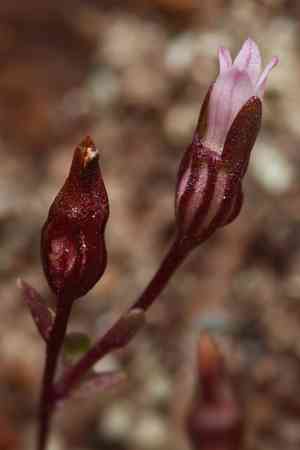
Griffin's bellflower (Campanula griffinii)
Also known as: Griffin's Bellflower
Griffin's bellflower, a delightful perennial known for its bell-shaped blooms, is a member of the Campanula family. Typically displaying shades of purple with delicate white edges, these flowers are a magnet for pollinators. Ideal for rock gardens, its compact, mound-forming foliage ensures a profusion of blossoms. This plant flourishes in cool climates with well-drained soil and benefits from partial to full sun exposure.
In This Article
Attributes of Griffin's bellflower
Lifespan
Perennial
Plant Type
Herb
Plant Height
20-50 cm
Spread
Varies, usually not extensive
Leaf Color
Green
Flower Size
2-4 cm
Flower Color
Blue to violet
Images of Griffin's bellflower
Quickly Identify Griffin's bellflower
1
Campanula griffinii can be identified by its bell-shaped flowers which are typically blue to violet in color. The plant has slender, upright stems and lance-shaped leaves with serrated edges.
Scientific Classification of Griffin's bellflower
Phylum
Vascular plants
Class
Dicotyledons
Order
Asterales
Family
Bellflower
Genus
Bellflowers
Species
Griffin's bellflower
Planting and Growing of Griffin's bellflower
Care Difficulty
Moderate
Watering Schedule
Every 3 days
Sunlight Requirements
Partial sun
Sunshine Duration
6-10 hours
Ideal Temperature
60-75℉
Soil Type
Potting Mix, Peat Mix
Soil pH
6.5-7.5
Fertilizer Type
Balanced
Pruning Season
Spring, Summer
Pruning Area
Branches, Leaves
Pruning Frequency
2 times a year
Repotting Season
Spring
Pot Type
Plastic, Ceramic
 How to Water Griffin's bellflower?
Campanula griffinii thrives when the soil is kept consistently moist but not waterlogged. A general rule of thumb is to water until about 200 ml of water drains from the pot's bottom. This ensures that water reaches the root system without leaving the soil overly saturated.
What are the symptoms of an underwatered Griffin's bellflower?
›
What should I do if my Griffin's bellflower is not getting enough water?
›
What are the symptoms of an overwatered Griffin's bellflower?
›
How to save an overwatered Griffin's bellflower?
›
 What Are the Sunlight Requirements for Griffin's bellflower?
Partial sun exposure is ideal for Campanula griffinii, promoting compact growth and abundant blooms. Adequate light encourages strong, healthy foliage and increases the plant's resilience to environmental stress.
Optimal Placement
›
Balancing Shade
›
Adjusting Light Seasonally
›
 What Is the Ideal Temperature Range for Griffin's bellflower?
The ideal temperature range for Campanula griffinii lies between 60°F and 75°F. This range promotes optimal photosynthesis and metabolic activities, ensuring healthy growth and vibrant flowering. At this temperature, the plant can efficiently use nutrients and maintain moisture levels without stress.
 What Soil is Best for Griffin's bellflower?
Campanula griffinii benefits from well-drained soil to prevent root rot. The well-drained soil ensures that water doesn't stagnate around the roots, promoting healthy growth and preventing the roots from suffocating. This plant thrives in moderately fertile soil, which provides essential nutrients without being overly rich. This balance supports sustainable growth, maintaining the plant's vigor and its charming blooms. Consistent soil moisture helps avoid stress on Campanula griffinii. While the soil should not be soggy, regular watering in well-draining soil ensures the plant receives ample hydration necessary for lush growth.
 How to Fertilize Griffin's bellflower?
For Campanula griffinii, the amount of fertilizer should be carefully measured to avoid over- or under-feeding. A typical application would involve using a balanced 10-10-10 liquid fertilizer at half strength or a slow-release fertilizer following the manufacturer's instructions. It's important to ensure that the soil is moist before applying any fertilizer.
 How to Prune Griffin's bellflower?
Begin by inspecting the plant for any dead or damaged stems and flowers. Use sharp, clean pruning shears to remove these parts at their base. For shaping, trim back overgrown sections to maintain the desired form. Aim to cut just above a leaf node to encourage new growth. Regularly remove spent blooms to direct the plant's energy towards producing more flowers. If the Campanula griffinii has become leggy or sparse, consider a more intensive pruning. Cut back one-third of the oldest stems near the base. This method encourages the growth of new, vigorous shoots, enhancing the overall health and aesthetic of the plant. Always sterilize tools before and after to prevent disease transmission.
More About Pruning Techniques→
 How to Propagate Griffin's bellflower plant?
1
Collect seeds from mature plants and sow them in seedling trays filled with well-draining soil. Lightly press the seeds into the soil surface and cover them with a thin layer of vermiculite or sand. Water gently and place the trays in a warm, bright location away from direct sunlight.
2
Select healthy, non-flowering stems for cuttings and make a clean cut just below a node using pruning shears. Each cutting should be around 10-15 cm long. Remove the lower leaves, keeping only the top pair to reduce water loss and promote root growth.
3
Carefully dig up the plant and separate the clumps, ensuring each division has roots and shoots attached. Replant the divisions in prepared soil, water thoroughly, and keep them shaded until new growth is established.
 How to Repot Griffin's bellflower plant?
1
Campanula griffinii signals its need for repotting when roots become visibly entangled at the pot's base or they start spiraling around the pot's interior. This typically manifests as stunted growth or reduced flowering. Ideally, repotting should be done when these signs are observed, ensuring the plant is at its healthiest and most receptive state during Spring or Summer.
2
Select a pot that is one size larger than the current one, with adequate drainage holes to prevent waterlogging. Using a slightly larger pot ensures adequate root expansion space, promoting optimal growth without overwhelming the plant. The use of terra cotta is beneficial as it allows for better air exchange, which mimics natural conditions.
3
Choosing the right soil is crucial. A well-draining potting mix is preferred to prevent root rot. Incorporating sand or perlite into the soil mix ensures enhanced aeration and water movement, which supports Campanula griffinii's growth and prevents water retention issues that could harm its roots.
Learn More About Griffin's bellflower Diseases
Anthracnose
Bacterial Leaf Spot
Bacterial Soft Rot
Bacterial Wilt
Crown Gall
Cyst Nematode
Damping-off
Downy Mildew
Drought Stress
Fusarium Wilt
Gray Mold
Leaf Spot
Mosaic
Nutrient Deficiency
Nutrient Toxicity
Powdery Mildew
Root Rot
Root-knot Nematode
Rusts
Sooty Mold
Spider Mites
Temperature Stress
Thrips Damage
White Mold



