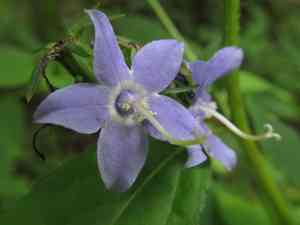
American Bellflower (Campanula americana)
Also known as: Tall Bellflower, American Bellflower
The American Bellflower, also called the Tall Bellflower, typically reaches heights between 91 and 152 cm. While often cultivated as an annual, it has a tendency to self-seed easily.
In This Article
Attributes of American Bellflower
Lifespan
Annual, Biennial, Perennial
Plant Type
Herb
Plant Height
91 cm to 1.8 m
Spread
30 cm to 60 cm
Leaf Color
Green Blue
Flower Size
2.5 cm to 8 cm
Flower Color
Blue Purple Lavender
Images of American Bellflower
Quickly Identify American Bellflower
1
Funnel-shaped flowers in blue to violet hues, occasionally white.
2
Sturdy stems reaching 3-6 feet (91-183 cm) with toothed ovate leaves.
3
Capsule-like fruit with small, erect segments releasing minute, flat seeds.
4
Lance to narrowly egg-shaped leaves, 3-6 inches (7.6-15.2 cm) long.
5
Erect, simple or sparsely branched stem with milky sap and occasional hair.
Scientific Classification of American Bellflower
Phylum
Vascular plants
Class
Dicotyledons
Order
Asterales
Family
Bellflower
Genus
Bellflowers
Species
American Bellflower
Planting and Growing of American Bellflower
Care Difficulty
Easy
Watering Schedule
Every 8 days
Sunlight Requirements
Partial sun
Sunshine Duration
4-8 hours
Ideal Temperature
65-75℉
Soil Type
Potting Mix, Peat Mix
Soil pH
5.5-7.5
Fertilizer Type
Balanced
Pruning Season
Spring, Summer
Pruning Area
Branches, Leaves
Pruning Frequency
2 times a year
Repotting Season
Spring
Pot Type
Plastic, Ceramic
 How to Water American Bellflower?
Campanula americana thrives best when the soil is evenly moist but not waterlogged. Ideally, water until the top 2-3 inches of soil feel damp, which generally requires about 250 ml. This hydration ensures the plant's roots are absorbing sufficient moisture, providing the necessary conditions for growth and blooming.
What are the symptoms of an underwatered American Bellflower?
›
What should I do if my American Bellflower is not getting enough water?
›
What are the symptoms of an overwatered American Bellflower?
›
How to save an overwatered American Bellflower?
›
 What Are the Sunlight Requirements for American Bellflower?
Campanula americana prefers partial sun to full sun, thriving with 4 to 6 hours of sunlight daily. Proper light aids in vigorous blooming and sturdy stem development.
More About Sunlight Requirements Techniques→
Optimal Sun Exposure
›
Adjusting Light Levels
›
Benefits of Ideal Lighting
›
 What Is the Ideal Temperature Range for American Bellflower?
The ideal temperature range for Campanula americana is between 65°F and 75°F. This range promotes robust growth and vibrant flowering in the plants. Maintaining these temperatures ensures that the plant's metabolic processes are carried out efficiently, leading to healthy development.
 What Soil is Best for American Bellflower?
Campanula americana thrives in soils with good drainage, preventing root rot and allowing the plant to access its needed nutrients. Well-drained soil ensures healthy root development and vibrant blooms. Incorporating moderate organic matter into the soil enhances its fertility, providing essential nutrients to Campanula americana. This helps in sustaining its growth and overall plant health. The plant benefits from soil that can retain adequate moisture, especially during dry spells. Moisture retention aids in sustaining growth without waterlogging.
 How to Fertilize American Bellflower?
Campanula americana requires moderate amounts of fertilizer, with care not to over-apply. Use a balanced liquid fertilizer diluted to half-strength, applying about 0.5 to 1 teaspoon per gallon of water every two weeks during the growing season.
 How to Prune American Bellflower?
Begin pruning by removing any dead or damaged stems. Focus on shaping the plant by cutting back overgrown areas, which will promote a fuller shape and encourage new flower growth. Regularly remove spent blooms, known as deadheading, throughout the growing season to encourage a longer blooming period and to prevent the plant from redirecting energy to seed production.
More About Pruning Techniques→
 How to Propagate American Bellflower plant?
1
To start, fill a seed tray with potting mix and moisten it lightly. Scatter Campanula americana seeds evenly across the surface, pressing them gently into the soil. Do not cover them as they need light to germinate.
2
Place the seed tray in a location with bright, indirect sunlight. Maintain a temperature of around 18-21°C (65-70°F) for optimal germination. Keep the soil moist but not soggy by misting it regularly.
3
When seedlings have developed a few true leaves, they can be transplanted into individual pots. Handle them carefully to avoid damage to the delicate roots. Ensure each pot has adequate drainage.
 How to Repot American Bellflower plant?
1
Repotting Campanula americana is essential when you notice roots emerging from the drainage holes or if the growth seems stunted. These signs indicate that the plant has outgrown its current pot and needs more space to thrive.
2
Selecting an appropriate pot for your Campanula americana is crucial. Opt for a pot that is 1-2 inches larger in diameter than the current one, and ensures it has sufficient drainage holes. This promotes root health by preventing waterlogging and encourages proper growth.
3
The soil should be well-draining to prevent water retention which can lead to root rot. A soil mix that includes components like peat, perlite, and organic matter will support healthy root development and facilitate strong plant growth by providing adequate aeration.
Learn More About American Bellflower Diseases
Anthracnose
Bacterial Leaf Spot
Bacterial Soft Rot
Bacterial Wilt
Chemical Injury
Crown Gall
Damping-off
Downy Mildew
Drought Stress
Fusarium Wilt
Gray Mold
Leaf Spot
Mosaic
Nutrient Deficiency
Nutrient Toxicity
Powdery Mildew
Root Rot
Root-knot Nematode
Rusts
Sooty Mold
Spider Mites
Temperature Stress
Thrips Damage
White Mold



