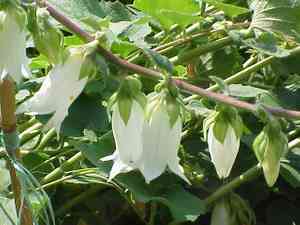
Cornish bellflower (Campanula alliariifolia)
Also known as: Ivory Bells, False Garlic Mustard, Chimney Bellflower
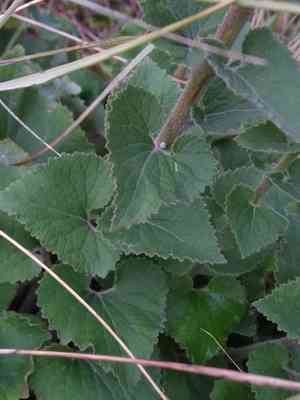
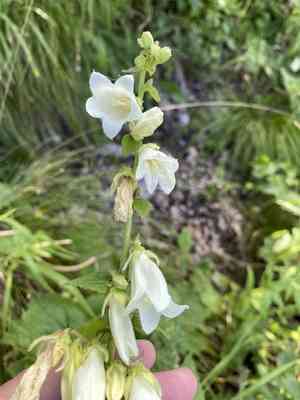
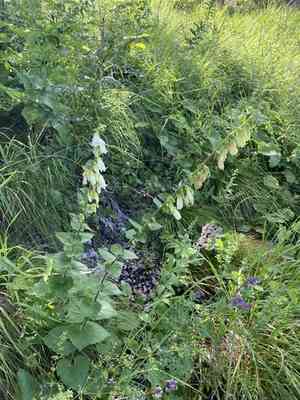
This plant is a robust, clump-forming perennial featuring heart-shaped, toothed, grayish-hairy leaves at its base, each about 8 cm in length. It produces white, tubular-bell shaped flowers, approximately 2 cm long, with pointed petals.
In This Article
Attributes of Cornish bellflower
Lifespan
Perennial
Plant Type
Herb
Plant Height
60 cm
Spread
45 cm
Leaf Color
Green
Flower Size
2-3 cm
Flower Color
Creamy-white
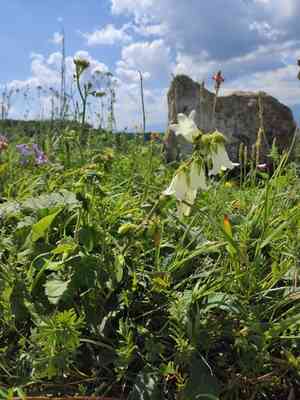
Images of Cornish bellflower
Quickly Identify Cornish bellflower
1
Campanula alliariifolia can be identified by its creamy-white, bell-shaped flowers which droop from tall, wiry stems. The leaves are heart-shaped, and it typically grows to around 60 cm in height.
Scientific Classification of Cornish bellflower
Phylum
Vascular plants
Class
Dicotyledons
Order
Asterales
Family
Bellflower
Genus
Bellflowers
Species
Cornish bellflower
Planting and Growing of Cornish bellflower
Care Difficulty
Easy
Watering Schedule
Every 2 days
Sunlight Requirements
Partial sun
Sunshine Duration
4-8 hours
Ideal Temperature
60-75℉
Soil Type
Potting Mix, Peat Mix
Soil pH
6.5-7.5
Fertilizer Type
Balanced
Pruning Season
Spring, Summer
Pruning Area
Branches, Leaves
Pruning Frequency
2 times a year
Repotting Season
Spring
Pot Type
Plastic, Ceramic
 How to Water Cornish bellflower?
For Campanula alliariifolia, the ideal watering amount is around 300 ml. Ensure the soil is evenly moist but not soggy. Water until you see a little drainage from the bottom of the pot, indicating the roots have absorbed what they need without drowning them.
What are the symptoms of an underwatered Cornish bellflower?
›
What should I do if my Cornish bellflower is not getting enough water?
›
What are the symptoms of an overwatered Cornish bellflower?
›
How to save an overwatered Cornish bellflower?
›
 What Are the Sunlight Requirements for Cornish bellflower?
Partial sun with dappled shade during the afternoon is ideal. This light range helps the plant develop robust foliage, increase bloom production, and improve resistance against environmental stressors.
How much sunlight does Campanula alliariifolia need daily?
›
What is the preferred orientation for Campanula alliariifolia?
›
What happens if the ideal sunlight is provided?
›
 What Is the Ideal Temperature Range for Cornish bellflower?
For optimal growth, Campanula alliariifolia thrives in temperatures ranging from 60°F to 75°F. These conditions replicate its native environment, allowing the plant to focus energy on flower production and foliage growth without the stress of temperature extremes.
 What Soil is Best for Cornish bellflower?
Campanula alliariifolia thrives in well-drained soil, which prevents waterlogging and root rot. Well-drained soil ensures that excess moisture flows away, providing a healthy environment for root growth and nutrient uptake. This plant prefers soil with moderate nutrient content. Balanced nutrients promote steady growth, vibrant flower production, and overall plant health, avoiding issues that excessive or deficient nutrients may cause. A soil pH ranging from neutral to slightly acidic helps maintain nutrient availability, ensuring Campanula alliariifolia receives essential elements. This framework supports strong stems and lush foliage.
 How to Fertilize Cornish bellflower?
For Campanula alliariifolia, use a diluted liquid fertilizer with a 10-10-10 NPK ratio, applying approximately 1 tablespoon per gallon of water. This ensures the plant receives balanced nutrients without overwhelming its delicate systems.
 How to Prune Cornish bellflower?
Use sharp, sterilized shears to remove wilted or dead flowers throughout the flowering period. This not only improves the plant's appearance but also encourages more blooms. To shape the plant, trim back any leggy stems to promote a bushier growth. Focus on cutting at a 45-degree angle, which helps prevent water accumulation and reduces the risk of disease. In late autumn, after the blooming season ends, prune back stems that have become unruly or cross over one another to prevent damage from wind and snow. Cut back about one-third of the plant’s size. This helps prepare Campanula alliariifolia for a dormant period, ensuring a robust return in the spring.
More About Pruning Techniques→
 How to Propagate Cornish bellflower plant?
1
Start by filling seed trays with a fine, well-draining potting mix. Gently press the Campanula alliariifolia seeds into the soil, leaving them exposed to light, which is necessary for germination. Keep the soil consistently moist.
2
For cutting propagation, use a sharp knife to take 4-6 inch cuttings from a healthy parent plant. Remove the lower leaves, leaving a couple at the top. Dip the cut end in rooting hormone before planting.
3
In early spring, carefully dig up a mature Campanula alliariifolia plant. Using a sharp spade, divide the plant into smaller sections, ensuring each section has roots attached. Replant immediately into prepared garden soil.
 How to Repot Cornish bellflower plant?
1
Campanula alliariifolia shows signs of needing a repot when the roots begin to circle the pot or emerge from drainage holes. Additionally, reduced growth and yellowing leaves indicate it's time for a change. Ideally, repot during spring or autumn when the plant is not in peak flowering, minimizing stress.
2
Select a pot that is one size larger than the current one. Ensure it has adequate drainage holes to prevent waterlogging, which can lead to root rot. Using a slightly larger pot encourages better root expansion and ensures the plant has room to grow, which is vital for healthy foliage and flowering.
3
Opt for a well-drained potting mix, rich in organic matter. This ensures the plant gets ample nutrients while preventing water retention around the roots. A good mix supports robust growth, helps retain moisture without causing waterlogged conditions, and matches the plant's natural habitat conditions.
Learn More About Cornish bellflower Diseases
Anthracnose
Bacterial Leaf Spot
Bacterial Soft Rot
Bacterial Wilt
Black Spot
Chemical Injury
Crown Gall
Cyst Nematode
Damping-off
Downy Mildew
Drought Stress
Fusarium Wilt
Gray Mold
Leaf Curl
Leaf Spot
Mosaic
Nutrient Deficiency
Nutrient Toxicity
Powdery Mildew
Root Rot
Root-knot Nematode
Rusts
Sooty Mold
Spider Mites
Temperature Stress
Thrips Damage
White Mold



