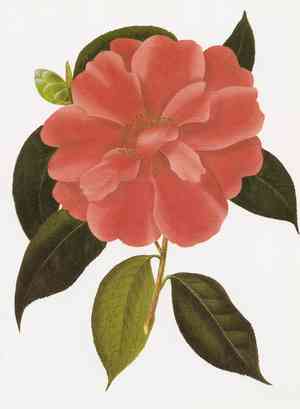
Temple flower (Camellia reticulata)
Also known as: Reticulated Camellia, Netz-camellia
Temple flower (Camellia reticulata) gets its Latin name reticulata, or net-like, from the net-like pattern of veins on its leaves. This flower is the floral emblem of China's Yunnan province. This is a popular ornamental shrub or small tree that only grows in warmer climates since it has almost no frost-hardiness.
In This Article
Attributes of Temple flower
Lifespan
Perennial
Plant Type
Tree, Shrub
Plant Height
10 m to 15 m
Spread
5 m
Leaf Color
Green
Flower Size
7 cm to 10 cm
Flower Color
Red Pink
Images of Temple flower
Quickly Identify Temple flower
1
Largest blossoms within genus, reaching 5-10 inches (13-25 cm) in diameter.
2
Dark green leaves, 3-5 inches (7.6-12.7 cm) long, with heavily serrated edges.
3
Fruit is a 0.5-1.5 inches (1.27-3.81 cm) capsule divided into 3 segments.
4
Vertical growth potential up to 50 feet (15 meters) distinguishes temple flower from other shrubs.
5
Petals have ruffled edges, creating a textured appearance in vibrant pink, red, or white.
Scientific Classification of Temple flower
Phylum
Vascular plants
Class
Dicotyledons
Order
Ericales
Family
Tea
Genus
Camellias
Species
Temple flower
Planting and Growing of Temple flower
Care Difficulty
Hard
Watering Schedule
Every 3 days
Sunlight Requirements
Partial sun
Sunshine Duration
6-10 hours
Ideal Temperature
60-75℉
Soil Type
Potting Mix, Peat Mix
Soil pH
6.5-7.5
Fertilizer Type
Balanced
Pruning Season
Spring, Summer
Pruning Area
Branches, Leaves
Pruning Frequency
2 times a year
Repotting Season
Spring
Pot Type
Plastic, Ceramic
 How to Water Temple flower?
For Camellia reticulata, the watering amount should be around 500 milliliters per session, ensuring that the soil feels evenly moist but not waterlogged. This plant prefers a consistently moist environment, so it's important to water until you see a small amount of water draining from the pot's bottom, indicating that the roots have been sufficiently soaked.
What are the symptoms of an underwatered Temple flower?
›
What should I do if my Temple flower is not getting enough water?
›
What are the symptoms of an overwatered Temple flower?
›
How to save an overwatered Temple flower?
›
 What Are the Sunlight Requirements for Temple flower?
Camellia reticulata benefits from partial sun, ideally receiving morning sunlight. This light condition encourages robust bloom development and maintains optimal photosynthetic efficiency.
More About Sunlight Requirements Techniques→
How much light does Camellia reticulata need?
›
What are the challenges in providing ideal light?
›
How will ideal light conditions benefit the plant?
›
 What Is the Ideal Temperature Range for Temple flower?
The ideal temperature range for Camellia reticulata is between 60°F and 75°F. Within this range, the plant experiences optimal growth, producing lush foliage and vibrant blooms. This range helps balance humidity and soil moisture, ensuring that the plant receives sufficient nutrients and water uptake. A stable temperature within this range prevents stress and supports overall health, promoting strong root development.
 What Soil is Best for Temple flower?
Camellia reticulata thrives in well-draining soil that prevents water from pooling around the roots. This helps prevent root rot and ensures the plant has access to the oxygen it needs. This plant benefits from soil rich in organic matter, which provides essential nutrients for robust growth and vibrant blooms. Organic matter improves soil structure and nutrient retention. The soil should be kept consistently moist but not waterlogged. Mulching can help maintain moisture levels, ensuring the Camellia reticulata receives a steady supply of water essential for its growth.
 How to Fertilize Temple flower?
For Camellia reticulata, the recommended amount for liquid fertilizer is typically half the concentration suggested on the packaging. For the slow-release type, apply approximately 1/4 cup per plant, distributing evenly around the base. Monitor plant response and adjust as necessary.
 How to Prune Temple flower?
Begin by removing any dead or diseased wood, cutting back to healthy tissue. 2. Thin out congested areas to improve air circulation, selecting branches that cross or rub against each other. 3. Trim back to just above a leaf node or bud to encourage outward growth. 4. Shape the plant to maintain its natural form, avoiding hard lines or severe cuts. Consider the natural shape of Camellia reticulata, which tends to be open and airy. Prune to maintain this form while removing any branches that notably disrupt this natural flow, ensuring the plant maintains an aesthetically pleasing form.
More About Pruning Techniques→
 How to Propagate Temple flower plant?
1
Choose healthy, semi-hardwood cuttings from the mature plant. A cutting of about 5-6 inches is ideal; make sure it includes a few leaves and a node for optimal rooting.
2
Remove the lower leaves from the cuttings to leave a few on the top. Dip the cut end into rooting hormone powder to stimulate root growth before planting them in a suitable medium.
3
Place the prepared cuttings into a potting mix, ensuring that they stand upright and the leaves do not touch the soil. Water the planted cuttings gently and cover with a plastic bag to maintain humidity.
 How to Repot Temple flower plant?
1
Camellia reticulata shows signs for repotting when its roots start to emerge from the drainage holes or the growth appears stunted. Spring and autumn are ideal seasons, as moderate temperatures and active growth periods help minimize plant stress.
2
Selecting the right pot involves opting for one that is 1-2 inches larger in diameter than the current pot, with excellent drainage to prevent waterlogging. Such a choice ensures that the roots have adequate space for new growth, promoting a healthy flowering season.
3
Opt for a well-draining, acidic soil mix rich in organic matter and nutrients. This environment supports Camellia reticulata's preference for slightly acidic conditions, enhances water retention without compaction, and provides essential nutrients for vigorous plant growth.
Learn More About Temple flower Diseases
Anthracnose
Bacterial Leaf Spot
Black Spot
Chemical Injury
Crown Gall
Cyst Nematode
Damping-off
Drought Stress
Fusarium Wilt
Gray Mold
Leaf Curl
Leaf Spot
Mosaic
Nutrient Deficiency
Nutrient Toxicity
Powdery Mildew
Root Rot
Root-knot Nematode
Sooty Mold
Spider Mites
Temperature Stress
Thrips Damage
White Mold



