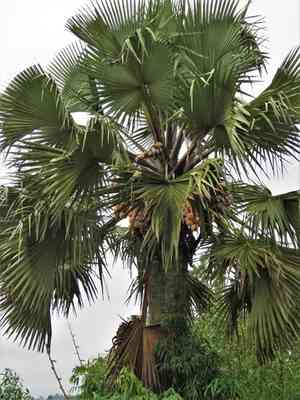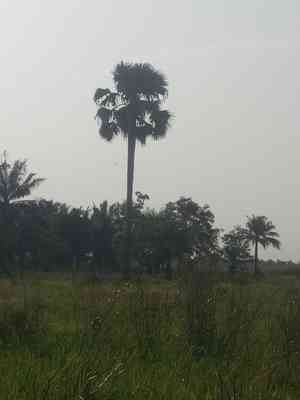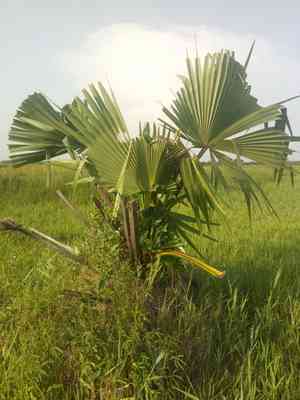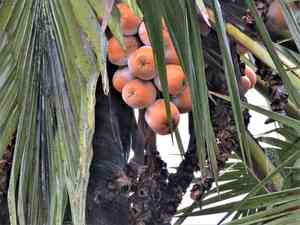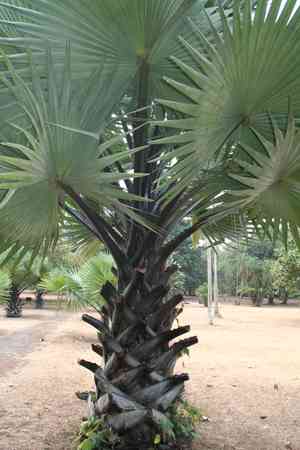
African palmyra palm(Borassus aethiopum)

African palmyra palm (Borassus aethiopum)

Also known as: Palmyra palm, African fan pam, Fan palm, Deleb palm, Borassus palm, Rhun Palm

The typical form of Borassus aethiopum is a solitary palm that can reach heights of up to 25 meters (82 feet) and a diameter of 1 meter (3 feet 3 inches) at the base. However, in the floodplains of East African rivers like the Rufiji in Tanzania and the Tana in Kenya, a closely related variety exists. This floodplain form can grow up to 30.5 meters (100 feet) tall and can be as thick as 2.1 meters (7 feet) at breast height, maintaining similar thickness in the upper part of the trunk. The fan-shaped leaves of this variety can be up to 3.66 meters (12 feet) wide with petioles that are about 2 meters (6 feet 7 inches) long. This variety is also noted for its larger female flowers and substantial fruits, containing 1-3 seeds each. It is considered one of the most massive of all palm species.

Attributes of African palmyra palm

Lifespan
Perennial
Plant Type
Tree
Plant Height
25 m
Spread
5 m
Leaf Color
Green
Flower Size
2 cm
Flower Color
Cream to yellow

ForwardPlant - Identify plants with a snap

Identify and diagnose plants, get toxicity alerts, and explore safety guides for all types of fungi.

Try for Free

Images of African palmyra palm

African palmyra palm(Borassus aethiopum)

Quickly Identify African palmyra palm

1
Look for a tall, single-trunked palm with large, fan-shaped leaves and a distinctive swelling at the trunk base in mature specimens. Its trunk is typically unbranched and has a rough, fibrous surface.

Scientific Classification of African palmyra palm

Phylum
Vascular plants
Class
Monocotyledons
Order
Arecales
Family
Palm
Genus
Palmyra palms
Species
African palmyra palm

Planting and Growing of African palmyra palm

Care Difficulty
Hard
Watering Schedule
Every 3 days
Sunlight Requirements
Full sun
Sunshine Duration
6-10 hours
Ideal Temperature
75-85℉
Soil Type
Potting Mix, Peat Mix
Soil pH
6.5-7.5
Fertilizer Type
Balanced
Pruning Season
Spring, Summer
Pruning Area
Branches, Leaves
Pruning Frequency
2 times a year
Repotting Season
Spring
Pot Type
Plastic, Ceramic

water icon How to Water African palmyra palm?

Borassus aethiopum prefers a deep, thorough watering approach. The amount should be around 2000 milliliters to ensure the water reaches the deeper roots, simulating its natural habitat. Allow the top inch of soil to dry out between waterings.
What are the symptoms of an underwatered African palmyra palm?
What should I do if my African palmyra palm is not getting enough water?
What are the symptoms of an overwatered African palmyra palm?
How to save an overwatered African palmyra palm?

sunlight icon What Are the Sunlight Requirements for African palmyra palm?

Sunlight Requirements: Full sun, Partial sun
Duration of light: 6-12 hours daily
Borassus aethiopum prospers in an environment offering full to partial sunlight, ensuring healthy growth and robust leaves. Optimal light exposure encourages photosynthesis and sturdy structural development.
What is the ideal lighting condition for Borassus aethiopum?
How can I achieve the ideal lighting condition?
What are the benefits of ideal lighting for Borassus aethiopum?

temperature icon What Is the Ideal Temperature Range for African palmyra palm?

Ideal Temperature: 75 ~ 85℉
Borassus aethiopum thrives best in temperatures between 75°F and 85°F. This range ensures optimal growth and physiological functions. Maintaining this range is crucial for the plant's cell processes, photosynthesis, and overall health.

soil icon What Soil is Best for African palmyra palm?

Soil type: Loam, Sandy soil
Soil PH: 6.5 ~ 7.5
Borassus aethiopum thrives best in well-draining soil. Good drainage ensures the roots are not waterlogged, preventing root rot and promoting healthy growth. This palm prefers nutrient-rich soils that can support its robust growth. Nutrient-rich soils provide essential elements such as nitrogen and potassium, which are critical for the development of leaves and fruit. A balanced soil that retains adequate moisture is beneficial for Borassus aethiopum. This helps in sustaining the palm during dry periods by providing continuous water availability without oversaturation.

fertilize icon How to Fertilize African palmyra palm?

Fertilizer type: Balanced
For Borassus aethiopum, a medium to high amount of fertilizer is generally recommended. Liquid fertilizers should be diluted to half-strength, especially if applied every two weeks. Meanwhile, slow-release fertilizers can be used at the manufacturer's recommended rate. Ensure to adjust quantities based on the plant's growth stage and soil fertility.

prune icon How to Prune African palmyra palm?

Pruning Time: Spring, Summer, Autumn, Winter
Start by identifying brown or yellowing fronds which signify they are dead or unsightly. Position yourself safely to have a clear reach to them. Cut the fronds at a 45-degree angle to prevent water retention issues when rainwater rolls down. This angle helps in avoiding diseases. Remove any seedpods or flower stalks that may appear. This helps redirect the plant's energy toward the growth of healthy fronds and trunk. More About Pruning Techniques

propagate icon How to Propagate African palmyra palm plant?

Propagate Time: Late spring, Early summer
1
Collect mature seeds from the Borassus aethiopum fruit. The seeds need to be viable and should be collected from healthy, mature fruits that have been allowed to ripen fully on the plant.
2
Soak the seeds in water for about 24 to 48 hours to help soften the seed coat and enhance germination. This process aids in breaking the seed dormancy and promotes successful seed germination.
3
Sow the seeds in a germination tray filled with potting soil. Ensure that the seeds are planted at an adequate depth (about twice the seed's diameter) and cover lightly with soil.

repot icon How to Repot African palmyra palm plant?

Repotting frequency: Once every 3-4 years
1
Borassus aethiopum needs repotting when its roots start peeking out from the drainage holes. This indicates that the plant has outgrown its current pot and requires more space to grow vigorously. Additionally, if the soil seems compact and doesn't absorb water well, it may be time to refresh it with new soil.
2
Select a pot that is 2-3 inches larger in diameter than the current one. This will provide the roots ample room to expand. Ensure the pot has good drainage holes to prevent waterlogging, which could cause root rot. Using a slightly larger pot also helps maintain the plant's stability as it grows and matures.
3
Opt for a mix that offers excellent drainage like sandy soil with organic matter. It should retain moisture but drain excess water efficiently. This mixture mimics the plant's native habitat, promoting healthy root growth while avoiding waterlogged conditions that can be detrimental.

ForwardPlant - Identify plants with a snap

Find the best spots for them to optimize their health, simply using your phone.

Try for Free