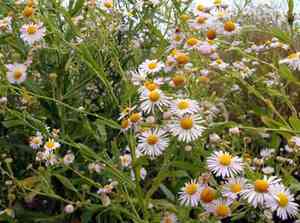
Claspingleaf doll's daisy (Boltonia decurrens)
Also known as: Decurrent False Aster
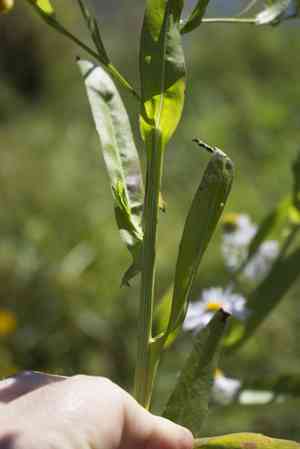
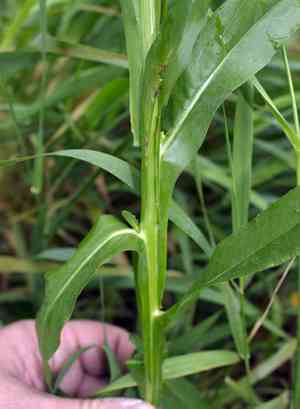
The claspingleaf doll's daisy is a hardy perennial herb known for its tall growth and distinctive winged stems formed by its clasping leaves. It features clusters of small, daisy-like flowers that typically bloom in shades of white or light purple during the late summer. This plant flourishes in moist, well-watered environments, thriving particularly well in lush, water-abundant areas.
In This Article
Attributes of Claspingleaf doll's daisy
Lifespan
Perennial
Plant Type
Herb
Plant Height
1.2 m to 1.8 m
Spread
60 cm to 1.2 m
Leaf Color
Green
Flower Size
2.5 cm to 8 cm
Flower Color
White or lavender
Images of Claspingleaf doll's daisy
Quickly Identify Claspingleaf doll's daisy
1
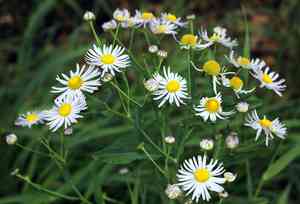
Dome-shaped panicles bear daisy-like flowers with yellow centers, 1 inch (2.5 cm) in diameter.
2
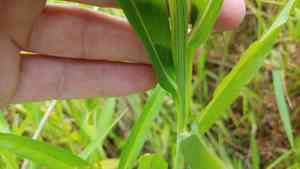
Robust plant reaching up to 6 feet (180 cm) tall, showcasing lance-shaped, clasping leaves.
3
Distinctive obovoid, winged achenes aiding wind dispersal without opening at maturity.
4
Slender, glabrous stems with a bluish hue, averaging 1 inch (2.5 cm) in diameter.
5
Lance-shaped leaves with pinnate venation, decreasing in size upwards, up to 7 inches (18 cm) long.
Scientific Classification of Claspingleaf doll's daisy
Phylum
Vascular plants
Class
Dicotyledons
Order
Asterales
Family
Daisy
Genus
Boltonia
Species
Claspingleaf doll's daisy
Planting and Growing of Claspingleaf doll's daisy
Care Difficulty
Easy
Watering Schedule
Every 8 days
Sunlight Requirements
Full sun
Sunshine Duration
4-8 hours
Ideal Temperature
68-77℉
Soil Type
Potting Mix, Peat Mix
Soil pH
6.5-7.5
Fertilizer Type
Balanced
Pruning Season
Spring, Summer
Pruning Area
Branches, Leaves
Pruning Frequency
2 times a year
Repotting Season
Spring
Pot Type
Plastic, Ceramic
 How to Water Claspingleaf doll's daisy?
Boltonia decurrens requires about 500 milliliters of water per session. The watering should ensure that the soil is moist but not waterlogged, simulating its native habitat. The container should have proper drainage to allow excess water to escape. It is crucial to ensure that the top inch of soil is slightly dry before the next watering to prevent over-saturation.
What are the symptoms of an underwatered Claspingleaf doll's daisy?
›
What should I do if my Claspingleaf doll's daisy is not getting enough water?
›
What are the symptoms of an overwatered Claspingleaf doll's daisy?
›
How to save an overwatered Claspingleaf doll's daisy?
›
 What Are the Sunlight Requirements for Claspingleaf doll's daisy?
Boltonia decurrens ideally thrives in full sun or partial sun, benefiting from 5 to 8 hours of sunlight daily. Proper light exposure enhances flowering profusely and maintains sturdy growth.
What is the ideal lighting condition for Boltonia decurrens?
›
How can I achieve ideal sunlight for this plant?
›
What are the benefits of providing ideal light?
›
 What Is the Ideal Temperature Range for Claspingleaf doll's daisy?
Boltonia decurrens thrives best in temperatures ranging from 68°F to 77°F. This optimal temperature range ensures effective photosynthesis and growth, while helping to maintain the plant's metabolic processes. It's crucial to maintain this range to avoid stressing the plant, especially during the critical growth phases.
 What Soil is Best for Claspingleaf doll's daisy?
Boltonia decurrens thrives in well-draining soil, which helps prevent root rot by allowing water to percolate through its roots efficiently. This characteristic is vital for maintaining the plant’s health and ensuring robust growth. This plant benefits from soil that's rich in organic matter. Nutrient-rich soil provides essential nutrients that enable the plant to flourish, encouraging lush foliage and prolific blooming. While Boltonia decurrens prefers well-draining soil, it also requires soil that can retain moderate moisture levels. This balance helps the plant maintain hydration without becoming waterlogged, supporting steady growth.
 How to Fertilize Claspingleaf doll's daisy?
For Boltonia decurrens, it is essential to maintain a balanced nutrition regime. Use a liquid fertilizer diluted to half strength every two weeks during the growing season. When applying slow-release fertilizers, a handful per plant (approximately 2-3 tablespoons) during early spring should suffice.
 How to Prune Claspingleaf doll's daisy?
Start pruning by removing any dead or damaged stems. Cut back all stems to a third of their height to control size and promote denser growth during the upcoming season. Pinch back the tips of new shoots to encourage branching. This helps in forming a fuller, bushier plant that is both healthier and more visually appealing. At the end of the blooming period in late summer, trim the plant to encourage a tidy appearance. This also helps in directing energy into root development for winter.
More About Pruning Techniques→
 How to Propagate Claspingleaf doll's daisy plant?
1
Before planting, soak the seeds in lukewarm water for 24 hours to break dormancy and promote faster germination.
2
Select a healthy stem and make a clean cut just below a node. Remove any leaves from the lower half to prevent rot and encourage root development.
3
Gently remove the plant from its pot or ground, and use your hands or a tool to separate rooted sections, ensuring each has roots attached before replanting.
 How to Repot Claspingleaf doll's daisy plant?
1
Boltonia decurrens benefits from repotting when it outgrows its current container or exhibits signs of reduced vigor, such as slower growth or water drainage issues. Typically, repotting is best done in early spring or autumn, when the plant is not actively blooming, allowing it time to acclimate to its new environment without stressing over flower production.
2
Select a pot that is just one or two sizes larger than the current one, ensuring it has good drainage holes. A pot that's too large can lead to overwatering and root rot. The right pot size ensures proper water balance and allows roots enough space to expand without overwhelming the plant.
3
Opt for a well-draining, loamy soil mix to ensure adequate aeration and prevent root rot. A mixture of equal parts peat, perlite, and garden loam serves well, helping to retain necessary moisture while also allowing excess water to escape easily, promoting healthy root development.
Learn More About Claspingleaf doll's daisy Diseases
Anthracnose
Bacterial Leaf Spot
Bacterial Soft Rot
Bacterial Wilt
Black Spot
Chemical Injury
Crown Gall
Cyst Nematode
Damping-off
Downy Mildew
Drought Stress
Fusarium Wilt
Gray Mold
Leaf Spot
Mosaic
Nutrient Deficiency
Nutrient Toxicity
Powdery Mildew
Root Rot
Root-knot Nematode
Rusts
Sooty Mold
Spider Mites
Temperature Stress
Thrips Damage
White Mold



