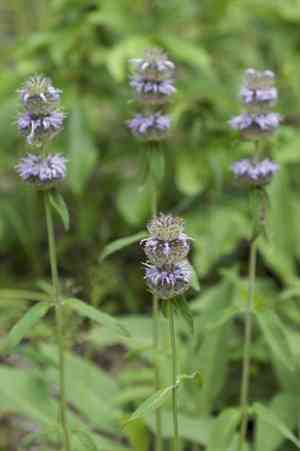
Downy pagoda plant (Blephilia ciliata)
Also known as: Downy Wood Mint, Ciliate Woodmint
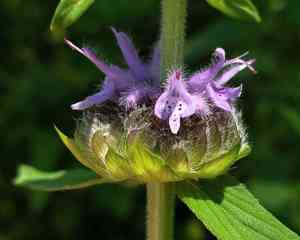
The downy pagoda plant, scientifically known as Blephilia ciliata, belongs to the mint family and is native to eastern North America. The name "Blephilia" is derived from the Greek word for "eyelash," a nod to the plant's hair-like bracts on its flowers. Despite thriving in colder regions, the plant's basal leaves stay green throughout the year.
In This Article
Attributes of Downy pagoda plant
Lifespan
Perennial
Plant Type
Herb
Plant Height
30 cm to 76 cm
Spread
20 cm to 45 cm
Leaf Color
Green
Flower Size
2.5 cm
Flower Color
White Pink Purple Lavender
Images of Downy pagoda plant
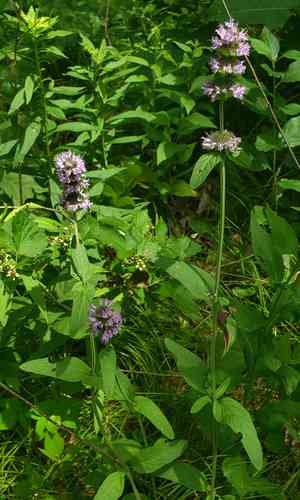
Quickly Identify Downy pagoda plant
1
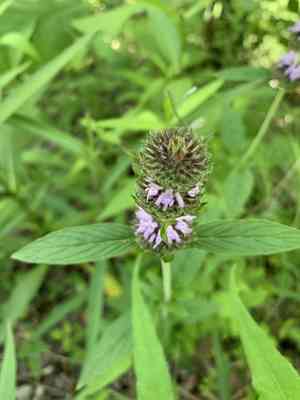
Linear, serrated leaves emit a refreshing aroma when crushed.
2
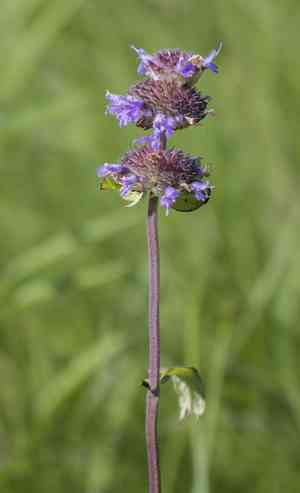
Dense clusters of blue-purple tubular flowers with distinctive hair-fringed bracts.
3
Dry nutlet fruit less than 1/8 inch (3 mm) in diameter.
4
Stem is stout, unbranched, 4-angled, with short white hairs.
5
Leaves are broadly oblong to lanceolate, covered in white pubescence.
Scientific Classification of Downy pagoda plant
Phylum
Vascular plants
Class
Dicotyledons
Order
Lamiales
Family
Mint
Genus
Pagoda plant
Species
Downy pagoda plant
Planting and Growing of Downy pagoda plant
Care Difficulty
Easy
Watering Schedule
Every 2 days
Sunlight Requirements
Full sun
Sunshine Duration
4-8 hours
Ideal Temperature
60-75℉
Soil Type
Potting Mix, Peat Mix
Soil pH
6-7.5
Fertilizer Type
Balanced
Pruning Season
Spring, Summer
Pruning Area
Branches, Leaves
Pruning Frequency
2 times a year
Repotting Season
Spring
Pot Type
Plastic, Ceramic
 How to Water Downy pagoda plant?
Blephilia ciliata prefers its soil to be kept consistently moist but not waterlogged. When watering, the goal is to allow the water to saturate the soil without excess water pooling at the surface or bottom of the pot. This ensures that the roots receive ample moisture without being surrounded by too much water, which could lead to rot.
What are the symptoms of an underwatered Downy pagoda plant?
›
What should I do if my Downy pagoda plant is not getting enough water?
›
What are the symptoms of an overwatered Downy pagoda plant?
›
How to save an overwatered Downy pagoda plant?
›
 What Are the Sunlight Requirements for Downy pagoda plant?
Thrives in full to partial sun, with sun exposure ideally between 6 to 8 hours. Suitable light encourages dense growth and enhances the plant's ability to bloom prolifically.
More About Sunlight Requirements Techniques→
What is the ideal lighting amount for Blephilia ciliata?
›
How can I achieve the ideal lighting for Blephilia ciliata?
›
What are the benefits of providing ideal lighting to Blephilia ciliata?
›
 What Is the Ideal Temperature Range for Downy pagoda plant?
Blephilia ciliata thrives best within temperatures ranging from 60°F to 75°F. This range provides the optimal thermal conditions for physiological processes, such as photosynthesis and nutrient absorption, to occur efficiently. Maintaining these temperatures ensures healthy, robust growth.
 What Soil is Best for Downy pagoda plant?
Blephilia ciliata thrives in well-drained soil, preventing root rot by allowing excess water to escape. This is crucial for promoting healthy root systems and ensuring the plant’s longevity. The plant prefers soil with moderate nutrient levels, which supports robust growth and abundant flowering. This balance prevents over-fertilization issues that can harm growth. While well-draining, the soil should also retain some moisture to keep consistent humidity around the roots, essential for steady growth without drought stress.
 How to Fertilize Downy pagoda plant?
For Blephilia ciliata, use a balanced fertilizer with an N-P-K ratio of 10-10-10. For liquid fertilizers, dilute to half the recommended strength, approximately 1 tablespoon per gallon of water. For slow-release granules, apply about 1 tablespoon per square foot around the base of the plant.
 How to Prune Downy pagoda plant?
Begin by removing any dead or diseased stems at their base to promote new, healthy growth. Next, focus on thinning out the plant by cutting back any overgrown or leggy stems. This helps improve air circulation and light penetration, reducing the risk of disease. Be sure to use clean, sharp pruning shears to make clean cuts. To maintain a neat shape, prune the plant to your desired size after the flowering period. Trim back stems to just above a set of leaves or a budding node to encourage new branching. This not only keeps Blephilia ciliata in good form but also boosts the plant’s overall vigour for the next growing season.
More About Pruning Techniques→
 How to Propagate Downy pagoda plant plant?
1
Allow the flower heads of Blephilia ciliata to dry on the plant before collecting seeds. Gently shake the dry flower heads over a container to release the seeds, ensuring the seeds are mature and dry.
2
Use well-draining soil in seed trays or a garden bed. Enrich with organic matter to promote healthy seedling development. Adequate drainage is crucial to prevent seed rot and promote healthy root growth.
3
Sow the seeds thinly on the surface of prepared soil and cover lightly. Water gently to keep the soil moist but not waterlogged. Ensure consistent moisture levels to support germination.
 How to Repot Downy pagoda plant plant?
1
Blephilia ciliata should be repotted when you notice its roots are crowding the current pot or growing through drainage holes. Another indicator is when the soil dries out quicker than usual, suggesting the plant has outgrown its home.
2
Choose a pot that is one size larger than the current one, with adequate drainage holes for excess water to escape. Terracotta pots are an excellent choice; they facilitate better breathability for the roots and prevent waterlogging.
3
Select a soil mix that drains well, perhaps amended with sand or perlite. This helps prevent root rot and ensures the roots have access to both nutrients and oxygen.



