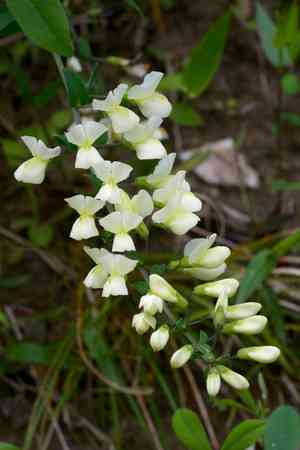
Longbract wild indigo (Baptisia bracteata)
Also known as: Plains wild indigo, Cream white indigo, Large-bracted Wild Indigo, Paque-paque Plant
Blue false indigo (Baptisia australis) is a member of the pea family (Fabaceae). The name "Baptisia" translates to "to dye," reflecting its historical use for dyeing fabrics. For centuries, people have utilized this plant's vibrant flowers to color their clothing. It is indigenous to North America.
In This Article
Attributes of Longbract wild indigo
Lifespan
Perennial
Plant Type
Herb
Plant Height
30 cm to 91 cm
Spread
30 cm to 60 cm
Leaf Color
Green
Flower Size
2.5 cm
Flower Color
Yellow Green
Images of Longbract wild indigo
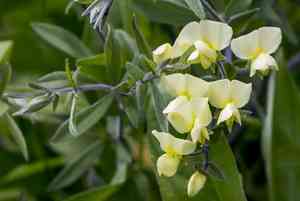
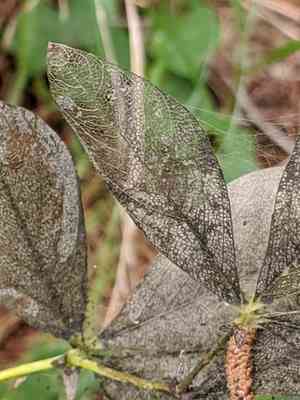
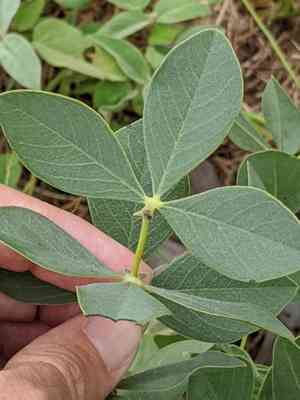
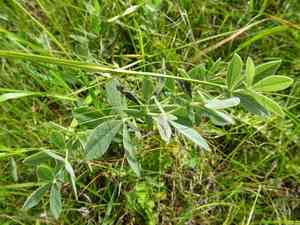
Quickly Identify Longbract wild indigo
1
Identify Baptisia bracteata by its erect stature, compound leaves with three leaflets, and long bracts under its racemes of creamy white flowers. The flowers often have a yellow tint and the plant forms dense clusters.
Scientific Classification of Longbract wild indigo
Phylum
Vascular plants
Class
Dicotyledons
Order
Fabales
Family
Legume
Genus
False Indigo
Species
Longbract wild indigo
Planting and Growing of Longbract wild indigo
Care Difficulty
Easy
Watering Schedule
Every 2 days
Sunlight Requirements
Full sun
Sunshine Duration
4-6 hours
Ideal Temperature
65-75℉
Soil Type
Potting Mix, Peat Mix
Soil pH
6.5-7.5
Fertilizer Type
Balanced
Pruning Season
Spring, Summer
Pruning Area
Branches, Leaves
Pruning Frequency
2 times a year
Repotting Season
Spring
Pot Type
Plastic, Ceramic
 How to Water Longbract wild indigo?
Baptisia bracteata requires approximately 500 ml of water per session. It's important to ensure that the soil is evenly moist, but not waterlogged. Aim for the soil to feel slightly damp when touched, similar to a wrung-out sponge. Over-watering can lead to root rot, so moderation is key.
What are the symptoms of an underwatered Longbract wild indigo?
›
What should I do if my Longbract wild indigo is not getting enough water?
›
What are the symptoms of an overwatered Longbract wild indigo?
›
How to save an overwatered Longbract wild indigo?
›
 What Are the Sunlight Requirements for Longbract wild indigo?
Baptisia bracteata thrives in 6 to 8 hours of daily sunlight, typically full to partial sun conditions. This light range supports optimal growth, maximizing health and blooming intensity.
More About Sunlight Requirements Techniques→
What type of sunlight is best for Baptisia bracteata?
›
How to achieve ideal sunlight for Baptisia bracteata?
›
What are the benefits of ideal sunlight for Baptisia bracteata?
›
 What Is the Ideal Temperature Range for Longbract wild indigo?
Baptisia bracteata thrives best in temperatures ranging from 65°F to 75°F. These conditions mimic its natural habitat, ensuring optimal photosynthesis and metabolic rates. The plant's enzymes and physiological processes operate most efficiently within this temperature range, allowing for robust growth and development.
 What Soil is Best for Longbract wild indigo?
Baptisia bracteata thrives in well-drained soils, which allow excess water to escape quickly, preventing root rot. This mimics its natural environment, where rainfall is sporadic, and promotes healthy root development and robust growth. This plant prefers soils with moderate fertility. Soils that are too rich can lead to excessive foliage growth with fewer flowers. Balanced soil fertility ensures optimal blooms and maintains the energy distribution between leaves, stems, and flowers. A moderate to moderately high organic matter content helps maintain moisture without waterlogging the roots. This is crucial for maintaining a balanced moisture level, enhancing nutrient availability, and supporting beneficial soil microbes.
 How to Fertilize Longbract wild indigo?
For Baptisia bracteata, a moderate amount of fertilizer is sufficient to support its growth. During the growing season, about 1/4 cup of a balanced granular fertilizer can be used per plant. Be careful not to over-fertilize as it can lead to excessive foliage growth at the expense of flower production.
 How to Prune Longbract wild indigo?
Start by inspecting the plant after the main blooming phase in spring. Remove any dead flowers and cut back stems to approximately 6 inches above the ground in late autumn. Focus on removing crowded or crossing branches to enhance air circulation and light penetration. Perform pruning right after the flowering season in spring to ensure the plant has enough energy for regrowth and to set the stage for abundant blooms next year.
More About Pruning Techniques→
 How to Propagate Longbract wild indigo plant?
1
Gather seeds from mature Baptisia bracteata plants as the seed pods dry out. Ensure that the pods are fully dry to harvest viable seeds. Store them in a cool, dry place until ready for planting.
2
Select healthy stems from the parent plant for cutting propagation. Cut at a 45-degree angle below a node to increase rooting potential, and remove the bottom leaves to reduce water loss.
3
For division propagation, dig up the mature plants in early spring. Separate the plant into sections, ensuring each has a portion of the root system. Replant the divisions promptly to allow establishment.
 How to Repot Longbract wild indigo plant?
1
You should consider repotting Baptisia bracteata when you notice that growth has slowed considerably, which usually means the roots have no space left to grow. Another sign is when you see roots starting to peek out from the drainage holes. Ideal repotting time is early spring before new growth begins.
2
Choose a pot that is only slightly larger than the current one. This allows the roots enough room to grow without overburdening them with too much soil, which could lead to waterlogging and root rot. A pot with ample drainage holes is essential to prevent water from stagnating.
3
Opt for a well-draining, gritty soil mix that mimics the Baptisia's natural habitat. The right soil should allow water to flow freely, reducing the risk of root rot. A gritty mix also provides the necessary support to keep the plant stable in its pot.
Toxicity
ingestion
WARNING
The judgment on toxicity and danger is for reference only. We DO NOT GUARANTEE any accuracy of such judgment. Therefore, you SHALL NOT rely on such judgment. It is IMPORTANT TO SEEK PROFESSIONAL ADVICE in advance when necessary.
Learn More About Longbract wild indigo Diseases
Anthracnose
Bacterial Leaf Spot
Bacterial Wilt
Crown Gall
Cyst Nematode
Damping-off
Downy Mildew
Drought Stress
Fusarium Wilt
Gray Mold
Leaf Curl
Leaf Spot
Mosaic
Nutrient Deficiency
Nutrient Toxicity
Powdery Mildew
Root Rot
Root-knot Nematode
Rusts
Sooty Mold
Spider Mites
Temperature Stress
Thrips Damage
White Mold



