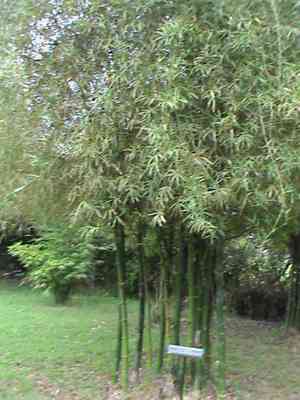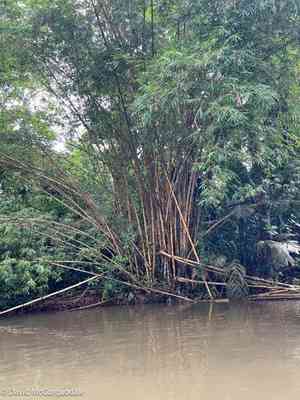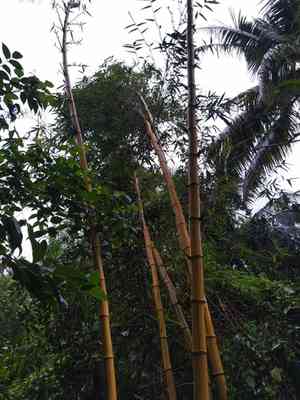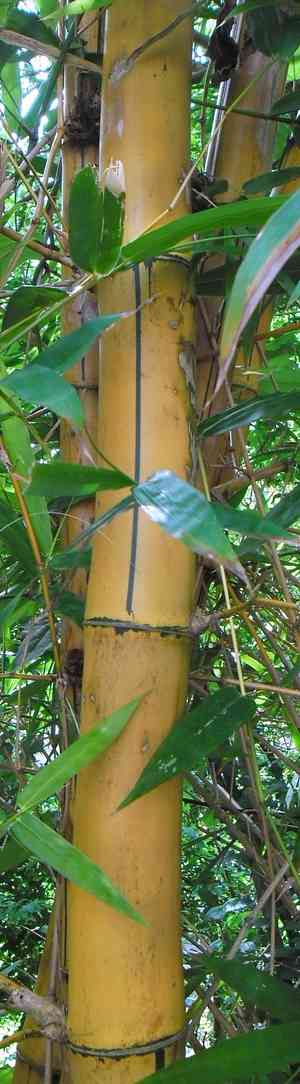
Common bamboo(Bambusa vulgaris)

Common bamboo (Bambusa vulgaris)

Also known as: Green-stripe common bamboo, Wamin bamboo

Common bamboo is a highly versatile and recognizable species, often forming loose clusters that can easily be propagated through clump division or rhizomes. Its practical applications in light construction and crafting are numerous due to its strength and rapid growth.

1. **Construction**:
- **Scaffolding**: Utilized extensively in Asia for its robust and flexible nature.
- **Fencing**: Provides a durable, eco-friendly fencing solution.
- **Panels**: Used for creating lightweight, sturdy wall and floor panels.

2. **Crafting**:
- **Furniture**: Ideal for making chairs, tables, and storage units.
- **Decorative Items**: Suitable for crafting picture frames, lampshades, and wall decor.
- **Baskets**: Excellent for creating strong, flexible baskets for various uses.

Bamboo’s rapid growth and renewability make it an excellent choice for sustainable construction and crafting endeavors.

Attributes of Common bamboo

Lifespan
Perennial
Plant Type
Bamboo
Plant Height
9 m to 21 m
Spread
60 cm to 90 cm
Leaf Color
Green
Flower Size
1 cm to 2 cm
Flower Color
When it does flower, it has small, inconspicuous flowers

ForwardPlant - Identify plants with a snap

Identify and diagnose plants, get toxicity alerts, and explore safety guides for all types of fungi.

Try for Free

Images of Common bamboo

Common bamboo(Bambusa vulgaris)

Quickly Identify Common bamboo

1
Identify Bambusa vulgaris by its large, thick-walled culms that are either bright green or golden-yellow in color. Look for the distinct clumping growth habit and lanceolate, green leaves.

Scientific Classification of Common bamboo

Phylum
Vascular plants
Class
Monocotyledons
Order
Poales
Family
Grass
Genus
Bambusa
Species
Common bamboo

Planting and Growing of Common bamboo

Care Difficulty
Easy
Watering Schedule
Every 4 days
Sunlight Requirements
Full sun
Sunshine Duration
6-10 hours
Ideal Temperature
65-85℉
Soil Type
Potting Mix, Peat Mix
Soil pH
6.5-7.5
Fertilizer Type
Balanced
Pruning Season
Spring, Summer
Pruning Area
Branches, Leaves
Pruning Frequency
2 times a year
Repotting Season
Spring
Pot Type
Plastic, Ceramic

water icon How to Water Common bamboo?

Bambusa vulgaris, or common bamboo, thrives on consistent moisture. Ensure the soil is thoroughly saturated but avoid waterlogging. Typically, about 1000 ml of water per session suffices. Water until the top 5 cm of soil feels moist, which helps mimic its natural, humid habitat.
What are the symptoms of an underwatered Common bamboo?
What should I do if my Common bamboo is not getting enough water?
What are the symptoms of an overwatered Common bamboo?
How to save an overwatered Common bamboo?

sunlight icon What Are the Sunlight Requirements for Common bamboo?

Sunlight Requirements: Full sun, Partial sun
Duration of light: 6 to 8 hours
Full sun to partial sun is ideal for Bambusa vulgaris. Such conditions help maintain vibrant foliage and support steady growth rates, ensuring the plant remains healthy and aesthetically pleasing.
Recommended Light Level
Solution to Achieve Ideal Lighting
Benefits of Ideal Lighting
More About Sunlight Requirements Techniques

temperature icon What Is the Ideal Temperature Range for Common bamboo?

Ideal Temperature: 65 ~ 85℉
For optimal growth, Bambusa vulgaris thrives in temperatures ranging from 65°F to 85°F. This range allows the plant to perform basic physiological functions, such as photosynthesis and respiration, efficiently and supports the development of healthy culms.

soil icon What Soil is Best for Common bamboo?

Soil type: Loam, Sandy loam, Sandy soil
Soil PH: 6.5 ~ 7.5
Bambusa vulgaris thrives in well-drained soil as it prevents waterlogging and root rot. Ensuring good drainage helps the plant absorb nutrients effectively, promoting healthy growth and vibrant foliage. This bamboo species benefits from nutrient-rich soil that provides essential minerals for growth. Regularly replenishing the soil with organic matter like compost encourages robust shoot development and enhances the plant's resilience. While well-drained, the soil should retain adequate moisture to support continuous growth. Mulching can be useful to maintain soil moisture levels, helping Bambusa vulgaris remain lush and vigorous even in dry spells.

fertilize icon How to Fertilize Common bamboo?

Fertilizer type: Balanced
For Bambusa vulgaris, it's important not to over-fertilize. A balanced 10-10-10 NPK liquid fertilizer should be diluted according to the label instructions and applied every two weeks. During the growing season, approximately 1 liter of diluted solution per square meter is adequate.

prune icon How to Prune Common bamboo?

Pruning Time: Spring, Summer, Autumn, Winter
Use sharp pruning shears or a fine-toothed saw for thicker canes. Make sure your tools are clean to avoid transmitting pests or diseases to the bamboo. Sterilize your tools with rubbing alcohol before and after use. Inspect the plant and identify any dead, damaged, or older canes that have stopped producing new foliage. These should be removed to encourage new growth and maintain the plant’s overall health and aesthetics. Thin out dense clusters of canes to improve air circulation within the bamboo clump. This helps reduce the risk of disease and encourages healthy growth by allowing sunlight and air to reach all parts of the plant.

propagate icon How to Propagate Common bamboo plant?

Propagate Time: Spring, Early summer
1
Choose a healthy, mature culm from the mother plant for cutting. Ensure it is at least a year old but not overly woody. This balance ensures sufficient energy stores for new growth.
2
Make a clean, diagonal cut at the base of the selected culm using pruning shears. This angled cut increases the surface area for rooting and helps prevent rot by shedding water effectively.
3
Dip the cut end in rooting hormone, then plant it in a well-draining soil mix, ensuring it stands upright. Ensure part of the culm is buried deep enough for stability while allowing nodes to remain above the surface for sprouting.
More About Propagating Techniques

repot icon How to Repot Common bamboo plant?

Repotting frequency: Every two to three years
1
Bambusa vulgaris shows a need for repotting when its roots start outgrowing the current pot, pushing through drainage holes, or when its growth appears stunted. Spring and Summer are ideal as the plant is in its growth phase, allowing it to quickly establish in a new container. Watch for signs like yellowing leaves and root-bound masses as clear indicators for repotting time.
2
Select a pot that is one to two sizes larger than the current one, ensuring it has ample drainage holes. The increased size provides space for root expansion, while drainage holes prevent waterlogging, which can harm bamboo’s roots. Material-wise, clay and plastic pots are good options, as both offer necessary support and moisture balance.
3
Opt for well-draining loamy soil that maintains adequate moisture without becoming waterlogged. Mixing in perlite or sand can enhance drainage. This type of soil ensures the roots have access to essential nutrients and avoid excess moisture build-up, promoting healthy growth and preventing root rot.

ForwardPlant - Identify plants with a snap

Find the best spots for them to optimize their health, simply using your phone.

Try for Free

Toxicity of Common bamboo

Is Common bamboo toxic to humans?

As a member of the *Bambusa* genus, commonly known as bamboo, it is important to note that this plant can be toxic if consumed without adequate preparation. Fresh bamboo has the potential to cause severe symptoms upon ingestion, and in substantial quantities, it may even result in fatal outcomes due to the presence of cyanide taxiphyllin within the plant. While all parts of the bamboo may carry toxicity, the shoots in particular are notorious for their heightened risk. Symptoms associated with the consumption of these parts include nausea, weakness, headaches, breathing difficulties, and confusion. In more serious cases, individuals may face unconsciousness, seizures, and cardiac arrest. There are instances where individuals harvesting and cooking fresh bamboo shoots may fail to prepare them correctly, leading to these adverse reactions.

Identify toxic plants for your safety

Learn which plants are harmful to you and your pets, and make informed choices for a safer home!

Try for Free
WARNING
The judgment on toxicity and danger is for reference only. We DO NOT GUARANTEE any accuracy of such judgment. Therefore, you SHALL NOT rely on such judgment. It is IMPORTANT TO SEEK PROFESSIONAL ADVICE in advance when necessary.
More About Toxic Techniques