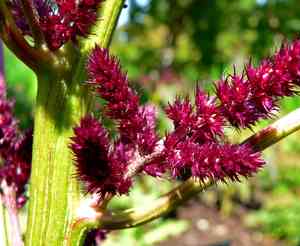
Spinescale saltbush (Atriplex spinifera)
Also known as: Spiny Saltbush
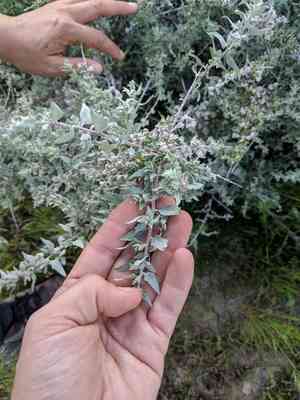
The spinescale saltbush (Atriplex spinifera) is a hardy shrub well-suited for arid and saline environments. Its grey-green, scaly leaves reduce water loss, enhancing its drought resistance. Sharp spines deter herbivores, providing a natural defense mechanism. The plant thrives in saline soils due to its ability to excrete excess salt through specialized leaf glands. Moreover, its growth form adapts to environmental conditions, often becoming more compact in exposed areas to minimize stress. These features collectively equip the spinescale saltbush to flourish in tough habitats.
In This Article
Attributes of Spinescale saltbush
Lifespan
Perennial
Plant Type
Shrub
Plant Height
Up to 1.5 meters
Spread
Up to 2 meters
Leaf Color
Gray-green
Flower Size
Small, typically less than 1 cm
Flower Color
Yellowish
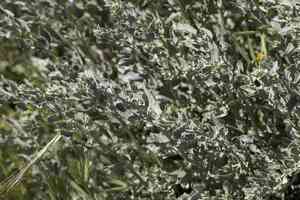
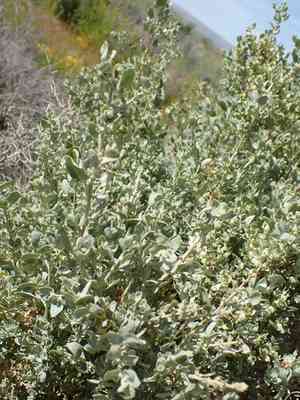
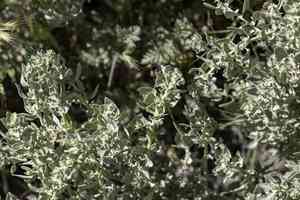
Images of Spinescale saltbush
Quickly Identify Spinescale saltbush
1
Can be identified by its rigid, spine-like branches and scaly, gray-green leaves. It typically forms a dense bush.
Scientific Classification of Spinescale saltbush
Phylum
Vascular plants
Class
Dicotyledons
Order
Caryophyllales
Family
Amaranth
Genus
Saltbush
Species
Spinescale saltbush
Planting and Growing of Spinescale saltbush
Care Difficulty
Easy
Watering Schedule
Every 2 days
Sunlight Requirements
Full sun
Sunshine Duration
6-10 hours
Ideal Temperature
60-75℉
Soil Type
Potting Mix, Peat Mix
Soil pH
6.5-8.5
Fertilizer Type
Balanced
Pruning Season
Spring, Summer
Pruning Area
Branches, Leaves
Pruning Frequency
2 times a year
Repotting Season
Spring
Pot Type
Plastic, Ceramic
 How to Water Spinescale saltbush?
For Atriplex spinifera, water should be given until the soil is moist but not waterlogged, around 250 milliliters per watering session. It's crucial to ensure that the soil can dry out between waterings to mimic its natural arid environment.
What are the symptoms of an underwatered Spinescale saltbush?
›
What should I do if my Spinescale saltbush is not getting enough water?
›
What are the symptoms of an overwatered Spinescale saltbush?
›
How to save an overwatered Spinescale saltbush?
›
 What Are the Sunlight Requirements for Spinescale saltbush?
Atriplex spinifera performs best in full sun, with 6 to 8 hours of direct sunlight daily. This light range promotes efficient growth and health, allowing the plant to thrive as it does in its native arid environments. Ample sunlight sustains vigorous growth, maintaining the plant's robustness and drought resistance.
What type of sunlight is best for Atriplex spinifera?
›
How can I achieve optimal sun exposure for my Atriplex spinifera?
›
What are the benefits of providing ideal sunlight to Atriplex spinifera?
›
 What Is the Ideal Temperature Range for Spinescale saltbush?
The ideal temperature range for Atriplex spinifera is between 60°F and 75°F. These conditions mimic the plant's native habitat, allowing it to grow healthily and reach its full potential.
 What Soil is Best for Spinescale saltbush?
Atriplex spinifera thrives best in soils with excellent drainage. Properly drained soil prevents root rot, allowing the plant access to vital nutrients and promoting healthy growth. This plant is well-suited for slightly saline soils, making it ideal for coastal areas. The plant's ability to tolerate salinity allows it to retain moisture and survive in harsher conditions. While Atriplex spinifera can survive in poor soils, it benefits greatly from nutrient-rich environments that provide essential minerals necessary for vigorous growth and robust health.
 How to Fertilize Spinescale saltbush?
Atriplex spinifera thrives in less fertile conditions, so it generally requires minimal fertilization. When using liquid fertilizers, a quarter strength of a balanced fertilizer solution (e.g., 20-20-20) applied once a month is sufficient. For slow-release fertilizers, a minimal amount applied twice a year is adequate.
 How to Prune Spinescale saltbush?
Begin by identifying the dead or damaged stems and leaves of Atriplex spinifera. Use clean, sharp pruning shears to make precise cuts at a 45-degree angle. This angle prevents water accumulation, minimizing the risk of disease. Remove any branches that disrupt the plant's natural shape, ensuring adequate air circulation by thinning overcrowded areas. For structural integrity and aesthetics, selectively prune branches to encourage a compact, balanced growth form. Avoid cutting more than one-third of the plant at a time to reduce stress. By shaping the plant thoughtfully, you can enhance its natural beauty and ensure better exposure to sunlight.
More About Pruning Techniques→
 How to Propagate Spinescale saltbush plant?
1
Start with selecting either healthy seeds or cuttings. For seeds, ensure they are mature and have been stored correctly to maintain viability. For cuttings, choose healthy stems that are disease-free and show no signs of pest infestation.
2
Prepare a well-draining soil mix that mimics the plant's natural habitat. A mix containing sand and organic compost works well, ensuring good drainage while providing necessary nutrients.
3
Plant seeds at a shallow depth in the seed tray and water regularly to keep the soil moist but not soggy. For cuttings, immerse the cut end in rooting hormone before planting in the prepared soil. Maintain consistent moisture levels without overwatering.
 How to Repot Spinescale saltbush plant?
1
Spot the signs your Atriplex spinifera is ready for a new home when it visibly outgrows its current pot or you notice roots sneaking out of drainage holes. Spring and autumn are ideal, as these seasons witness milder temperatures, offering a conducive environment for your plant to settle comfortably.
2
Opt for a pot that is one size larger than the current one, with ample drainage holes at the bottom. A terracotta pot works wonders; it allows excess moisture to evaporate, preventing root rot. Such a pot ensures a breathable environment, catering to your Atriplex spinifera’s preference for dry conditions.
3
A well-draining cactus mix is your go-to choice. It mimics the plant's natural habitat, reducing the risk of overwatering, which can lead to root rot. This specialized soil balances moisture retention and drainage, crafting a cozy nook for your plant's roots to thrive.
Toxicity
Ingestion
WARNING
The judgment on toxicity and danger is for reference only. We DO NOT GUARANTEE any accuracy of such judgment. Therefore, you SHALL NOT rely on such judgment. It is IMPORTANT TO SEEK PROFESSIONAL ADVICE in advance when necessary.
Learn More About Spinescale saltbush Diseases
Anthracnose
Bacterial Leaf Spot
Bacterial Soft Rot
Bacterial Wilt
Chemical Injury
Crown Gall
Cyst Nematode
Damping-off
Downy Mildew
Drought Stress
Fusarium Wilt
Gray Mold
Leaf Spot
Mosaic
Nutrient Deficiency
Nutrient Toxicity
Powdery Mildew
Root Rot
Root-knot Nematode
Rusts
Sooty Mold
Spider Mites
Temperature Stress
Thrips Damage
White Mold



