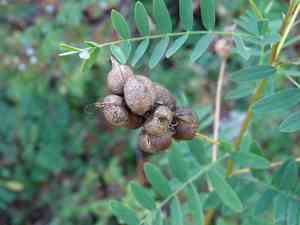
Cooper's milkvetch (Astragalus neglectus)
Also known as: None
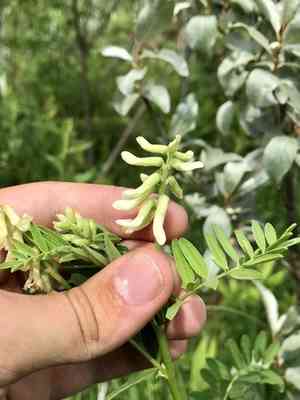
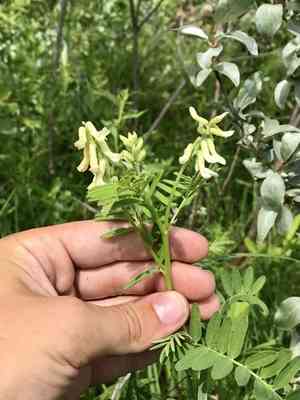
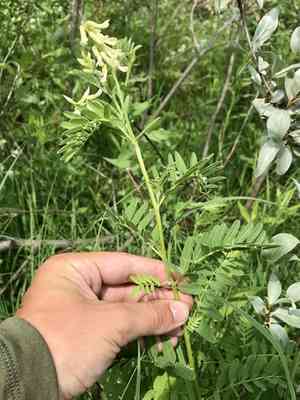
Cooper's milkvetch (Astragalus neglectus) is a resilient perennial herb distinguished by its tall, slender stems and compound leaves with multiple small leaflets. The plant produces clusters of pale yellow flowers from late spring into early summer, which attract a variety of pollinators. It thrives in open environments such as prairies, sandy soils, and rocky outcrops, favoring well-drained soils. Its deep taproot system not only provides strong anchorage but also enhances its ability to withstand drought conditions.
In This Article
Attributes of Cooper's milkvetch
Lifespan
Perennial
Plant Type
Herb
Plant Height
30 cm to 91 cm
Spread
Varies; typically small and not widely spreading
Leaf Color
Green
Flower Size
1-2 cm
Flower Color
Pink to purple
Images of Cooper's milkvetch
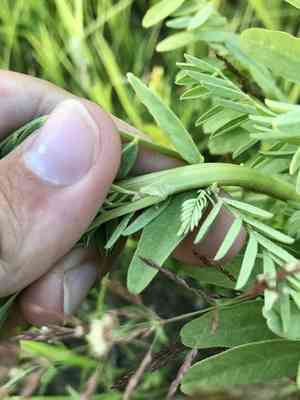
Quickly Identify Cooper's milkvetch
1
Identifiable by its compound leaves with numerous small leaflets and clusters of small, pea-like flowers. The flowers are typically pink to purple and grow in terminal or axillary racemes.
Scientific Classification of Cooper's milkvetch
Phylum
Vascular plants
Class
Dicotyledons
Order
Fabales
Family
Legume
Genus
Milkvetch
Species
Cooper's milkvetch
Planting and Growing of Cooper's milkvetch
Care Difficulty
Moderate
Watering Schedule
Every 4 days
Sunlight Requirements
Partial sun
Sunshine Duration
4-6 hours
Ideal Temperature
60-75℉
Soil Type
Potting Mix, Peat Mix
Soil pH
6.5-7.5
Fertilizer Type
Balanced
Pruning Season
Spring, Summer
Pruning Area
Branches, Leaves
Pruning Frequency
2 times a year
Repotting Season
Spring
Pot Type
Plastic, Ceramic
 How to Water Cooper's milkvetch?
Astragalus neglectus prefers to be watered deeply yet infrequently. Water until the soil is moist about 2-3 inches deep, which generally means around 250 ml. Make sure that excess water drains away as this plant dislikes standing water, allowing soil to become partially dry between waterings.
What are the symptoms of an underwatered Cooper's milkvetch?
›
What should I do if my Cooper's milkvetch is not getting enough water?
›
What are the symptoms of an overwatered Cooper's milkvetch?
›
How to save an overwatered Cooper's milkvetch?
›
 What Are the Sunlight Requirements for Cooper's milkvetch?
Partial sun provides Astragalus neglectus with exactly what it needs, a perfect balance of light ensures robust photosynthesis without the stress of excessive heat, promoting overall vigor and natural growth habits.
What is the optimal light condition?
›
How to achieve ideal lighting?
›
What are the benefits of ideal light exposure?
›
 What Is the Ideal Temperature Range for Cooper's milkvetch?
Astragalus neglectus thrives best within an ideal temperature range of 60°F to 75°F. This range allows for optimal metabolic functions, robust growth, and efficient nutrient uptake. Keeping temperatures within this range ensures the plant's physiological processes proceed unhindered, fostering overall vitality and health.
 What Soil is Best for Cooper's milkvetch?
Astragalus neglectus thrives in soil that drains water efficiently. Well-drained soil prevents waterlogging, which can lead to root rot. Ensuring such environments maximizes root aeration, promoting healthy growth. A nutrient-rich soil bolsters the plant's immune system, contributing to vibrant growth. Essential for healthy flowering, choose soil with ample minerals to meet the plant's needs. While it needs well-draining soil, Astragalus neglectus also benefits from moderate moisture retention. This balance ensures the plant receives enough moisture to sustain its metabolic functions without saturating the roots.
 How to Fertilize Cooper's milkvetch?
For Astragalus neglectus, a moderate amount of fertilizer is recommended. Use about half the suggested quantity listed on the package for liquid fertilizers, approximately 1/2 teaspoon per gallon of water. For slow-release fertilizers, apply 1/4 cup per square foot of soil around the plant. The key is not to overwhelm the plant with nutrients but to supplement what is naturally available in the soil.
 How to Prune Cooper's milkvetch?
First, identify any dead or overgrown branches. Target areas that disrupt the natural symmetry of the plant, focusing on dense spots where light and air struggle to penetrate. Make precise cuts just above the leaf nodes at a slant. This encourages new growth to emerge healthily and helps water to run off, reducing the risk of rot. Systematically cut away any brown or dead leaves. This not only improves the look of the plant but also reduces the risk of disease by improving air circulation.
More About Pruning Techniques→
 How to Propagate Cooper's milkvetch plant?
1
Start by preparing well-draining soil in seed trays. A mix of peat and perlite is often suitable. Ensure the soil is lightly moist before sowing the seeds to promote good germination conditions.
2
Select a healthy parent plant and cut a stem section of about 4-6 inches with at least two nodes. Remove lower leaves to expose nodes and dip the cut end in rooting hormone before planting in a suitable medium.
3
For division propagation, carefully dig up a mature plant and gently separate the clumps. Each division should have several stems and a healthy root system. Replant immediately in a well-prepared garden bed or pot.
 How to Repot Cooper's milkvetch plant?
1
Astragalus neglectus shows clear signs when it needs repotting: visible roots through drainage holes, stunted growth, or the soil drying out quickly after watering. Observing these signals in spring or early summer provides optimal conditions for a successful transition.
2
Select a pot slightly larger than the current one, providing extra space for root growth without being excessively large. The pot should have adequate drainage holes to prevent waterlogging, which preserves root health. A terracotta pot is beneficial as it allows the soil to breathe.
3
Choose a well-draining sandy loam soil to replicate the plant's natural habitat. Such soil ensures proper aeration and root development while preventing water retention, reducing the risk of root rot.
Toxicity
Ingestion
WARNING
The judgment on toxicity and danger is for reference only. We DO NOT GUARANTEE any accuracy of such judgment. Therefore, you SHALL NOT rely on such judgment. It is IMPORTANT TO SEEK PROFESSIONAL ADVICE in advance when necessary.
Learn More About Cooper's milkvetch Diseases
Anthracnose
Bacterial Leaf Spot
Bacterial Wilt
Crown Gall
Cyst Nematode
Damping-off
Downy Mildew
Drought Stress
Fusarium Wilt
Gray Mold
Leaf Spot
Mosaic
Nutrient Deficiency
Nutrient Toxicity
Powdery Mildew
Root Rot
Root-knot Nematode
Rusts
Sooty Mold
Spider Mites
Temperature Stress
Thrips Damage
White Mold
Chemical Injury



