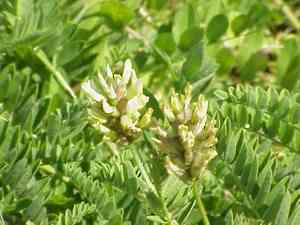
Chick-pea milk vetch (Astragalus cicer)
Also known as: Chickpea milkvetch, Chick-pea Milk-vetch
The plant in question is "alfalfa" (Medicago sativa), a perennial flowering species that was brought from Eastern Europe to the U.S. to serve as livestock forage. Alfalfa is commonly used as a cover crop to stabilize and enrich soil, and its flowers are known to attract bees.
In This Article
Attributes of Chick-pea milk vetch
Lifespan
Perennial
Plant Type
Herb
Plant Height
30 cm to 76 cm
Spread
Not typically measured due to sprawling habit
Leaf Color
Green
Flower Size
4 cm to 5 cm
Flower Color
White Yellow Green
Images of Chick-pea milk vetch
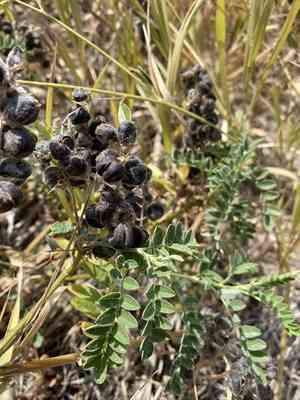
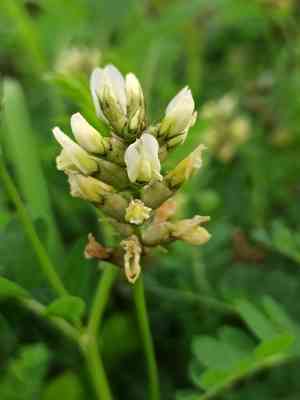
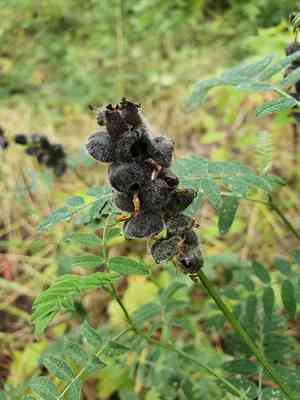
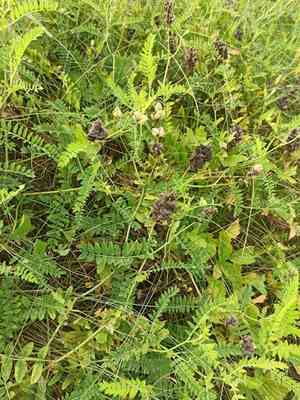
Quickly Identify Chick-pea milk vetch
1
Identify Astragalus cicer by its fine, fern-like, pinnate leaves, and its dense clusters of pale yellow flowers. The plant\'s sprawling habit and the presence of small, hairy pods are distinguishing features.
Scientific Classification of Chick-pea milk vetch
Phylum
Vascular plants
Class
Dicotyledons
Order
Fabales
Family
Legume
Genus
Milkvetch
Species
Chick-pea milk vetch
Planting and Growing of Chick-pea milk vetch
Care Difficulty
Easy
Watering Schedule
Every 3 days
Sunlight Requirements
Full sun
Sunshine Duration
4-8 hours
Ideal Temperature
60-75℉
Soil Type
Potting Mix, Peat Mix
Soil pH
6.5-7.5
Fertilizer Type
Balanced
Pruning Season
Spring, Summer
Pruning Area
Branches, Leaves
Pruning Frequency
2 times a year
Repotting Season
Spring
Pot Type
Plastic, Ceramic
 How to Water Chick-pea milk vetch?
For Astragalus cicer, watering should be thorough but infrequent. Ensure that the soil is moistened about 500ml each time, allowing the water to soak deeply into the root zone. The goal is to provide enough moisture to sustain growth without over-saturating the soil.
What are the symptoms of an underwatered Chick-pea milk vetch?
›
What should I do if my Chick-pea milk vetch is not getting enough water?
›
What are the symptoms of an overwatered Chick-pea milk vetch?
›
How to save an overwatered Chick-pea milk vetch?
›
 What Are the Sunlight Requirements for Chick-pea milk vetch?
Astragalus cicer flourishes best in full to partial sun conditions. Ideal light ensures robust growth, enhances photosynthesis, and supports its flowering capabilities.
More About Sunlight Requirements Techniques→
Preferred Light Intensity
›
Ensuring Ideal Exposure
›
Benefits of Adequate Sunlight
›
 What Is the Ideal Temperature Range for Chick-pea milk vetch?
Maintaining an ideal temperature range of 60°F to 75°F is crucial for Astragalus cicer as it promotes optimal photosynthesis and energy production. Within this range, the plant can efficiently facilitate metabolic processes, leading to robust growth and maximum yield. Temperatures in this range also help prevent common issues like freezing or overheating stress.
 What Soil is Best for Chick-pea milk vetch?
Astragalus cicer thrives in well-drained soil as it prevents root rot by allowing excess water to escape quickly. This encourages a robust root system and ensures healthy plant growth. A soil rich in organic matter provides essential nutrients that support the plant’s growth. This beneficial nutrient profile leads to increased plant vigor and a more abundant flowering. Soil with good aeration guarantees that roots receive sufficient oxygen, which is crucial for photosynthesis and overall plant health. This characteristic also supports beneficial microbial activity in the soil.
 How to Fertilize Chick-pea milk vetch?
Astragalus cicer benefits from balanced fertilization, using about 5 grams of nitrogen-rich fertilizer per plant monthly during the growing season. Be cautious not to exceed this amount to avoid root burn.
 How to Prune Chick-pea milk vetch?
Before pruning, thoroughly inspect your Astragalus cicer. Look for any dead, diseased, or damaged branches that need to be removed. Also, identify areas where the plant looks too dense or overcrowded, requiring thinning to encourage better growth and sunlight penetration. Start by removing any dead or diseased wood. Use clean and sharp pruning shears to make precise cuts close to the main stem, but avoid cutting into healthy tissue. This step is critical to prevent the spread of disease and pests within your plant. After removing deadwood, focus on shaping the plant by trimming overgrown branches. Aim to open up the center of the plant, allowing light and air to reach inner parts. This helps in preventing fungal diseases and encourages uniform growth. While pruning, ensure that you maintain a balanced appearance. Step back frequently to assess the plant's shape and symmetry. Avoid over-pruning on one side, which might lead to an uneven structure that can affect the plant's stability.
More About Pruning Techniques→
 How to Propagate Chick-pea milk vetch plant?
1
To propagate Astragalus cicer from seeds, start by soaking the seeds in warm water for 24 hours to help break dormancy. Scarification may also be needed due to the hard seed coat.
2
When opting for root cutting propagation, take 2-3 inch sections of healthy roots in early spring. Place them horizontally in trays filled with moist potting mix and cover lightly with soil.
3
Dividing mature Astragalus cicer plants should be done in early spring. Carefully dig up the plant, split the root ball into sections, and replant in well-prepared soil.
 How to Repot Chick-pea milk vetch plant?
1
Repot Astragalus cicer when you notice several signs: the roots start to grow out of the drainage holes, the plant looks top-heavy or wilted, or the soil dries out very quickly after watering. Spring and early summer are ideal times as the plant is in a growth phase, which allows it to recover better from repotting stress.
2
Select a pot that is one to two inches larger in diameter than the current one, with adequate drainage holes. This ensures enough room for root expansion without overwhelming them with excess soil, which can retain too much moisture and potentially lead to root rot.
3
Opt for a well-draining potting mix that mimics the plant's natural habitat, often a blend that includes sand, perlite, or bark. This type of soil will prevent waterlogging and ensure the roots have adequate access to oxygen, promoting healthy growth.
Toxicity
Ingestion
WARNING
The judgment on toxicity and danger is for reference only. We DO NOT GUARANTEE any accuracy of such judgment. Therefore, you SHALL NOT rely on such judgment. It is IMPORTANT TO SEEK PROFESSIONAL ADVICE in advance when necessary.
Learn More About Chick-pea milk vetch Diseases
Anthracnose
Bacterial Leaf Spot
Bacterial Soft Rot
Bacterial Wilt
Crown Gall
Cyst Nematode
Damping-off
Downy Mildew
Drought Stress
Fusarium Wilt
Gray Mold
Leaf Spot
Mosaic
Nutrient Deficiency
Nutrient Toxicity
Powdery Mildew
Root Rot
Root-knot Nematode
Rusts
Sooty Mold
Spider Mites
Temperature Stress
Thrips Damage
White Mold
Chemical Injury



