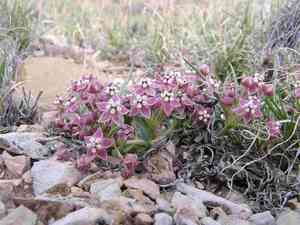
Wheel milkweed (Asclepias uncialis)
Also known as: Wheel Milkweed
Milkweed is a hardy perennial plant recognized for its milky sap and vibrant flowers, ranging from orange-red to pink. Thriving in well-drained soils, it features clusters of blossoms that are essential for monarch butterflies. With narrow leaves and an upright growth habit, milkweed adapts well to sunny, open areas, playing a crucial role in native ecosystems both as a food source and an ornamental plant.
In This Article
Attributes of Wheel milkweed
Lifespan
Perennial
Plant Type
Herb
Plant Height
10-15 cm
Spread
N/A (Herbaceous plant)
Leaf Color
Green
Flower Size
Approximately 0.5 cm
Flower Color
Pink to purple
Images of Wheel milkweed
Quickly Identify Wheel milkweed
1
Identifying Asclepias uncialis involves looking for its small stature, typically less than 15 cm in height, and its unique whorled leaf arrangement. The flowers are small, pink to purple, and clustered in umbels.
Scientific Classification of Wheel milkweed
Phylum
Vascular plants
Class
Dicotyledons
Order
Gentianales
Family
Dogbane
Genus
Milkweeds
Species
Wheel milkweed
Planting and Growing of Wheel milkweed
Care Difficulty
Moderate
Watering Schedule
Every day
Sunlight Requirements
Full sun
Sunshine Duration
6-10 hours
Ideal Temperature
60-75℉
Soil Type
Potting Mix, Peat Mix
Soil pH
6.5-7.5
Fertilizer Type
Balanced
Pruning Season
Spring, Summer
Pruning Area
Branches, Leaves
Pruning Frequency
2 times a year
Repotting Season
Spring
Pot Type
Plastic, Terracotta
 How to Water Wheel milkweed?
For Asclepias uncialis, you should aim to provide about 100 ml of water during each watering session. This plant thrives best when the soil mimics its natural dry habitat, so watering should be thorough but infrequent. Ensure that the soil is dry at least a couple of inches deep before rewatering.
What are the symptoms of an underwatered Wheel milkweed?
›
What should I do if my Wheel milkweed is not getting enough water?
›
What are the symptoms of an overwatered Wheel milkweed?
›
How to save an overwatered Wheel milkweed?
›
 What Are the Sunlight Requirements for Wheel milkweed?
Partial to full sun ensures best performance. Ideal light enables vigorous growth, improving aesthetics and ecological functions such as supporting the food chain by attracting and sustaining insects like butterflies.
What is the best environment for Asclepias uncialis?
›
How to achieve ideal sunlight for this plant?
›
Benefits of providing ideal lighting conditions?
›
 What Is the Ideal Temperature Range for Wheel milkweed?
The ideal temperature range for Asclepias uncialis is 60 to 75 degrees Fahrenheit. These temperatures support healthy growth and development by providing a stable environment that mimics their natural habitat. Maintaining this temperature range ensures optimal metabolic activity and photosynthesis, promoting robust plant health.
 What Soil is Best for Wheel milkweed?
Asclepias uncialis thrives in well-drained soils, which help prevent root rot by allowing excess water to escape easily. This ensures that the roots can breathe and absorb nutrients efficiently, crucial for the plant's health and vibrant growth. This plant is adapted to nutrient-poor conditions, which means it doesn't require rich soil. In fact, too much fertility can lead to weaker plants, making them susceptible to pests and diseases. A lean soil environment supports its natural hardiness. Asclepias uncialis can tolerate a slightly acidic to neutral pH range of 6.5 to 7.5, making it flexible for a variety of soil conditions. This tolerance ensures better absorption of essential minerals required for maintaining its distinctive foliage and flowering.
 How to Fertilize Wheel milkweed?
Asclepias uncialis requires a balanced approach to fertilization. Use a half-strength liquid fertilizer at the rate of 1 tablespoon per gallon of water. Ensure not to exceed this amount to prevent nutrient burn. For slow-release fertilizers, a handful around the base, lightly mixed into the soil, should suffice annually.
 How to Prune Wheel milkweed?
The optimal time for pruning Asclepias uncialis is during the early spring or late summer when the plant is not actively flowering. Pruning at these times minimizes stress on the plant and encourages robust growth for the upcoming season. Use clean, sharp pruning shears for precise cuts. Start by removing any dead or diseased stems at the base. Shape the plant gently by cutting back overgrown sections, but maintain the overall natural appearance of the plant.
More About Pruning Techniques→
 How to Propagate Wheel milkweed plant?
1
Before planting, soak the seeds in warm water for 24 hours to soften the seed coat. This helps improve germination rates by allowing moisture to penetrate the seeds more easily.
2
Sow the seeds evenly on the surface of the sterile potting mix. Cover them lightly with a thin layer of soil or vermiculite to ensure darkness, necessary for seed germination.
3
Mist the soil gently to ensure it stays moist but not waterlogged. Keep the seed tray in a warm, bright area but out of direct sunlight to protect the young seedlings.
 How to Repot Wheel milkweed plant?
1
Signs that it's time to repot your Asclepias uncialis include roots growing through the drainage holes or circling the root ball's bottom. Typically, spring and summer present the perfect seasons to undertake this task, as the plant is actively growing and can recover quickly.
2
Select a pot that is one size larger than the current one with good drainage. A pot that's too big can lead to water retention and root rot, while one that's too small can restrict root growth. Ensure it has plenty of drainage holes to prevent waterlogging.
3
A well-draining gritty mix is essential for repotting Asclepias uncialis. This type of soil ensures excess water drains away, preventing root rot and fostering healthy root development. Incorporate perlite or sand to enhance drainage.
Toxicity
Ingestion
WARNING
The judgment on toxicity and danger is for reference only. We DO NOT GUARANTEE any accuracy of such judgment. Therefore, you SHALL NOT rely on such judgment. It is IMPORTANT TO SEEK PROFESSIONAL ADVICE in advance when necessary.
Learn More About Wheel milkweed Diseases
Anthracnose
Bacterial Leaf Spot
Bacterial Wilt
Chemical Injury
Damping-off
Downy Mildew
Drought Stress
Fusarium Wilt
Gray Mold
Leaf Curl
Leaf Spot
Mosaic
Nutrient Deficiency
Nutrient Toxicity
Powdery Mildew
Root Rot
Root-knot Nematode
Rusts
Sooty Mold
Spider Mites
Temperature Stress
Thrips Damage
White Mold



