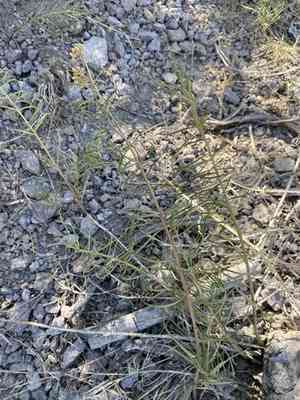
Rusby's milkweed (Asclepias rusbyi)
Also known as: Rusby's Milkweed
Rusby's milkweed, known for its striking star-like flowers in vivid orange and red hues, flourishes in dry, rocky habitats. This hardy perennial herb is well-suited to sunny, open areas and features narrow, lance-shaped leaves that help it endure arid conditions. Notably, Rusby's milkweed supports a range of pollinators, including the monarch butterfly, which plays a crucial role in its pollination.
In This Article
Attributes of Rusby's milkweed
Lifespan
Perennial
Plant Type
Herb
Plant Height
0.4 to 1 meter (1.3 to 3.3 feet)
Spread
Not typically described in crown diameter terms; focused more on height and spread.
Leaf Color
Green
Flower Size
1 to 2 centimeters (0.4 to 0.8 inches)
Flower Color
Purplish-pink to white
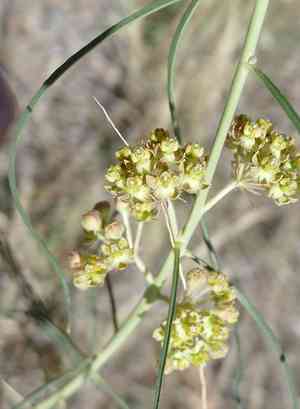
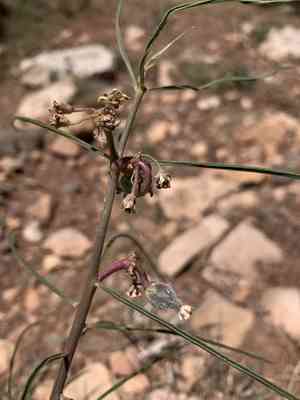
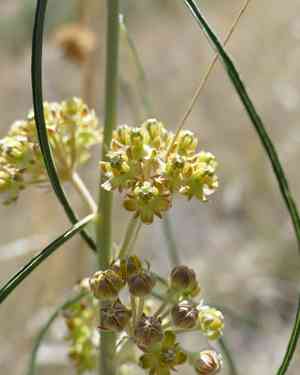
Images of Rusby's milkweed
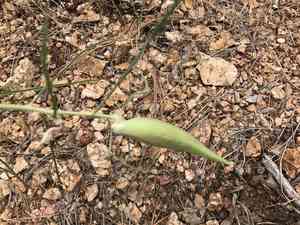
Quickly Identify Rusby's milkweed
1
Look for its unique 5-petaled flowers that are generally purplish-pink to white, with a distinct corona lobe. Its leaves are opposite, lance-shaped, and hairless, providing a smooth texture.
Scientific Classification of Rusby's milkweed
Phylum
Vascular plants
Class
Dicotyledons
Order
Gentianales
Family
Dogbane
Genus
Milkweeds
Species
Rusby's milkweed
Planting and Growing of Rusby's milkweed
Care Difficulty
Hard
Watering Schedule
Every 2 days
Sunlight Requirements
Full sun
Sunshine Duration
4-8 hours
Ideal Temperature
65-75℉
Soil Type
Potting Mix, Peat Mix
Soil pH
6.5-7.5
Fertilizer Type
Balanced
Pruning Season
Spring, Summer
Pruning Area
Branches, Leaves
Pruning Frequency
2 times a year
Repotting Season
Spring
Pot Type
Plastic, Ceramic
 How to Water Rusby's milkweed?
For Asclepias rusbyi, the watering amount should mimic natural rainfall patterns, targeting around 250 ml per session. The goal is to moisten the soil lightly to a depth of approximately 10 cm, ensuring the roots have enough moisture without causing waterlogging.
What are the symptoms of an underwatered Rusby's milkweed?
›
What should I do if my Rusby's milkweed is not getting enough water?
›
What are the symptoms of an overwatered Rusby's milkweed?
›
How to save an overwatered Rusby's milkweed?
›
 What Are the Sunlight Requirements for Rusby's milkweed?
Full sun exposure of at least 6 to 8 hours is ideal for Asclepias rusbyi. This ensures optimal growth conditions, enhancing its flowering and ensuring plant health.
What kind of light does Asclepias rusbyi prefer?
›
How can I ensure my Asclepias rusbyi receives ideal light?
›
What are the benefits of proper lighting for Asclepias rusbyi?
›
 What Is the Ideal Temperature Range for Rusby's milkweed?
The ideal temperature range for cultivating Asclepias rusbyi is between 65°F and 75°F. Within this range, the plant is most likely to thrive, as the temperatures are neither too extreme nor too mild, allowing it to maintain optimal metabolic activities.
 What Soil is Best for Rusby's milkweed?
Asclepias rusbyi thrives in well-draining soil, which helps prevent root rot by allowing excess water to escape quickly. This is particularly beneficial in preventing diseases associated with overly moist environments. The plant requires soil that is not overly rich in nutrients, as too much fertility can lead to lush foliage growth at the expense of flowers. A moderate nutrient level promotes balanced growth, ensuring both healthy leaves and vibrant blooms. This species prefers slightly alkaline soil, which can help in the availability of essential nutrients. Such a pH balance supports optimal nutrient uptake and plant vigor.
 How to Fertilize Rusby's milkweed?
For Asclepias rusbyi, it's essential to apply a balanced fertilizer with a ratio such as 10-10-10. Use about half the recommended strength on the package when first applying liquid fertilizer. Asclepias rusbyi is not a heavy feeder, so err on the side of caution to avoid over-fertilization.
 How to Prune Rusby's milkweed?
Start by identifying the older, woody stems that are less likely to produce new growth. These can be pruned back to the base or to a junction with a younger shoot. After identifying the primary growing tips, trim them just above a leaf node to encourage bushier growth and more flowers.
More About Pruning Techniques→
 How to Propagate Rusby's milkweed plant?
1
Gather seeds from ripe pods when they start to open. It is important to do this promptly before the wind disperses the seeds. Store collected seeds in a dry place until you're ready to plant them.
2
Choose healthy, disease-free stems for cuttings. Cut about 4-6 inches from the tip of the stem, include at least two leaf nodes, and remove the lower leaves to prevent rot when placed in soil.
3
Plant seeds in soil or place cuttings in a rooting medium. Ensure adequate watering but avoid waterlogging as excessive moisture can lead to rot. Place the tray or pot in a position with indirect sunlight.
 How to Repot Rusby's milkweed plant?
1
Asclepias rusbyi needs repotting when you observe its roots emerging from the drainage holes of the current pot. This indicates that the plant has outgrown its space. Additionally, slow growth or yellowing leaves can signal that the soil has depleted in nutrients, necessitating a repotting session.
2
Choose a pot that is one size larger than its current home to encourage root expansion without overwhelming the plant. Ensure it has drainage holes to prevent waterlogging, which can swiftly lead to root rot – the plant’s arch-nemesis.
3
Opt for a well-draining, sandy soil mix to replicate Asclepias rusbyi’s natural habitat. A cactus or succulent mix blended with sand is perfect. This combination allows for optimal water drainage, preventing root decay while allowing the necessary aeration for root health.
Toxicity
Ingestion
WARNING
The judgment on toxicity and danger is for reference only. We DO NOT GUARANTEE any accuracy of such judgment. Therefore, you SHALL NOT rely on such judgment. It is IMPORTANT TO SEEK PROFESSIONAL ADVICE in advance when necessary.
Learn More About Rusby's milkweed Diseases
Anthracnose
Bacterial Leaf Spot
Bacterial Soft Rot
Bacterial Wilt
Crown Gall
Cyst Nematode
Damping-off
Downy Mildew
Fusarium Wilt
Gray Mold
Leaf Spot
Mosaic
Powdery Mildew
Root Rot
Root-knot Nematode
Rusts
Sooty Mold
White Mold
Chemical Injury
Drought Stress
Nutrient Deficiency
Nutrient Toxicity
Temperature Stress
Spider Mites
Thrips Damage



