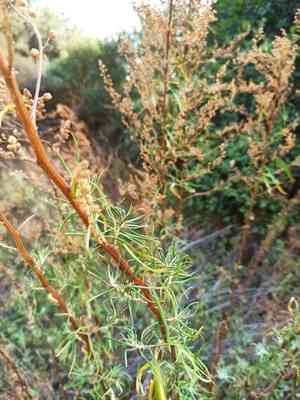
San diego sagewort (Artemisia palmeri)
Also known as: Palmer's Artemisia, Palmer Sagewort
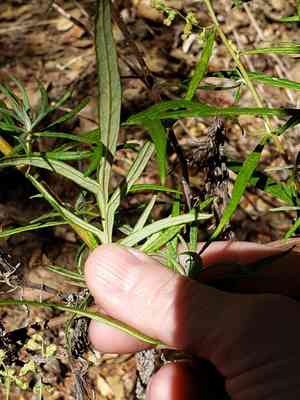
San Diego sagewort (Artemisia palmeri) is a hardy perennial herb well-suited for arid environments. It features deep root systems for accessing water and has small, silver-gray leaves that help reduce water loss and reflect sunlight. The plant's stems can become woody at the base, supporting growth up to 2 meters tall. During late summer, it produces clusters of tiny, yellowish flowers in leafy bracts. Additionally, its strong, aromatic scent deters herbivores, aiding its survival in tough conditions.
In This Article
Attributes of San diego sagewort
Lifespan
Perennial
Plant Type
Herb
Plant Height
30 cm to 91 cm
Spread
1 to 1.5 meters (3.3 to 5 feet)
Leaf Color
Silver-green
Flower Size
0.1 to 0.2 centimeters (0.04 to 0.08 inches)
Flower Color
Yellowish
Images of San diego sagewort
Quickly Identify San diego sagewort
1
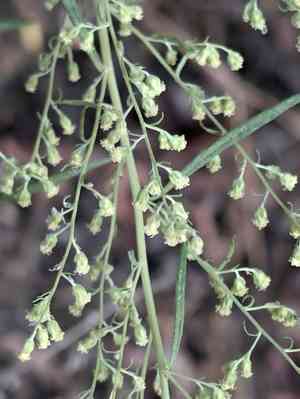
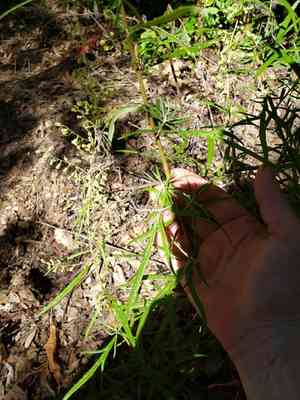
Artemisia palmeri can be identified by its silver-green, finely divided leaves and the strong, sage-like aroma released when the leaves are crushed. The plant also produces small, yellowish flowers arranged in dense clusters.
Scientific Classification of San diego sagewort
Phylum
Vascular plants
Class
Dicotyledons
Order
Asterales
Family
Daisy
Genus
Mugworts
Species
San diego sagewort
Planting and Growing of San diego sagewort
Care Difficulty
Moderate
Watering Schedule
Every 2 days
Sunlight Requirements
Full sun
Sunshine Duration
6-10 hours
Ideal Temperature
68-77℉
Soil Type
Potting Mix, Peat Mix
Soil pH
6.5-7.5
Fertilizer Type
Balanced
Pruning Season
Spring, Summer
Pruning Area
Branches, Leaves
Pruning Frequency
2 times a year
Repotting Season
Spring
Pot Type
Plastic, Terracotta
 How to Water San diego sagewort?
Artemisia palmeri, known as Palmer's sagebrush, prefers a moderate amount of water. Watering should be sufficient to moisten the root zone, but take care not to drench it. A deep watering of 500 milliliters, allowing water to soak through the soil to a depth of 6-8 inches, ensures healthy growth by reaching the roots effectively.
What are the symptoms of an underwatered San diego sagewort?
›
What should I do if my San diego sagewort is not getting enough water?
›
What are the symptoms of an overwatered San diego sagewort?
›
How to save an overwatered San diego sagewort?
›
 What Are the Sunlight Requirements for San diego sagewort?
Artemisia palmeri ideally flourishes under full sun to partial sun conditions. This ensures optimal energy supply for robust growth and vibrant foliage, enhancing overall health and resilience.
What is the best location for Artemisia palmeri?
›
How to ensure Artemisia palmeri receives enough light indoors?
›
What are the benefits of providing ideal light conditions for Artemisia palmeri?
›
 What Is the Ideal Temperature Range for San diego sagewort?
Artemisia palmeri thrives best within an ideal temperature range of 68°F to 77°F. This range ensures optimal growth and metabolic function. Maintaining this range supports healthy foliage development and flowering.
 What Soil is Best for San diego sagewort?
Artemisia palmeri thrives in well-drained soil, which prevents the roots from sitting in water, reducing the risk of rot. This facilitates healthy root growth and prevents nutrient leaching. The plant prefers soil with moderate fertility, supporting its growth without overwhelming roots with nutrients, allowing for sturdy and balanced plant development. Optimal growth is observed in dry soil conditions, which simulates its native habitat and ensures the plant does not succumb to root diseases caused by excess moisture.
 How to Fertilize San diego sagewort?
For Artemisia palmeri, it's important to ensure the soil remains slightly enriched without overwhelming its roots. Typically, apply a dilute, balanced liquid fertilizer with an N-P-K ratio around 10-10-10 at half the recommended strength. This will promote healthy growth while preventing nutrient burn.
 How to Prune San diego sagewort?
Begin by identifying any dead or damaged branches and cutting them back to healthy growth using sharp, clean pruning shears. Focus on maintaining the plant's natural shape; trim back any leggy or unruly growth to promote a more compact and bushy appearance. Make sure to remove no more than one-third of the plant at a time to avoid shock. Thin out crowded areas to improve air circulation, which can reduce the risk of fungal diseases.
More About Pruning Techniques→
 How to Propagate San diego sagewort plant?
1
Fill a seed tray with seed-starting mix and sow the seeds of Artemisia palmeri. Cover lightly with soil and keep the tray in a warm, sunny spot. Maintain moisture without over-watering.
2
Cut 4-6 inch long stems from a healthy Artemisia palmeri plant, strip lower leaves, and dip the cut end in rooting hormone. This encourages root development for better propagation success.
3
Divide the root ball of an established plant into sections, ensuring each section has roots and shoots. Plant separately in well-prepared soil, keeping them moist as they establish.
 How to Repot San diego sagewort plant?
1
Keep an eye on signals such as roots growing out of the pot's drainage holes or the plant becoming top-heavy. These are clear indicators that Artemisia palmeri needs more space to continue thriving. Ideally, repotting should occur in the milder seasons like spring or autumn, when the plant isn't under the stress of extreme temperatures.
2
Opt for a pot that is one to two sizes larger than the current one, with excellent drainage to prevent soil saturation. Terra cotta or clay pots are ideal for this purpose, as they facilitate better airflow and moisture control, minimizing the risks of root rot and overwatering.
3
Adopt a well-draining potting mix, ideally one with a sandy composition that mirrors the plant's natural habitat. Such soil provides proper aeration, efficient drainage, and helps prevent root rot by ensuring that excess water flows through easily, thus creating an ideal growing environment.



