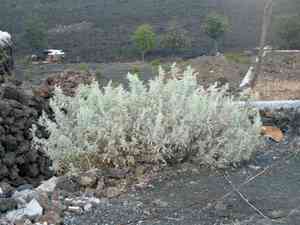
Cape verde sagebrush (Artemisia gorgonum)
Also known as: Common Wormwood
Cape Verde sagebrush (Artemisia gorgonum) is a hardy perennial shrub notable for its silvery-gray, intricately lobed leaves and sturdy woody stem. This plant is well-adapted to arid environments, producing a strong, distinctive scent when its leaves are crushed. It often features clusters of small, yellow flowers that attract pollinators. With its deep root system and water-conserving leaf structure, Cape Verde sagebrush is well-suited to withstand the dry, rocky conditions and intense sunlight of its native habitat.
In This Article
Attributes of Cape verde sagebrush
Lifespan
Perennial
Plant Type
Herb
Plant Height
Up to 1 meter
Spread
Approximately 0.5 meters
Leaf Color
Grayish-green
Flower Size
Less than 1 centimeter
Flower Color
Yellowish
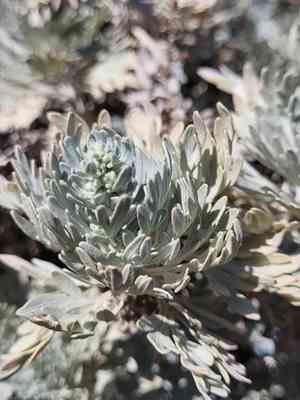
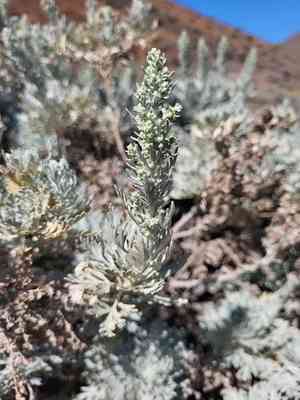
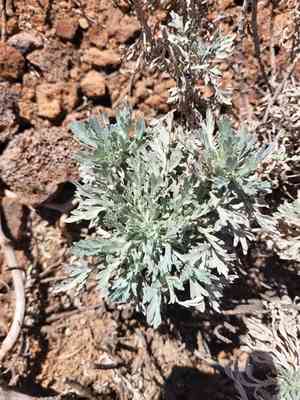
Images of Cape verde sagebrush
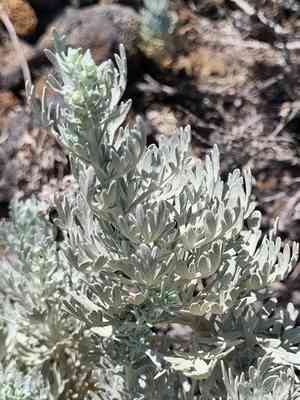
Quickly Identify Cape verde sagebrush
1
Artemisia gorgonum can be recognized by its deeply lobed leaves that are grayish-green in color, and its small yellowish flowers arranged in clusters.
Scientific Classification of Cape verde sagebrush
Phylum
Vascular plants
Class
Dicotyledons
Order
Asterales
Family
Daisy
Genus
Mugworts
Species
Cape verde sagebrush
Planting and Growing of Cape verde sagebrush
Care Difficulty
Hard
Watering Schedule
Every 3 days
Sunlight Requirements
Partial sun
Sunshine Duration
6-8 hours
Ideal Temperature
68-77℉
Soil Type
Potting Mix, Peat Mix
Soil pH
6.5-7.5
Fertilizer Type
Balanced
Pruning Season
Spring, Summer
Pruning Area
Branches, Leaves
Pruning Frequency
2 times a year
Repotting Season
Spring
Pot Type
Plastic, Ceramic
 How to Water Cape verde sagebrush?
Artemisia gorgonum should be watered with about 250 milliliters of water each time. The goal is to moisten the soil, but not to the point of waterlogging. Ensure the water reaches the root zone gradually, allowing the soil to absorb evenly without excess pooling, maintaining a balance between sufficient hydration and preventing root rot.
What are the symptoms of an underwatered Cape verde sagebrush?
›
What should I do if my Cape verde sagebrush is not getting enough water?
›
What are the symptoms of an overwatered Cape verde sagebrush?
›
How to save an overwatered Cape verde sagebrush?
›
 What Are the Sunlight Requirements for Cape verde sagebrush?
Artemisia gorgonum requires primarily full sun with partial shade accommodated. This range is beneficial as it supports robust growth, healthy foliage, and seasonal flowering. Ensuring proper lighting maintains vitality.
How much sunlight is ideal?
›
What solutions ensure the ideal lighting?
›
What are the benefits of ideal lighting?
›
 What Is the Ideal Temperature Range for Cape verde sagebrush?
Artemisia gorgonum thrives best within a temperature range of 68°F to 77°F. This range promotes healthy growth, facilitates proper physiological processes, and ensures that the plant can photosynthesize efficiently. Maintaining this temperature range helps prevent stress and supports robust development.
 What Soil is Best for Cape verde sagebrush?
Artemisia gorgonum thrives in nutrient-rich soils that provide essential minerals and organic matter. These nutrients play a crucial role in ensuring vibrant growth and the development of healthy foliage. The plant requires well-draining soil to prevent waterlogging, which can lead to root rot. Ample drainage also facilitates aeration, promoting root health and vigor. Maintaining a moderate moisture level is key. Artemisia gorgonum prefers neither too dry nor overly wet conditions, ensuring that it gains sustenance without the risk of root diseases.
 How to Fertilize Cape verde sagebrush?
When applying fertilizers to Artemisia gorgonum, use a balanced liquid fertilizer diluted to half strength, about 10 milliliters per liter of water. For slow-release fertilizers, apply at a rate of approximately 50 grams per square meter. It's crucial to avoid over-fertilization to prevent root damage.
 How to Prune Cape verde sagebrush?
Do not prune Artemisia gorgonum during extreme weather conditions like high heat or frost. Such stresses can weaken the plant and prolong recovery. Ideally, prune during cooler days in early morning or late evening. Ensure you don't overcrowd the plant by leaving too many branches. Proper spacing allows for better air circulation that helps in reducing disease incidence and improves light exposure, essential for healthy growth.
More About Pruning Techniques→
 How to Propagate Cape verde sagebrush plant?
1
Collect seeds from mature Artemisia gorgonum plants in the early spring. Ensure that the seeds are fully developed and dry before storing them in a cool, dry place until planting.
2
For cuttings, select healthy, non-flowering stems from the mother plant. Cut these at a diagonal to increase the surface area for rooting and remove the lower leaves to minimize transpiration.
3
Sow the seeds in a prepared seed tray with a seed-starting mix, lightly covering them with soil. For cuttings, insert them into pots with well-draining soil, ensuring that they are firm and upright.
 How to Repot Cape verde sagebrush plant?
1
You should consider repotting Artemisia gorgonum when you notice that the plant has outgrown its current container and the roots are visible through the drainage holes. Also, if you observe reduced growth or if the soil dries out more quickly than usual, these are signs that repotting is necessary.
2
Select a pot that is slightly larger than its current one, with good drainage holes to prevent waterlogging. The benefits of this include promoting healthy root growth and ensuring the plant does not store excess water, which prevents root rot.
3
Opt for a well-draining sandy loam mix that replicates its natural environment. This type of soil prevents water retention, minimizes the risk of root rot, and ensures adequate aeration, all of which are crucial for healthy growth of Artemisia gorgonum.
Learn More About Cape verde sagebrush Diseases
Anthracnose
Bacterial Leaf Spot
Bacterial Soft Rot
Bacterial Wilt
Black Spot
Chemical Injury
Crown Gall
Cyst Nematode
Damping-off
Downy Mildew
Drought Stress
Fusarium Wilt
Gray Mold
Leaf Curl
Leaf Spot
Mosaic
Nutrient Deficiency
Nutrient Toxicity
Powdery Mildew
Root Rot
Root-knot Nematode
Rusts
Sooty Mold
Spider Mites
Temperature Stress
Thrips Damage
White Mold



