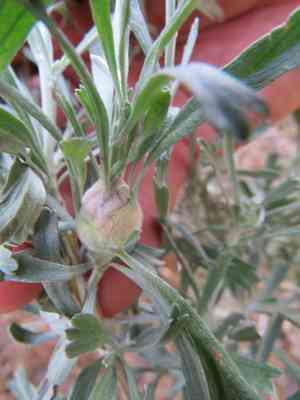
Little sagebrush (Artemisia arbuscula)
Also known as: Low sagebrush, Alkali sagebrush
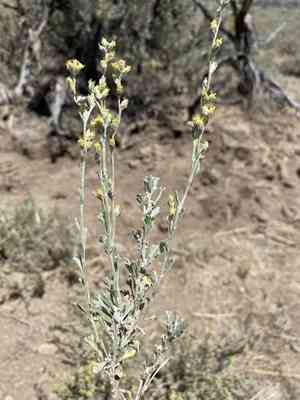
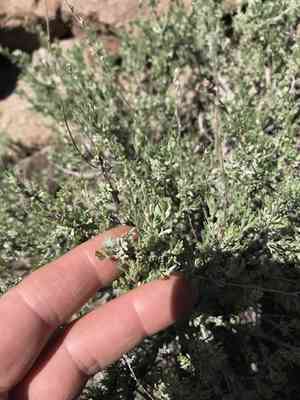
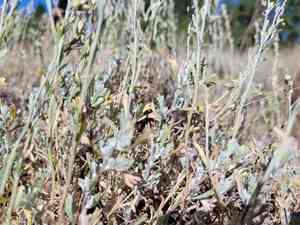
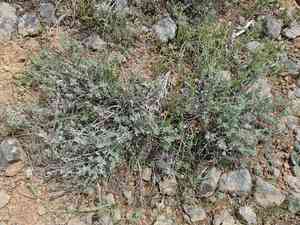
Artemisia arbuscula, known as low sagebrush, is a grayish-green shrub that typically grows up to 30 cm tall, often forming small mounds. Its numerous branches are adorned with finely hairy leaves, each measuring less than 1 cm in length. The plant's inflorescence consists of spike-like clusters of small, hairy flower heads. Each flower head contains several pale yellow disc florets and lacks ray florets. The fruit is a minute achene, measuring under 1 mm in width.
In This Article
Attributes of Little sagebrush
Lifespan
Perennial
Plant Type
Shrub
Plant Height
Up to 2 feet
Spread
Up to 3 feet
Leaf Color
Silvery-green
Flower Size
Less than 0.1 inches
Flower Color
Yellowish
Images of Little sagebrush
Quickly Identify Little sagebrush
1
Artemisia arbuscula can be identified by its small stature, typically less than 2 feet tall, and its highly aromatic, silvery-green leaves. The leaves are small and divided into linear segments. The plant produces tiny, yellowish flowers that form in clusters.
Scientific Classification of Little sagebrush
Phylum
Vascular plants
Class
Dicotyledons
Order
Asterales
Family
Daisy
Genus
Mugworts
Species
Little sagebrush
Planting and Growing of Little sagebrush
Care Difficulty
Easy
Watering Schedule
Every 2 days
Sunlight Requirements
Full sun
Sunshine Duration
4-6 hours
Ideal Temperature
60-75℉
Soil Type
Potting Mix, Peat Mix
Soil pH
6.5-7.5
Fertilizer Type
Balanced
Pruning Season
Spring, Summer
Pruning Area
Branches, Leaves
Pruning Frequency
2 times a year
Repotting Season
Spring
Pot Type
Plastic, Ceramic
 How to Water Little sagebrush?
When watering Artemisia arbuscula, aim to moisten the soil thoroughly without causing waterlogging. Using around 500 milliliters should suffice, ensuring water reaches the roots. This amount should keep the roots hydrated while avoiding standing water in the pot or garden. The principle here is to maintain a consistent moisture level, adapting to environmental conditions such as temperature and humidity.
What are the symptoms of an underwatered Little sagebrush?
›
What should I do if my Little sagebrush is not getting enough water?
›
What are the symptoms of an overwatered Little sagebrush?
›
How to save an overwatered Little sagebrush?
›
 What Are the Sunlight Requirements for Little sagebrush?
Artemisia arbuscula ideally flourishes in full sun to partial sun settings, requiring 4 to 8 hours of sunlight. Adequate light supports robust growth, increases blooming potential, and enhances drought tolerance in various climates.
What is the best light exposure for Artemisia arbuscula?
›
How can I achieve the ideal lighting conditions for this plant?
›
What benefits does proper sun exposure provide to Artemisia arbuscula?
›
 What Is the Ideal Temperature Range for Little sagebrush?
Artemisia arbuscula thrives best within a temperature range of 60 to 75 degrees Fahrenheit. Maintaining this range ensures optimal metabolic activity, balanced moisture levels, and prevents stress. Ideal temperatures support the plant's growth cycle by promoting photosynthesis and nutrient absorption efficiently.
 What Soil is Best for Little sagebrush?
Artemisia arbuscula thrives in well-drained soil to prevent root rot and other moisture-related diseases. Good drainage ensures healthy root development and optimal nutrient absorption. This plant prefers nutrient-poor soils, which mimic its native habitat and discourage fast growth, promoting a more natural and sustainable form. Artemisia arbuscula does well in soils with low organic matter content, avoiding conditions that are too rich. This helps maintain its characteristic tight, compact growth and silvery foliage.
 How to Fertilize Little sagebrush?
For Artemisia arbuscula, the fertilizer amount should be moderate. Use a balanced fertilizer diluted to half strength for liquid applications. Over-fertilization can lead to excess growth, which dilutes the aromatic oils and makes the plant more susceptible to pests.
 How to Prune Little sagebrush?
Start by cutting away any dead, diseased, or crossing branches. This helps improve air circulation and light penetration, essential for the plant's health. Prune the plant to maintain its desired shape, focusing on trimming back any excessively long or wayward branches. Keep the natural form intact while removing any parts that detract from its aesthetic look.
More About Pruning Techniques→
 How to Propagate Little sagebrush plant?
1
Collect seeds from mature Artemisia arbuscula plants in the autumn. Ensure the seeds are dry and free from any plant debris, as cleanliness will promote successful germination.
2
Choose healthy, non-flowering stems from the mother plant, ideally 3-6 inches long. Cut below a node using sharp pruners and remove any leaves from the bottom half of the cutting.
3
Carefully dig up a mature Artemisia arbuscula plant in early spring and separate the root clumps. This must be done carefully to not damage the roots, planting each division immediately.
 How to Repot Little sagebrush plant?
1
Repotting Artemisia arbuscula is best done when growth appears stunted or roots start to escape through drainage holes. These are clear signs the plant needs more room to thrive. Additionally, if the soil seems compacted or doesn't drain well, it's time for repotting, ensuring the plant's long-term health.
2
Select a pot that is only slightly larger than the current one, ensuring good drainage with several holes at the bottom. This prevents waterlogging, a common killer of Artemisia. The new pot should provide just enough space for growth without overly retaining moisture, protecting against root rot.
3
Opt for a well-draining sandy soil mix, as it provides excellent drainage and aeration, mimicking the plant's natural habitat. This type of soil prevents root rot by allowing excess water to easily escape, making it ideal for the drought-tolerant nature of Artemisia arbuscula.
Learn More About Little sagebrush Diseases
Anthracnose
Bacterial Leaf Spot
Bacterial Wilt
Crown Gall
Cyst Nematode
Damping-off
Downy Mildew
Drought Stress
Fusarium Wilt
Gray Mold
Leaf Spot
Mosaic
Nutrient Deficiency
Nutrient Toxicity
Powdery Mildew
Root Rot
Root-knot Nematode
Rusts
Sooty Mold
Spider Mites
Temperature Stress
Thrips Damage
White Mold



