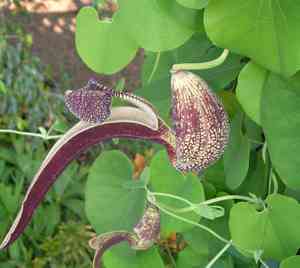
Gaping dutchman's pipe (Aristolochia ringens)
Also known as: Dutchman's Pipe, Gaping Dutchman's Pipe, Brazilian Dutchman's Pipe
The plant in question is the "gaping Dutchman's pipe" (Aristolochia elegans), notable for its striking flowers that resemble carnivorous pipe-shaped structures, which is how it earned its common name. Although it naturally thrives in tropical rainforests and is grown for its ornamental value, it has escaped into the wild and become an invasive species worldwide.
In This Article
Attributes of Gaping dutchman's pipe
Lifespan
Perennial
Plant Type
Vine
Plant Height
90 cm
Spread
4.5 m
Leaf Color
Green
Flower Size
Approximately 7 to 10 centimeters
Flower Color
Yellow Green Purple Brown
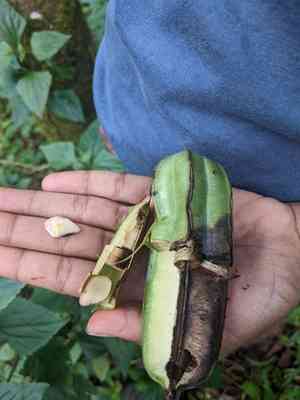
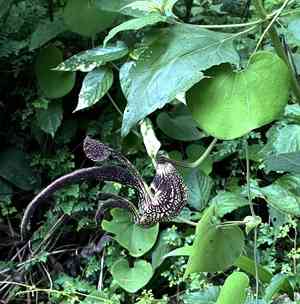
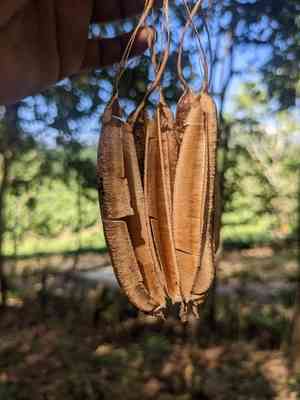
Images of Gaping dutchman's pipe
Quickly Identify Gaping dutchman's pipe
1
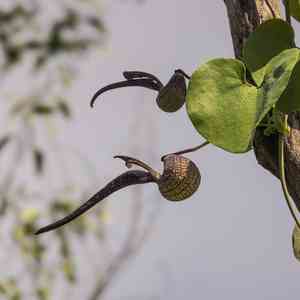
Aristolochia ringens can be identified by its unique flower structure that looks like a curved pipe, large heart-shaped leaves, and a woody vine. The flowers are typically a pale yellow to greenish color with a brownish-purple veining.
Scientific Classification of Gaping dutchman's pipe
Phylum
Vascular plants
Class
Dicotyledons
Order
Piperales
Family
Birthwort
Genus
Aristolochia
Species
Gaping dutchman's pipe
Planting and Growing of Gaping dutchman's pipe
Care Difficulty
Easy
Watering Schedule
Every 4 days
Sunlight Requirements
Partial sun
Sunshine Duration
4-8 hours
Ideal Temperature
65-85℉
Soil Type
Potting Mix, Peat Mix
Soil pH
6.5-7.5
Fertilizer Type
Balanced
Pruning Season
Spring, Summer
Pruning Area
Branches, Leaves
Pruning Frequency
2 times a year
Repotting Season
Spring
Pot Type
Plastic, Ceramic
 How to Water Gaping dutchman's pipe?
For Aristolochia ringens, it's essential to water them thoroughly yet adequately. You should aim for about 500 milliliters of water each time, ensuring the soil is moist but not waterlogged. The key is to allow water to fully penetrate the root zone, providing hydration without drowning the roots.
What are the symptoms of an underwatered Gaping dutchman's pipe?
›
What should I do if my Gaping dutchman's pipe is not getting enough water?
›
What are the symptoms of an overwatered Gaping dutchman's pipe?
›
How to save an overwatered Gaping dutchman's pipe?
›
 What Are the Sunlight Requirements for Gaping dutchman's pipe?
Aristolochia ringens prefers partial sun conditions, where it receives 4 to 6 hours of indirect or diffused sunlight. This light range allows optimal energy capture for growth and robust health, ensuring the plant's vitality.
More About Sunlight Requirements Techniques→
How much light does Aristolochia ringens prefer?
›
How to achieve ideal lighting for Aristolochia ringens?
›
What are the benefits of ideal light for Aristolochia ringens?
›
 What Is the Ideal Temperature Range for Gaping dutchman's pipe?
Aristolochia ringens thrives best within a temperature range of 65°F to 85°F. This range provides optimal conditions for growth and flowering, ensuring that the plant can photosynthesize efficiently, maintain healthy respiration rates, and carry out transpiration without undue stress.
 What Soil is Best for Gaping dutchman's pipe?
Aristolochia ringens thrives in well-draining soil, as it prevents waterlogging, which can lead to root rot. This type of soil ensures that water moves efficiently through the soil, providing necessary moisture without smothering the roots. A nutrient-rich soil boosts the growth of Aristolochia ringens by supplying essential elements like nitrogen, phosphorus, and potassium. This ensures vigorous growth and vibrant foliage, which are critical for its ornamental appeal. While drainage is crucial, the soil should also retain adequate moisture to support sustained growth. The balance of moisture retention and drainage helps maintain the plant's health during dry spells.
 How to Fertilize Gaping dutchman's pipe?
For Aristolochia ringens, it is essential to use a balanced fertilizer. Apply 1 tablespoon of a liquid fertilizer diluted at half strength every two weeks. For slow-release fertilizer, sprinkle around 3 tablespoons once every four months and ensure it's incorporated into the top layer of soil.
 How to Prune Gaping dutchman's pipe?
Ensure you use sharp and clean pruning shears or loppers to prevent disease spread and give a clean cut. Cut above a node to promote new growth and shape. Trim back to maintain desired size and remove any crossing branches to reduce tangling in the dense foliage of Aristolochia ringens. Pruning helps in shaping the vine to your preference, whether it's for ornamental purposes or space management. Trim to control the size and shape, and to encourage fuller growth along the trellis, fence, or area you have allotted for it to grow.
More About Pruning Techniques→
 How to Propagate Gaping dutchman's pipe plant?
1
Begin by soaking seeds in water for 24 hours to soften the seed coat, enhancing germination rates. Then, plant seeds in a prepared potting mix at a suitable depth.
2
Choose healthy, semi-hardwood sections of the plant for cuttings. Trim each section to about 4-6 inches long, ensuring a clean cut to maximize rooting potential.
3
After applying rooting hormone, plant cuttings in moist potting mix. Place them in a warm, humid environment with indirect sunlight, maintaining consistent moisture in the soil.
 How to Repot Gaping dutchman's pipe plant?
1
Aristolochia ringens should be repotted when the roots start circling inside the pot, or the plant shows signs of stunted growth. Spring and summer are ideal as the plant is actively growing and can recover more quickly from the disturbance of repotting.
2
Select a pot that is only slightly larger than the current one to prevent excess water retention. A pot with multiple drainage holes is ideal as it ensures any excess water can escape easily, reducing the risk of root rot.
3
Use a well-draining potting mix, such as one designed for succulents or cacti. This ensures that water moves quickly through the soil, helping to prevent soggy conditions that can lead to root disease.
Toxicity
Ingestion
WARNING
The judgment on toxicity and danger is for reference only. We DO NOT GUARANTEE any accuracy of such judgment. Therefore, you SHALL NOT rely on such judgment. It is IMPORTANT TO SEEK PROFESSIONAL ADVICE in advance when necessary.



