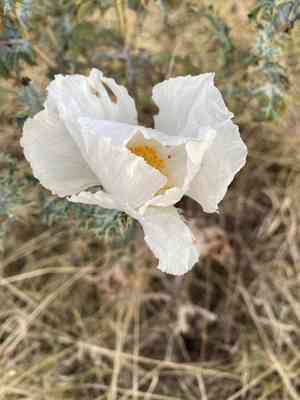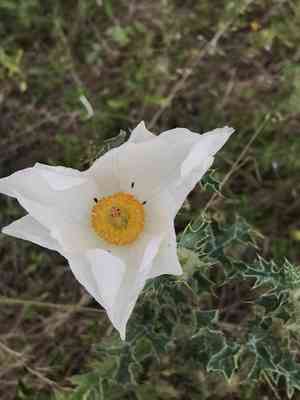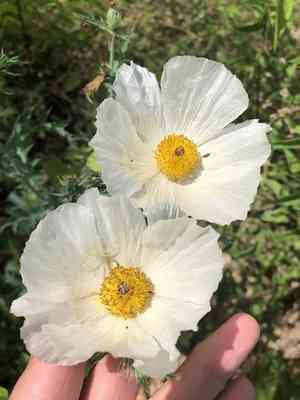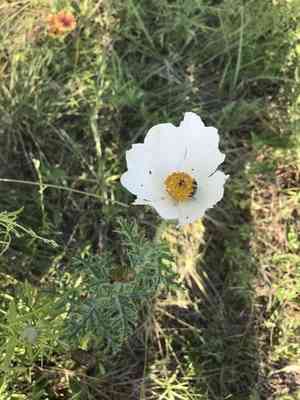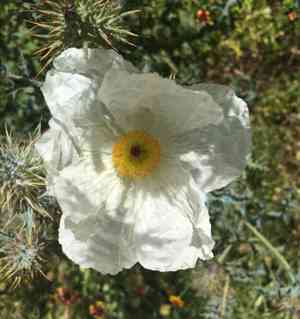
White prickly poppy(Argemone albiflora)

White prickly poppy (Argemone albiflora)

Also known as: Texas prickly poppy

The white prickly poppy (Argemone albiflora) is an annual, deciduous plant that reaches a height of 30 to 91 cm. It features a single, white, cupped flower atop its spiny stem and typically blooms between spring and summer. Bees are drawn to its nectar, although the plant is toxic to humans.

Attributes of White prickly poppy

Lifespan
Annual, Biennial
Plant Type
Herb
Plant Height
1.2 m
Spread
30 cm to 60 cm
Leaf Color
Green
Flower Size
8 cm to 10 cm
Flower Color
White

ForwardPlant - Identify plants with a snap

Identify and diagnose plants, get toxicity alerts, and explore safety guides for all types of fungi.

Try for Free

Images of White prickly poppy

White prickly poppy(Argemone albiflora)

Quickly Identify White prickly poppy

1
Argemone albiflora can be identified by its white, poppy-like flowers, rigid spiny leaves, and bristly stems. The plant typically exudes a yellow latex when cut, which is another distinguishing feature.

Scientific Classification of White prickly poppy

Phylum
Vascular plants
Class
Dicotyledons
Order
Ranunculales
Family
Poppy
Genus
Prickly poppies
Species
White prickly poppy

Planting and Growing of White prickly poppy

Care Difficulty
Easy
Watering Schedule
Every 2 days
Sunlight Requirements
Full sun
Sunshine Duration
4-6 hours
Ideal Temperature
70-85℉
Soil Type
Potting Mix, Peat Mix
Soil pH
6.5-7.5
Fertilizer Type
Balanced
Pruning Season
Spring, Summer
Pruning Area
Branches, Leaves
Pruning Frequency
2 times a year
Repotting Season
Spring
Pot Type
Plastic, Terracotta

water icon How to Water White prickly poppy?

Argemone albiflora prefers a moderate watering schedule. Ensure you provide around 500ml of water per session, allowing the soil to become moist but not waterlogged. The goal is to maintain a balance, ensuring the roots have enough moisture without sitting in excess water, which can cause rot.
What are the symptoms of an underwatered White prickly poppy?
What should I do if my White prickly poppy is not getting enough water?
What are the symptoms of an overwatered White prickly poppy?
How to save an overwatered White prickly poppy?

sunlight icon What Are the Sunlight Requirements for White prickly poppy?

Sunlight Requirements: Full sun, Partial sun
Duration of light: 6 to 8 hours
Argemone albiflora ideally grows in full to partial sun conditions. Ensuring these conditions fosters robust growth, vibrant blooms, and resilience to pests and diseases through optimized photosynthetic processes.
Optimal Sun Exposure
Solution for Ideal Exposure
Benefits of Ideal Lighting
More About Sunlight Requirements Techniques

temperature icon What Is the Ideal Temperature Range for White prickly poppy?

Ideal Temperature: 70 ~ 85℉
The ideal temperature range for growing Argemone albiflora is between 70°F and 85°F. This range ensures optimal photosynthesis and growth, providing a warm and stable environment similar to its natural habitat. Maintaining this temperature range can lead to healthier plants with more vigorous growth and larger blooms.

soil icon What Soil is Best for White prickly poppy?

Soil type: Sandy soil, Loam, Sandy loam
Soil PH: 6.5 ~ 7.5
Argemone albiflora thrives in well-draining soil, which prevents waterlogging and root rot. This ensures the roots have access to oxygen and nutrients, promoting healthy growth. The plant does well in soil with moderate nutrient levels. Providing it with nutrient-rich soil ensures robust stem and leaf development and vibrant flowers. This plant prefers slightly alkaline to neutral soils with a ph range between 6.5 and 7.5. Such soil conditions can enhance nutrient availability and overall plant health.

fertilize icon How to Fertilize White prickly poppy?

Fertilizer type: Balanced
For Argemone albiflora, it's important to apply fertilizer at a moderate rate. Use about half the recommended dosage on the label for liquid fertilizers, as this plant is adapted to nutrient-poor soils. It's vital to ensure even application to avoid nutrient burn.

prune icon How to Prune White prickly poppy?

Pruning Time: Spring, Summer, Autumn
Pruning Argemone albiflora involves cutting back any diseased, damaged, or dead stems to maintain plant health. This encourages the plant to focus its energy on healthy growth and vibrant blooms. Start by cleaning your tools to prevent infection. Carefully trim the plant to shape it and remove any wild growth. Ensure cuts are clean and at a slight angle to promote water runoff and prevent rot. More About Pruning Techniques

propagate icon How to Propagate White prickly poppy plant?

Propagate Time: Spring, Early spring
1
Use well-draining soil mix enriched with organic matter. The soil should be slightly moist but not waterlogged, providing an ideal environment for seed germination and root development.
2
Spread the seeds evenly on the soil surface and lightly cover with a thin layer of soil. Water gently to settle the seeds and provide consistent moisture until germination occurs.
3
Select healthy, mature stems for cuttings. Cut at a 45-degree angle and remove any lower leaves, then dip the cut end in rooting hormone to enhance root development.
More About Propagating Techniques

repot icon How to Repot White prickly poppy plant?

Repotting frequency: Every 2-3 years
1
Argemone albiflora should be repotted when you notice roots excessively growing out of the drainage holes or when the soil appears compacted and water is not penetrating it well. Also, if the plant appears crowded in its pot or growth seems stunted, these are strong indicators that it's time for a new home.
2
Select a pot one size larger than the current one, ensuring it has well-sized drainage holes to prevent water stagnation. A clay pot can be beneficial as it allows the soil to dry more evenly, but plastic pots could work if they offer good drainage. The new pot should also provide room for growth, ensuring that the plant will not need another repotting too soon.
3
Opt for a well-draining sandy soil mix, possibly mixed with perlite or pumice, to enhance aeration and drainage. This mimics the plant’s natural desert environment, reducing the risk of root rot and allowing the roots to breathe efficiently, promoting healthy root development and plant growth.

ForwardPlant - Identify plants with a snap

Find the best spots for them to optimize their health, simply using your phone.

Try for Free

Toxicity of White prickly poppy

Is White prickly poppy toxic to humans?

White prickly poppy exhibits extreme toxicity when ingested. Ingestion can result in serious health issues, loss of consciousness, or potentially fatal outcomes. The plant's toxicity arises from alkaloids, which are distributed throughout all its parts, with the highest concentrations found in the seeds and roots. Symptoms of poisoning from white prickly poppy include nausea, diarrhea, visual disturbances, fainting spells, and coma. In severe instances, the consequences can be lethal, determined by the quantity ingested. Young children are particularly susceptible to its toxic effects.

Is White prickly poppy toxic to cat?

The white prickly poppy is known to be toxic to felines. If a cat consumes any part of this plant, it may result in poisoning. Cats could inadvertently ingest sections of the white prickly poppy, which poses a significant risk to their well-being. After consuming the plant, a cat may exhibit general signs of discomfort or illness. It is essential for cat owners to protect their pets from accessing this harmful plant and to observe for any signs of distress. Should there be any suspicion of poisoning from white prickly poppy, it is vital to seek immediate professional assistance at a veterinary clinic to ensure the health and safety of the affected cat.

Is White prickly poppy toxic to dog?

The white prickly poppy is recognized as toxic to dogs. If dogs mistakenly ingest this plant, they can experience poisoning. Every part of the plant, which includes its leaves, stems, flowers, and seeds, harbors toxic substances that can jeopardize canine health. Following the consumption of white prickly poppy, dogs might show symptoms such as gastrointestinal disturbances, vomiting, diarrhea, lethargy, or potentially more serious reactions depending on the quantity ingested. It is essential for dog owners to keep their pets away from white prickly poppy and to carefully supervise them in areas where this plant is found. Should there be any suspicion of poisoning from white prickly poppy, seeking immediate veterinary assistance is critical to guarantee the best possible outcome for the dog involved.

Identify toxic plants for your safety

Learn which plants are harmful to you and your pets, and make informed choices for a safer home!

Try for Free
WARNING
The judgment on toxicity and danger is for reference only. We DO NOT GUARANTEE any accuracy of such judgment. Therefore, you SHALL NOT rely on such judgment. It is IMPORTANT TO SEEK PROFESSIONAL ADVICE in advance when necessary.
More About Toxic Techniques