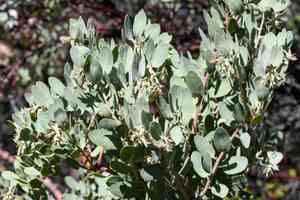
Hoover's manzanita(Arctostaphylos hooveri)

Hoover's manzanita (Arctostaphylos hooveri)

Also known as: Hoover's manzanita

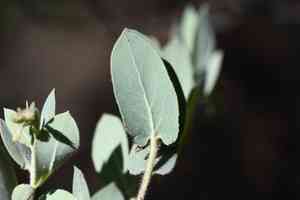
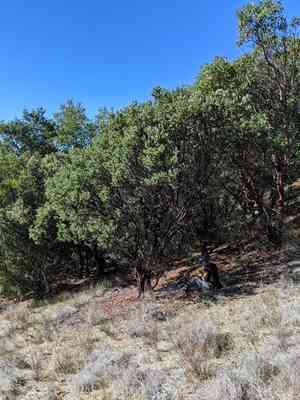
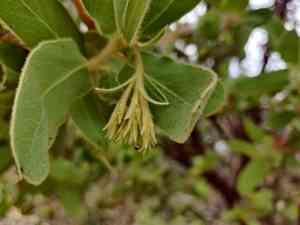
Hoover's manzanita (Arctostaphylos hooveri) is a robust, evergreen shrub indigenous to California, specifically thriving in the unique serpentine soils of the central coast. This plant is characterized by its durable, leathery green leaves, which have a glossy top side and are finely haired underneath. It blooms in winter and early spring with clusters of white to pink urn-shaped flowers, which are followed by small, red, berry-like fruits.

Ecological contributions include:

1. **Erosion Control:** Its deep root system stabilizes soil on slopes and prevents erosion.
2. **Wildlife Support:** The flowers attract pollinators, while the berries provide nourishment for birds and other animals.
3. **Biodiversity Enhancement:** It supports a variety of species within its ecosystem, contributing to overall biodiversity.
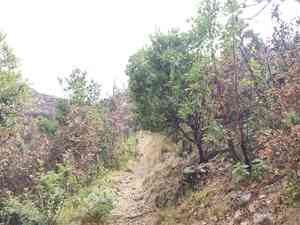
4. **Fire Resilience:** The shrub is well-adapted to fire-prone areas, capable of resprouting after wildfires, thus playing a role in the natural fire cycle and ecosystem recovery.

These attributes underscore Hoover's manzanita's importance in its native habitat, fostering ecological stability and diversity.

Attributes of Hoover's manzanita

Lifespan
Perennial
Plant Type
Shrub
Plant Height
4 to 6 feet (1.2 to 1.8 meters)
Spread
3 to 5 feet (0.9 to 1.5 meters)
Leaf Color
Bright green
Flower Size
0.2 to 0.3 inches (5 to 8 mm)
Flower Color
White to pink

ForwardPlant - Identify plants with a snap

Identify and diagnose plants, get toxicity alerts, and explore safety guides for all types of fungi.

Try for Free

Images of Hoover's manzanita

Hoover's manzanita(Arctostaphylos hooveri)

Quickly Identify Hoover's manzanita

1
To identify Arctostaphylos hooveri, look for an evergreen shrub with leathery, bright green leaves and smooth, reddish-brown bark. The plant produces small, white to pink, urn-shaped flowers in clusters followed by red berries.

Scientific Classification of Hoover's manzanita

Phylum
Vascular plants
Class
Dicotyledons
Order
Ericales
Family
Heath
Genus
Arctostaphylos
Species
Hoover's manzanita

Planting and Growing of Hoover's manzanita

Care Difficulty
Moderate
Watering Schedule
Every 2 days
Sunlight Requirements
Full sun
Sunshine Duration
6-12 hours
Ideal Temperature
65-80℉
Soil Type
Potting Mix, Peat Mix
Soil pH
6.5-7.5
Fertilizer Type
Balanced
Pruning Season
Spring, Summer
Pruning Area
Branches, Leaves
Pruning Frequency
2 times a year
Repotting Season
Spring
Pot Type
Plastic, Ceramic

water icon How to Water Hoover's manzanita?

For Arctostaphylos hooveri, watering should mimic the moderate conditions of its native environment. Water deeply but infrequently, allowing the soil to dry out between waterings. This ensures the roots are encouraged to grow deep, enhancing drought resistance.
What are the symptoms of an underwatered Hoover's manzanita?
What should I do if my Hoover's manzanita is not getting enough water?
What are the symptoms of an overwatered Hoover's manzanita?
How to save an overwatered Hoover's manzanita?

sunlight icon What Are the Sunlight Requirements for Hoover's manzanita?

Sunlight Requirements: Full sun, Partial sun
Duration of light: 6 to 8 hours
Arctostaphylos hooveri enjoys a full to partial sun range, promoting vigorous growth and healthy foliage while minimizing risk of sun damage.
What is the optimal sunlight level?
How can you achieve optimal sunlight levels?
What are the benefits of ideal sunlight conditions?

temperature icon What Is the Ideal Temperature Range for Hoover's manzanita?

Ideal Temperature: 65 ~ 80℉
Arctostaphylos hooveri thrives best in temperatures ranging from 65°F to 80°F. Within this range, the plant can perform essential physiological processes such as photosynthesis and respiration optimally, promoting healthy growth and development.

soil icon What Soil is Best for Hoover's manzanita?

Soil type: Sandy soil, Sandy loam, Acidic soil
Soil PH: 6.5 ~ 7.5
Arctostaphylos hooveri thrives in well-drained soils. Good drainage prevents root rot and other moisture-related issues, ensuring the plant can access just the right amount of water it needs to flourish. This plant requires soils that offer a balanced nutrient profile. Easily accessible nutrients promote healthy leaf growth and enhance blooming, resulting in a vibrant and robust Arctostaphylos hooveri. Preferring a sandy or sandy loam texture, these soil types prevent compaction. This fosters a healthy root spread, providing the plant with the necessary foundation to withstand environmental stress.

fertilize icon How to Fertilize Hoover's manzanita?

Fertilizer type: Balanced
Arctostaphylos hooveri thrives on a subtle balance of nutrients. When fertilizing, use a balanced fertilizer with a ratio such as 10-10-10. For liquid fertilizer, dilute it at half the recommended strength (e.g., half a teaspoon per gallon) to avoid over-fertilization and apply evenly around the base.

prune icon How to Prune Hoover's manzanita?

Pruning Time: Spring, Summer
Start by removing any dead, diseased, or damaged branches. Use clean, sharp tools for precise cuts. Focus on the inner branches to thin out dense growth, allowing more light and air circulation. Avoid cutting back more than one-third of the plant in a season to prevent stress. Shape the plant gently, following its natural growth habit to maintain its aesthetic appeal. More About Pruning Techniques

propagate icon How to Propagate Hoover's manzanita plant?

Propagate Time: Spring, Early spring
1
Arctostaphylos hooveri seeds have a hard outer coat, requiring stratification to break dormancy. This involves soaking seeds in water for 24 hours, followed by cold stratification in a refrigerator for several weeks.
2
Select healthy, semi-hardwood cuttings from the parent plant. Ensure each cutting includes a few leaf nodes and is cut to a length of 4-6 inches to facilitate root development.
3
Plant seeds or treated cuttings in well-draining soil mix. Maintain a moist environment and ensure they receive indirect sunlight, avoiding overly harsh or direct light.
More About Propagating Techniques

repot icon How to Repot Hoover's manzanita plant?

Repotting frequency: Every 2-3 years
1
Watch for roots protruding from the drainage holes, as this indicates it's time to repot Arctostaphylos hooveri. Additionally, if the plant's growth becomes stunted or it dries out too quickly after watering, these are clear signals that a repotting is necessary to provide more space and fresh nutrients.
2
Choose a pot slightly larger than the current one, with ample drainage holes. The increase in size should be about 1-2 inches in diameter to prevent excessive soil, which can retain moisture and lead to root rot. A terracotta pot is ideal as it allows moisture to evaporate and keeps the roots from staying too wet.
3
Select a well-draining, gritty soil mix, such as a combination of cactus soil and perlite. This mixes provide excellent drainage, which is crucial for preventing root rot and maintaining the health of Arctostaphylos hooveri, as it mimics its native, poor-soiled habitat.

ForwardPlant - Identify plants with a snap

Find the best spots for them to optimize their health, simply using your phone.

Try for Free