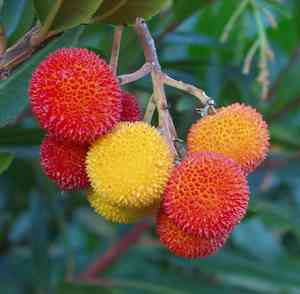
Strawberry tree(Arbutus unedo)

Strawberry tree (Arbutus unedo)

Also known as: Irish strawberry tree, Arbutus tree

The Strawberry Tree (Arbutus unedo) is an evergreen shrub or small tree native to Europe. Its bright red fruits, which resemble strawberries, are rich in nutrients and sugars. These fruits are commonly used in the preparation of jams, pastries, fruit yogurts, and various alcoholic drinks.

Attributes of Strawberry tree

Lifespan
Perennial
Plant Type
Tree, Shrub
Plant Height
5 m to 15 m
Spread
1.8 m to 4.5 m
Leaf Color
Green
Flower Size
4 mm to 6 mm
Flower Color
White Pink

ForwardPlant - Identify plants with a snap

Identify and diagnose plants, get toxicity alerts, and explore safety guides for all types of fungi.

Try for Free

Images of Strawberry tree

Strawberry tree(Arbutus unedo)

Quickly Identify Strawberry tree

1
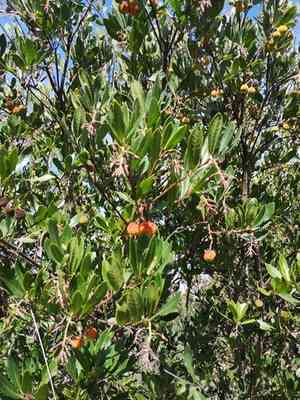
Distinctive glossy green leaves with serrated margins and red undersides.
2
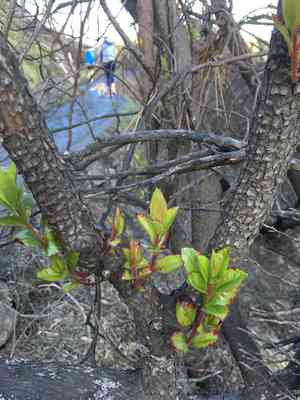
Tree sheds grayish-brown bark to reveal striking red inner bark.
3
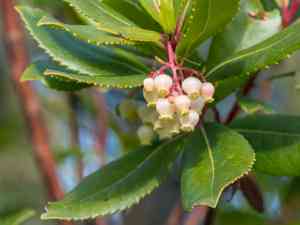
White urn-shaped flowers in drooping panicles emit mild fragrance.
4
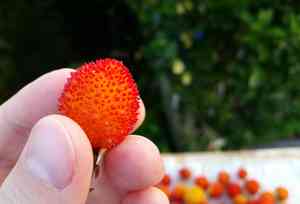
Rough-textured red berries resembling strawberries persist alongside flowers.
5
Robust, irregular reddish-brown stems with shallow vertical fissures.

Scientific Classification of Strawberry tree

Phylum
Vascular plants
Class
Dicotyledons
Order
Heathers and allies
Family
Heath
Genus
Madronas
Species
Strawberry tree

Planting and Growing of Strawberry tree

Care Difficulty
Easy
Watering Schedule
Every 2 days
Sunlight Requirements
Full sun
Sunshine Duration
6-10 hours
Ideal Temperature
60-75℉
Soil Type
Potting Mix, Peat Mix
Soil pH
6-7.5
Fertilizer Type
Balanced
Pruning Season
Spring, Summer
Pruning Area
Branches, Leaves
Pruning Frequency
2 times a year
Repotting Season
Spring
Pot Type
Plastic, Ceramic

water icon How to Water Strawberry tree?

The Strawberry Tree (Arbutus unedo) thrives when watered moderately—about 500 ml per session. It's crucial to ensure that the soil remains slightly moist but never soggy, as the plant prefers a well-draining environment. The key principle here is balance: too little water can stress the plant, while too much can lead to root rot.
What are the symptoms of an underwatered Strawberry tree?
What should I do if my Strawberry tree is not getting enough water?
What are the symptoms of an overwatered Strawberry tree?
How to save an overwatered Strawberry tree?
More About Watering Techniques

sunlight icon What Are the Sunlight Requirements for Strawberry tree?

Sunlight Requirements: Full sun, Partial sun
Duration of light: Six to eight hours
Arbutus unedo thrives best in full to partial sun, with six to eight hours daily. This light range supports optimal photosynthesis, leading to healthy growth and vibrant foliage.
What is the best location for optimal sunlight?
What adjustments can be made to improve its lighting?
What are the benefits of adequate sunlight for the plant?
More About Sunlight Requirements Techniques

temperature icon What Is the Ideal Temperature Range for Strawberry tree?

Ideal Temperature: 60 ~ 75℉
The ideal temperature range for growing Arbutus unedo is between 60°F and 75°F. This range ensures that the plant can perform photosynthesis optimally and maintain robust growth. It is crucial to maintain these temperatures consistently to simulate their natural Mediterranean habitat. Extreme deviations could hinder their development significantly.

soil icon What Soil is Best for Strawberry tree?

Soil type: Sandy loam, Loam, Clay soil
Soil PH: 6 ~ 7.5
Arbutus unedo thrives in well-drained soil conditions. This reduces waterlogging risks, ensuring the roots have the necessary aeration to absorb nutrients efficiently. Well-drained soil prevents root rot and encourages healthy plant growth. This plant benefits from soil with moderate nutrient levels. It requires balanced nutrients to maintain its evergreen foliage and produce its distinctive fruits. Providing a moderate nutrient base supports the overall vitality and growth of Arbutus unedo. While Arbutus unedo enjoys well-drained conditions, it also benefits from soil that retains adequate moisture. This balance ensures the plant stays hydrated without being overly wet, which is vital for its growth during drier spells. More About Soil

fertilize icon How to Fertilize Strawberry tree?

Fertilizer type: Balanced
For Arbutus unedo, the amount of fertilizer should be carefully managed. Use a balanced liquid fertilizer diluted to half the recommended strength. Apply approximately 2 tablespoons per gallon of water to avoid overwhelming the plant's root system. Solid slow-release fertilizers should be applied at a rate of roughly 1/4 cup per plant annually to offer a consistent nutrient supply. More About Fertilizing Techniques

prune icon How to Prune Strawberry tree?

Pruning Time: Spring, Summer, Autumn, Winter
Begin by removing dead or diseased wood. Next, thin out overcrowded branches to allow light and air to penetrate the foliage, which minimizes pest issues. After flowering, prune the plant lightly to stimulate new growth. This results in a better fruit yield, as the plant redirects energy to produce berries. Wear gloves to protect from sharp branches and potential sap irritation. Ensure stable footing when reaching higher branches to avoid accidents. More About Pruning Techniques

propagate icon How to Propagate Strawberry tree plant?

Propagate Time: Early spring, Late autumn
1
For seed propagation, gather seeds from the fruit of Arbutus unedo. Seed stratification is recommended by chilling the seeds in a refrigerator for a few weeks to break dormancy and improve germination rates.
2
For cutting propagation, choose healthy semi-hardwood cuttings in late autumn. Use sterilized pruning shears to make clean cuts just below a node. Apply rooting hormone to the cut tips to enhance root formation.
3
Plant seeds or cuttings in a well-draining mix, like peat and perlite. Cover seeds lightly with soil, and for cuttings, insert them into the soil up to a third of their length. Ensure they are kept moist and sheltered.
More About Propagating Techniques

repot icon How to Repot Strawberry tree plant?

Repotting frequency: Once every 2-3 years
1
Arbutus unedo shows signals like roots outgrowing drainage holes or soil compacting when it needs repotting. These signs typically appear after 2-3 years, signaling a need for fresh soil and space. Choose spring or autumn for optimal repotting timing, allowing the plant to recover rapidly.
2
Choose a pot slightly larger than the current one with adequate drainage holes. A ceramic or terracotta pot provides stability and breathability, preventing root rot and overwatering. The pot's depth should accommodate root growth while promoting healthy development.
3
Select a well-draining soil mix, rich in organic matter, like peat, pine bark, or coarse sand. This helps maintain acidity and prevents waterlogging, ensuring the roots receive oxygen. The soil also provides necessary nutrients, supporting robust growth and health.

ForwardPlant - Identify plants with a snap

Find the best spots for them to optimize their health, simply using your phone.

Try for Free

Toxicity of Strawberry tree

Is Strawberry tree toxic to cat?

The strawberry tree poses a moderate toxicity risk to cats and can result in poisoning if any part is ingested. Every component of the plant is poisonous, meaning that cats may be harmed if they consume even a small amount. Upon ingestion, a cat may display symptoms of pain or sickness. It is essential for cat owners to remain alert and keep their pets away from the strawberry tree. If a cat eats any section of the strawberry tree, prompt veterinary assistance is crucial to guarantee proper care and treatment.

Is Strawberry tree toxic to dog?

The strawberry tree presents a moderate risk of toxicity to dogs. Poisoning usually happens when a dog consumes any part of the plant, as all its sections are deemed toxic. Following ingestion, a dog might show symptoms like gastrointestinal distress, vomiting, diarrhea, or more serious reactions based on the quantity ingested. It is vital for dog owners to keep a close eye on their pets and restrict their access to the strawberry tree. If there is any suspicion of poisoning, prompt veterinary attention is critical to guarantee the best possible recovery for the affected dog.

Identify toxic plants for your safety

Learn which plants are harmful to you and your pets, and make informed choices for a safer home!

Try for Free
WARNING
The judgment on toxicity and danger is for reference only. We DO NOT GUARANTEE any accuracy of such judgment. Therefore, you SHALL NOT rely on such judgment. It is IMPORTANT TO SEEK PROFESSIONAL ADVICE in advance when necessary.
More About Toxic Techniques