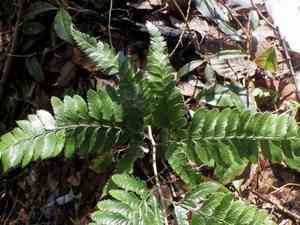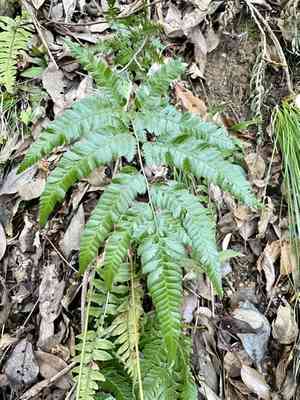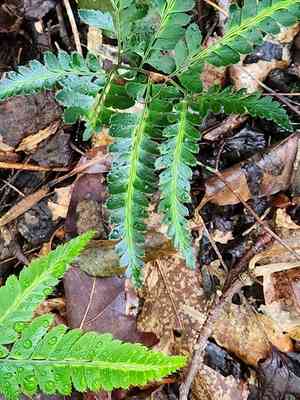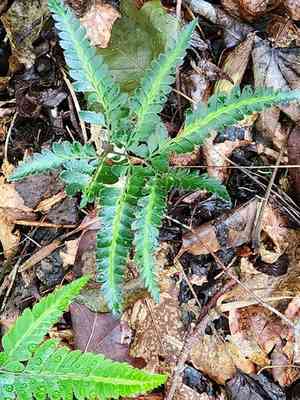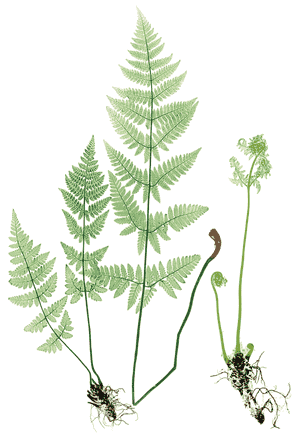
East indian holly fern(Arachniodes simplicior)

East indian holly fern (Arachniodes simplicior)

Also known as: Simplicior holly fern, Variegated east indian holly fern

Rhizomes are described as slender and scaly, extending horizontally or diagonally. The scales, which are linear-lanceolate and measure 2 to 8 mm in length and less than 1 mm in width, are brown with hairy edges and are attached at the base of the rhizome and petiole. The petiole itself is pale straw-colored, 25 to 45 cm long, and has a thickened base with denser scales. The leaf blades are twice pinnately compound, oval-oblong in shape, and measure 30 to 40 cm in length and 15 to 35 cm in width. The lower 3-5 pairs of side wings are well-developed, while the wings above them shorten abruptly, forming a top wing similar to the side wings. Each wing has a handle and a linear-lanceolate shape, broadest at the base and tapering to a sharp, serrated tip. The leaf surface is green, sometimes with whitish spots along the feather axis. Sporangia appear midway between the midrib and the winglet edge, with a round kidney-shaped spore membrane that has a smooth or slightly wavy rim.

Attributes of East indian holly fern

Lifespan
Perennial
Plant Type
Herb
Plant Height
50 cm
Spread
50 cm
Leaf Color
Green Yellow Variegated Gray
Flower Size
N/A (ferns do not produce flowers)
Flower Color
N/A (ferns do not produce flowers)

ForwardPlant - Identify plants with a snap

Identify and diagnose plants, get toxicity alerts, and explore safety guides for all types of fungi.

Try for Free

Images of East indian holly fern

East indian holly fern(Arachniodes simplicior)

Quickly Identify East indian holly fern

1
Look for the distinctive variegated leaves with a green center and yellow edges. The fronds are pinnate and can grow quite large, giving an unmistakable lush appearance.

Scientific Classification of East indian holly fern

Phylum
Vascular plants
Class
Ferns
Order
Polypodiales
Family
Wood fern
Genus
Arachniodes
Species
East indian holly fern

Planting and Growing of East indian holly fern

Care Difficulty
Easy
Watering Schedule
Every 3 days
Sunlight Requirements
Partial sun
Sunshine Duration
4-8 hours
Ideal Temperature
65-75℉
Soil Type
Potting Mix, Peat Mix
Soil pH
6.5-7.5
Fertilizer Type
Balanced
Pruning Season
Spring, Summer
Pruning Area
Branches, Leaves
Pruning Frequency
2 times a year
Repotting Season
Spring
Pot Type
Plastic, Ceramic

water icon How to Water East indian holly fern?

Arachniodes simplicior requires a balanced watering approach. It thrives when the soil is kept consistently moist but not waterlogged. This means watering until you see slight moisture seepage from the pot's bottom, generally around 250 ml per session.
What are the symptoms of an underwatered East indian holly fern?
What should I do if my East indian holly fern is not getting enough water?
What are the symptoms of an overwatered East indian holly fern?
How to save an overwatered East indian holly fern?

sunlight icon What Are the Sunlight Requirements for East indian holly fern?

Sunlight Requirements: Partial sun, Full shade
Duration of light: 3 to 6 hours
Arachniodes simplicior ideally grows best in partial sun, basking in approximately 3 to 6 hours of diffuse sunlight daily. Such conditions help maintain its vibrant green foliage and encourage steady growth.
How much sun does Arachniodes simplicior need?
What are the ideal placement locations for Arachniodes simplicior?
How to adjust indoor lighting for Arachniodes simplicior?
More About Sunlight Requirements Techniques

temperature icon What Is the Ideal Temperature Range for East indian holly fern?

Ideal Temperature: 65 ~ 75℉
The ideal temperature range for Arachniodes simplicior is between 65°F and 75°F. This range provides optimal conditions for growth, ensuring that the fern remains healthy and maintains its vibrant foliage. Maintaining this temperature range stabilizes the plant's metabolism and supports effective photosynthesis.

soil icon What Soil is Best for East indian holly fern?

Soil type: Loam, Sandy loam
Soil PH: 6.5 ~ 7.5
Arachniodes simplicior thrives in well-draining soil, which prevents waterlogging and root rot. Loamy and sandy loam soils are perfect as they ensure good aeration and allow excess water to drain away easily, providing an ideal environment for root health. This plant prefers soil that is rich in organic matter, which supplies essential nutrients for growth. Regular addition of compost or well-rotted manure can maintain its nutrient levels, promoting lush, green foliage and robust plant health. With a pH tolerance from 6.5 to 7.5, this plant manages well in slightly acidic to neutral soils. Maintaining the pH within this range ensures optimal nutrient uptake and prevents nutrient deficiency, fostering healthy and vigorous growth.

fertilize icon How to Fertilize East indian holly fern?

Fertilizer type: Balanced
For Arachniodes simplicior, employing a balanced fertilizer with a formulation such as 10-10-10 is ideal. Apply no more than a quarter teaspoon per plant to avoid nutrient burn. Use it cautiously, as ferns are sensitive to over-fertilization.

prune icon How to Prune East indian holly fern?

Pruning Time: Spring, Summer, Autumn
Before you begin, carefully inspect your Arachniodes simplicior for any fronds that appear brown or wilted. These are usually located towards the plant's base and should be removed to encourage new growth and ensure optimal energy distribution. Utilize sharp, sterilized pruning shears to make clean cuts. Dull or dirty tools can cause tissue damage and can introduce pathogens to the plant, leading to potential infections. When pruning, cut fronds as close to the base as possible while being careful not to damage emerging new growth. This minimizes injury to the plant and allows it to redistribute resources effectively. More About Pruning Techniques

propagate icon How to Propagate East indian holly fern plant?

Propagate Time: Spring, Early spring
1
Before dividing, water the Arachniodes simplicior thoroughly the day before to ensure the plant is well-hydrated. This makes it easier to handle and minimizes stress during division.
2
Gently dig around the plant using a garden fork and carefully lift the clumps. Look for natural divisions in the root system and separate them by hand or with pruning shears, ensuring each division has a healthy amount of roots and fronds.
3
Plant the new divisions in well-draining soil that's been enriched with organic matter. Water them thoroughly after planting and ensure they receive indirect sunlight to encourage healthy growth.
More About Propagating Techniques

repot icon How to Repot East indian holly fern plant?

Repotting frequency: Every 2-3 years
1
Repot your Arachniodes simplicior when you notice signs such as roots poking out from the drainage holes or stunted growth. These indicators suggest that the plant has become root-bound and needs more space.
2
Choose a pot that is one size larger than the current one to give the roots room to spread. Ensure it has good drainage to prevent waterlogging, protecting the roots from rot.
3
Opt for a rich, well-draining soil mix to imitate its natural habitat. A fern-specific mix is ideal, as it retains necessary moisture while allowing excess water to escape, preventing root rot.

ForwardPlant - Identify plants with a snap

Find the best spots for them to optimize their health, simply using your phone.

Try for Free