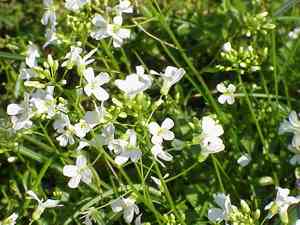
Running rockcress (Arabis procurrens)
Also known as: Procumbent Rock Cress
Arabis procurrens, commonly known as running rockcress or spreading rockcress, is a species within the Brassicaceae family. This perennial is either evergreen or semi-evergreen and is known for creating a dense mat of foliage. In the spring, it produces loose racemes of white flowers, making it an excellent choice for alpine gardens. The name "procurrens" signifies its spreading nature, particularly underground. The cultivar Arabis procurrens 'Variegata', distinguished by its white-edged leaves, has been honored with the Royal Horticultural Society's Award of Garden Merit.
In This Article
Attributes of Running rockcress
Lifespan
Perennial
Plant Type
Herb
Plant Height
Up to 10 cm (3.9 inches)
Spread
30-45 cm (12-18 inches)
Leaf Color
Green Pink Variegated Cream
Flower Size
0.5-1 cm (0.2-0.4 inches)
Flower Color
White
Images of Running rockcress
Quickly Identify Running rockcress
1
Look for its low-growing, mat-forming habit with small, white or pale pink flowers. It often has small, oblong leaves that are arranged in a rosette formation.
Scientific Classification of Running rockcress
Phylum
Vascular plants
Class
Dicotyledons
Order
Brassicales
Family
Cruciferae
Genus
Rockcresses
Species
Running rockcress
Planting and Growing of Running rockcress
Care Difficulty
Easy
Watering Schedule
Every 2 days
Sunlight Requirements
Full sun
Sunshine Duration
4-8 hours
Ideal Temperature
59-68℉
Soil Type
Potting Mix, Peat Mix
Soil pH
6.5-7.5
Fertilizer Type
Balanced
Pruning Season
Spring, Summer
Pruning Area
Branches, Leaves
Pruning Frequency
2 times a year
Repotting Season
Spring
Pot Type
Plastic, Ceramic
 How to Water Running rockcress?
When watering Arabis procurrens, ensure the soil is moist but not waterlogged. Use about 250 ml of water, enough to adequately soak the top layer of soil and allow it to dry slightly before the next watering. This prevents root rot and supports healthy growth.
What are the symptoms of an underwatered Running rockcress?
›
What should I do if my Running rockcress is not getting enough water?
›
What are the symptoms of an overwatered Running rockcress?
›
How to save an overwatered Running rockcress?
›
 What Are the Sunlight Requirements for Running rockcress?
Partial to full sun exposure over 6-8 hours daily is optimal for Arabis procurrens, supporting its robust leaf development and vibrant flowering. Sufficient light helps maintain the plant's structural integrity and enhances its natural defense mechanisms.
What is the best time for sunlight exposure?
›
What measures should I take to ensure ideal sunlight?
›
What are the benefits of achieving ideal light for Arabis procurrens?
›
 What Is the Ideal Temperature Range for Running rockcress?
Arabis procurrens thrives best in moderate temperatures. Maintaining the growing environment between 59°F to 68°F ensures the most robust growth. These temperatures support optimal photosynthetic activity and nutrient assimilation, fostering healthy foliage and vibrant blooms.
 What Soil is Best for Running rockcress?
Arabis procurrens thrives in well-drained soil to prevent waterlogging, which can lead to root rot. Well-drained conditions ensure oxygen reaches the roots, promoting healthy growth and flowering. This plant prefers soil with moderate nutrient levels. It does not demand excessively rich soil, thus minimizing the need for frequent fertilization while ensuring steady growth and vibrant blooms. Arabis procurrens shows a preference for slightly alkaline soil conditions, which align with its natural habitats. This helps in maximizing its nutrient absorption efficiency.
 How to Fertilize Running rockcress?
For Arabis procurrens, less is often more when it comes to fertilization. Use a balanced liquid fertilizer, diluted to half strength, and apply at a rate of 50ml per plant every time during the growing season. This ensures the plant receives adequate nutrients without risking nutrient burn.
 How to Prune Running rockcress?
Begin by inspecting the plant and identifying any damaged or dead leaves and stems. Use clean, sharp pruning shears to remove these parts first. Next, cut back any overly long stems to about one-third of their length to maintain the plant’s shape and encourage bushier growth. Be cautious to make clean cuts just above a leaf node. Additionally, remove any stems that cross each other to prevent rubbing and potential damage. Regularly check for and prune any offshoots spreading out of bounds to maintain its tidy appearance.
More About Pruning Techniques→
 How to Propagate Running rockcress plant?
1
Collect mature seeds from the parent plant in late summer to autumn. Sow the seeds in seed trays filled with a well-drained growing medium and cover them lightly with soil.
2
Select healthy, non-flowering stems and cut them just below a leaf node. Remove the lower leaves to prevent decay and dip the cut end in rooting hormone before planting.
3
Lift mature plants in early spring or early autumn, divide them into smaller clumps, ensuring each has roots attached, then replant them in prepared soil.
 How to Repot Running rockcress plant?
1
Arabis procurrens shows it's time for repotting when roots start to emerge from the drainage holes or the plant appears to be outgrowing its current pot. Spring and autumn offer optimal conditions for this task, providing mild temperatures that minimize stress. Watch for signs of stunted growth or waterlogging as indicators that a fresh start is needed.
2
Select a pot that is one size larger than the current one to allow for root expansion. Ensure it has drainage holes to prevent water from accumulating at the bottom. Material-wise, terra cotta is excellent because it's porous, allowing air and moisture to pass through, which helps maintain healthy roots.
3
Use well-draining soil, preferably a sandy loam mix, to prevent root rot. This type of soil allows excess water to escape, reducing the chance of root diseases. Incorporate organic matter, like compost, to offer nutrients and improve vitality, setting a solid foundation for plant rejuvenation.
Learn More About Running rockcress Diseases
Anthracnose
Bacterial Leaf Spot
Bacterial Soft Rot
Clubroot
Crown Gall
Cyst Nematode
Damping-off
Downy Mildew
Drought Stress
Fusarium Wilt
Gray Mold
Leaf Spot
Mosaic
Nutrient Deficiency
Nutrient Toxicity
Powdery Mildew
Root Rot
Root-knot Nematode
Rusts
Sooty Mold
Spider Mites
Temperature Stress
Thrips Damage
White Mold



