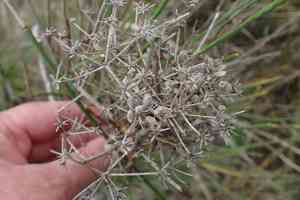
Anginon difforme (Anginon difforme)
Also known as: None known
Anginon difforme is characterized by its dense, bushy appearance with small, needle-like leaves that adapt well to the arid landscapes it often inhabits. Its white to pale pink flowers blossom in distinctive, umbrella-shaped clusters, enabling efficient pollination and seed dispersal by leveraging the limited moisture available in its environment. This resilience makes anginon difforme a staple in rugged terrains.
In This Article
Attributes of Anginon difforme
Lifespan
Perennial
Plant Type
Shrub
Plant Height
0.5-1.5 meters
Spread
Not specified
Leaf Color
Green
Flower Size
0.2-0.4 cm
Flower Color
White or yellow
Images of Anginon difforme
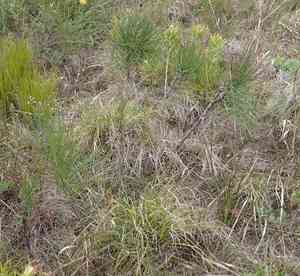
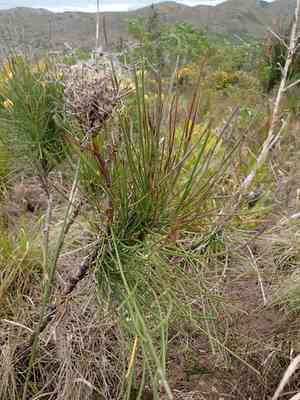
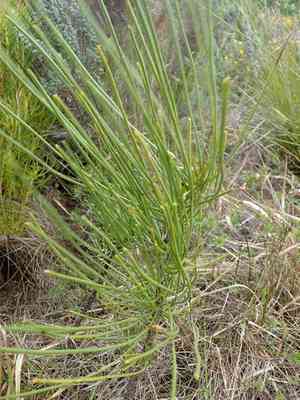
Quickly Identify Anginon difforme
1
Identification involves looking for the characteristic umbel-shaped clusters of flowers and dissected leaves typical of the Apiaceae family.
Scientific Classification of Anginon difforme
Phylum
Vascular plants
Class
Dicotyledons
Order
Apiales
Family
Umbellifers
Genus
Anginon
Species
Anginon difforme
Planting and Growing of Anginon difforme
Care Difficulty
Hard
Watering Schedule
Every 2 days
Sunlight Requirements
Partial sun
Sunshine Duration
4-8 hours
Ideal Temperature
60-75℉
Soil Type
Potting Mix, Peat Mix
Soil pH
6.5-7.5
Fertilizer Type
Balanced
Pruning Season
Spring, Summer
Pruning Area
Branches, Leaves
Pruning Frequency
2 times a year
Repotting Season
Spring
Pot Type
Plastic, Ceramic
 How to Water Anginon difforme?
For Anginon difforme, aim to provide enough water to fully moisten the soil, ensuring the roots are adequately hydrated but not drowned. Each watering session should provide approximately 300 milliliters, allowing excess to drain to prevent root rot.
What are the symptoms of an underwatered Anginon difforme?
›
What should I do if my Anginon difforme is not getting enough water?
›
What are the symptoms of an overwatered Anginon difforme?
›
How to save an overwatered Anginon difforme?
›
 What Are the Sunlight Requirements for Anginon difforme?
Anginon difforme thrives in partial sun, receiving about 4-6 hours of sunlight daily. Ideal lighting optimizes photosynthesis, ensuring healthy growth, vivid coloration, and resilience against environmental stressors.
What is the optimal sunlight condition for Anginon difforme?
›
How can you achieve the ideal sunlight exposure?
›
What are the benefits of ensuring correct lighting for Anginon difforme?
›
 What Is the Ideal Temperature Range for Anginon difforme?
The ideal temperature range for Anginon difforme is between 60°F and 75°F. This range ensures optimal photosynthesis rates and healthy growth. Maintaining this temperature helps in achieving vigorous foliage and consistent flowering patterns, ensuring the plant remains robust and vibrant.
 What Soil is Best for Anginon difforme?
Anginon difforme thrives in well-draining soils that prevent waterlogging. Such soils enable the roots to receive adequate oxygen, fostering healthy growth and preventing root rot. This plant flourishes in nutrient-rich soils that supply essential minerals. A rich soil tonic promotes lush foliage and vibrant blooms, ensuring the plant reaches its full decorative potential. Anginon difforme prefers soils with moderate moisture. Consistent moisture balance prevents the plant from dehydration stress and supports steady physiological processes.
 How to Fertilize Anginon difforme?
For Anginon difforme, a careful balance of nutrients is required. Liquid fertilizers should be used at a diluted strength of 1/4 of the recommended dose to ensure the plant gets just the right amount of nutrients. Solid fertilizers can be applied in small quantities, roughly a tablespoon, evenly spread around the base of the plant.
 How to Prune Anginon difforme?
Begin by sterilizing your pruning tools to prevent any disease transmission. Identify and remove dead or diseased branches first, cutting them back to a healthy point or the main stem. For shaping purposes, make cuts at a 45-degree angle just above a node, which encourages new growth in the desired direction. Regularly step back to assess the plant's overall shape to maintain balance and aesthetics. When shaping Anginon difforme, aim to maintain an open center which allows light and air to penetrate the plant's core. Remove crossing branches or those growing inward to promote an open canopy. This helps reduce the risk of fungal diseases and encourages a robust structure capable of supporting abundant foliage.
More About Pruning Techniques→
 How to Propagate Anginon difforme plant?
1
Start by filling seed trays with a well-draining seed starting mix. Sow the seeds on the surface and lightly cover with a thin layer of soil. Keep the soil consistently moist but not waterlogged to ensure germination.
2
Select a healthy, non-flowering stem and use sterilized pruning shears to make a clean cut just below a node. Remove any lower leaves to prevent rotting when the cutting is placed in the soil.
3
Insert the cutting into a pot filled with a mix of sand and peat for better drainage. Maintain high humidity by covering the pot with a plastic bag and place in indirect sunlight until roots develop.
 How to Repot Anginon difforme plant?
1
Repot Anginon difforme when you notice roots protruding from drainage holes or the soil becomes compact and water-retentive. These signs indicate that the plant needs more room for root expansion, enabling better nutrient and water absorption.
2
Choose a pot that is slightly larger than the current one, with ample drainage holes. This prevents waterlogging and root rot. A pot with 1-2 inches more diameter than the current one is ideal, providing just enough space for healthy growth without overwhelming the plant.
3
Opt for a well-draining, sandy soil mix. This type of soil mimics its natural environment, preventing water from sitting at the roots, which can lead to rot while promoting healthy root development and growth.
Learn More About Anginon difforme Diseases
Anthracnose
Bacterial Leaf Spot
Bacterial Soft Rot
Bacterial Wilt
Chemical Injury
Crown Gall
Cyst Nematode
Damping-off
Downy Mildew
Drought Stress
Fusarium Wilt
Gray Mold
Leaf Curl
Leaf Spot
Mosaic
Nutrient Deficiency
Nutrient Toxicity
Powdery Mildew
Root Rot
Root-knot Nematode
Rusts
Sooty Mold
Spider Mites
Temperature Stress
Thrips Damage
White Mold



