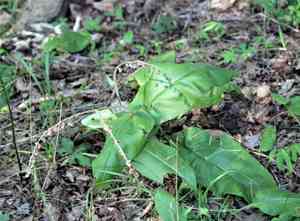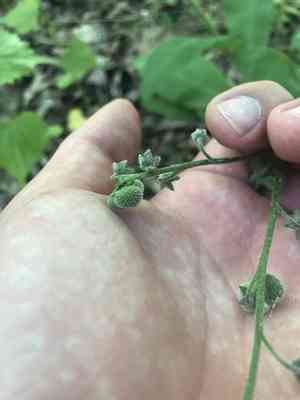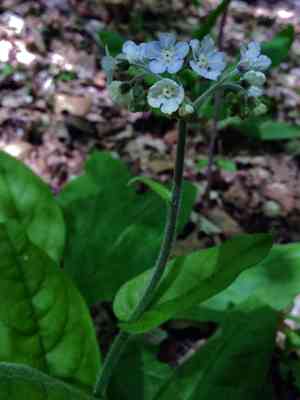
Wild Comfrey(Andersonglossum virginianum)

Wild Comfrey (Andersonglossum virginianum)

Also known as: Virginia False Gromwell

Wild Comfrey (Andersonglossum virginianum), a perennial herb from the borage family, is originally from southeastern North America. It thrives in hardwood forests, ravines, and slopes. The Latin name, meaning "tongue of a dog," refers to the shape of its leaves. Due to its fast growth, it is considered invasive in certain regions.

Attributes of Wild Comfrey

Lifespan
Perennial
Plant Type
Herb
Plant Height
30 cm to 61 cm
Spread
Not typically applicable for this herbaceous plant
Leaf Color
Green
Flower Size
1.3 cm
Flower Color
White Blue

ForwardPlant - Identify plants with a snap

Identify and diagnose plants, get toxicity alerts, and explore safety guides for all types of fungi.

Try for Free

Images of Wild Comfrey

Wild Comfrey(Andersonglossum virginianum)

Quickly Identify Wild Comfrey

1
This plant can be identified by its lance-shaped leaves, which are rough to the touch and arranged alternately on the stem. It produces small, white, five-petaled flowers in clusters at the end of its stems.

Scientific Classification of Wild Comfrey

Phylum
Vascular plants
Class
Dicotyledons
Order
Boraginales
Family
Borage
Genus
American Comfreys
Species
Wild Comfrey

Planting and Growing of Wild Comfrey

Care Difficulty
Easy
Watering Schedule
Every 3 days
Sunlight Requirements
Partial sun
Sunshine Duration
6-10 hours
Ideal Temperature
65-75℉
Soil Type
Potting Mix, Peat Mix
Soil pH
6.5-7.5
Fertilizer Type
Balanced
Pruning Season
Spring, Summer
Pruning Area
Branches, Leaves
Pruning Frequency
2 times a year
Repotting Season
Spring
Pot Type
Plastic, Ceramic

water icon How to Water Wild Comfrey?

When watering Andersonglossum virginianum, aim for approximately 250 milliliters each time. Ensure the water moistens the topsoil thoroughly without waterlogging the roots. It's important to allow the soil to dry slightly between waterings to mimic its natural habitat conditions.
What are the symptoms of an underwatered Wild Comfrey?
What should I do if my Wild Comfrey is not getting enough water?
What are the symptoms of an overwatered Wild Comfrey?
How to save an overwatered Wild Comfrey?

sunlight icon What Are the Sunlight Requirements for Wild Comfrey?

Sunlight Requirements: Partial sun
Duration of light: 4 to 6 hours
Andersonglossum virginianum ideally thrives under partial sun, where it enjoys 4 to 6 hours of filtered sunlight. Providing this light level helps balance photosynthesis and growth without excessive stress from harsh lighting.
What light conditions does Andersonglossum virginianum prefer?
How can you achieve ideal lighting for this plant?
What benefits do ideal lighting conditions offer?

temperature icon What Is the Ideal Temperature Range for Wild Comfrey?

Ideal Temperature: 65 ~ 75℉
The ideal temperature range for growing Andersonglossum virginianum is between 65°F and 75°F. In this range, the plant experiences optimal growth, efficient photosynthesis, and robust development. Consistently maintaining this temperature range can help ensure the health and aesthetic quality of the plant.

soil icon What Soil is Best for Wild Comfrey?

Soil type: Sandy soil, Loam
Soil PH: 6.5 ~ 7.5
The plant thrives best in well-drained soil, as this prevents waterlogging, which can lead to root rot and other soil-related diseases. Well-draining soil retains enough moisture for the plant while allowing excess water to escape easily, promoting healthier root growth. The plant prefers soil with moderate fertility levels. High nutrient levels can lead to excessive foliage growth at the cost of reduced flowering, while too low can stunt growth. Balanced soil fertility ensures optimal blooming and overall plant health. Incorporating organic matter, such as compost, into the soil enriches it with essential nutrients and improves soil structure. This is beneficial for the plant as it provides a steady nutrient supply, enhances moisture retention, and supports microbe activity.

fertilize icon How to Fertilize Wild Comfrey?

Fertilizer type: Balanced
For Andersonglossum virginianum, moderate fertilization is key. When using liquid fertilizer, aim for a diluted solution with a ratio of 1:4 parts fertilizer to water to avoid burning the plant's roots. As for slow-release granules, a light application of approximately 30 grams per application spread evenly around the soil will suffice.

prune icon How to Prune Wild Comfrey?

Pruning Time: Spring, Summer
Begin by identifying dead or diseased branches, using clean and sharp pruning shears for precise cuts. Trim back by cutting at a 45-degree angle to minimize damage and promote healthy regrowth. Remove any tangled parts to ensure the plant receives adequate air circulation and sunlight. To encourage a denser, bushier plant, target the upper growth and remove the stem tips. This redirects energy into developing side branches, enhancing the plant's overall volume and appearance. Be mindful to stagger cuts for a natural shape, avoiding a uniform, unnatural appearance. More About Pruning Techniques

propagate icon How to Propagate Wild Comfrey plant?

Propagate Time: Spring
1
Collect seeds from mature Andersonglossum virginianum plants. Ensure that the seeds are fully developed and dry. Clean them by removing any plant debris and store them in a cool, dry place until you are ready to plant.
2
Fill a seed tray with moistened potting soil and create shallow depressions for each seed. Place a seed in each depression and lightly cover it with soil. This ensures good seed-to-soil contact, which is vital for germination.
3
After planting, water the seeds gently but thoroughly. Keep the soil consistently moist, but not waterlogged, by misting it lightly with water. This will provide the seeds with the necessary moisture to germinate without causing excessive drowning.

repot icon How to Repot Wild Comfrey plant?

Repotting frequency: Every 2-3 years
1
Andersonglossum virginianum shows signs it's ready for repotting when its roots curl out of drainage holes, soil compacts or water drains immediately. Spring and summer provide optimal warmth for root settling.
2
Select a pot that is one size larger than the current one, with ample drainage holes to prevent waterlogging. This aids in healthy root expansion and ensures excess water escapes, preventing root rot.
3
Opt for a well-draining, sandy loam soil mix. This type of soil provides necessary aeration and moisture retention, which helps in preventing root rot while supplying essential nutrients for growth.

ForwardPlant - Identify plants with a snap

Find the best spots for them to optimize their health, simply using your phone.

Try for Free

Toxicity of Wild Comfrey

Is Wild Comfrey toxic to cat?

Wild Comfrey presents a moderate toxicity risk to cats. Exposure happens if a cat consumes any portion of the plant since all its parts are poisonous. Following ingestion, a cat may display signs of physical distress that could develop into more severe health complications. It is essential to supervise cats around wild Comfrey, and should ingestion be suspected, pet owners must promptly seek help from a veterinary clinic to guarantee their pet receives timely treatment and care.

Is Wild Comfrey toxic to dog?

Wild Comfrey presents a moderate risk of toxicity for dogs. Poisoning generally happens when a dog ingests any part of the plant, since all components are regarded as toxic. After consumption, dogs may show symptoms including gastrointestinal distress, lethargy, or more severe reactions depending on the quantity ingested. It is essential for dog owners to keep a vigilant eye on their pets and restrict their access to wild Comfrey. If poisoning is suspected, prompt veterinary assistance is vital to secure the best possible outcome for the affected pet.

Identify toxic plants for your safety

Learn which plants are harmful to you and your pets, and make informed choices for a safer home!

Try for Free
WARNING
The judgment on toxicity and danger is for reference only. We DO NOT GUARANTEE any accuracy of such judgment. Therefore, you SHALL NOT rely on such judgment. It is IMPORTANT TO SEEK PROFESSIONAL ADVICE in advance when necessary.
More About Toxic Techniques