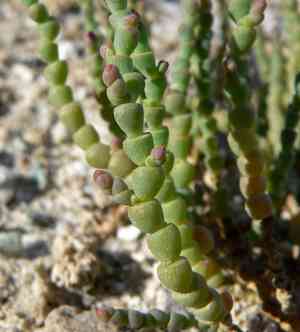
Iodinebush (Allenrolfea occidentalis)
Also known as: Iodine bush, Pickleweed, Seepweed
Allenrolfea occidentalis, often referred to as the iodine bush, is a low-growing shrub native to the southwestern United States and Mexico. It typically thrives in sandy environments, and its seeds were consumed by people in prehistoric North America.
In This Article
Attributes of Iodinebush
Lifespan
Perennial
Plant Type
Shrub
Plant Height
30 cm to 2 m
Spread
90 cm to 2 m
Leaf Color
Green, with red or purple hues in certain conditions
Flower Size
2.5 cm
Flower Color
Yellow Green
Images of Iodinebush
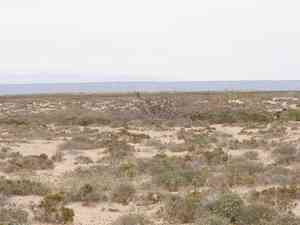
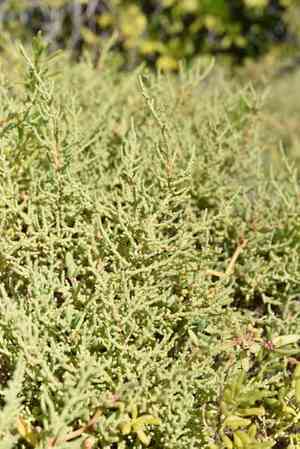
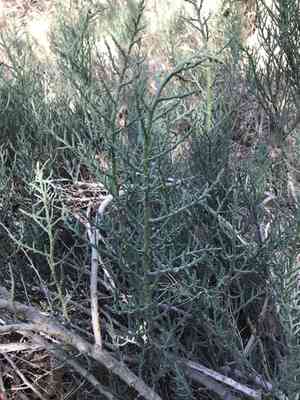
Quickly Identify Iodinebush
1
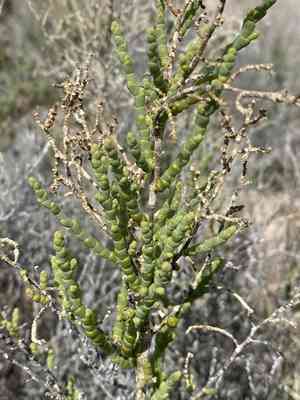
The plant can be identified by its succulent, small-scale-like leaves and dense, bushy growth habit. The stems are jointed and have a somewhat segmented appearance, often giving the bush a reddish or purple tinge, especially in high-salinity environments.
Scientific Classification of Iodinebush
Phylum
Vascular plants
Class
Dicotyledons
Order
Caryophyllales
Family
Amaranth
Genus
Allenrolfea
Species
Iodinebush
Planting and Growing of Iodinebush
Care Difficulty
Easy
Watering Schedule
Every 2 days
Sunlight Requirements
Full sun
Sunshine Duration
4-8 hours
Ideal Temperature
70-85℉
Soil Type
Potting Mix, Peat Mix
Soil pH
6.5-8.5
Fertilizer Type
Balanced
Pruning Season
Spring, Summer
Pruning Area
Branches, Leaves
Pruning Frequency
2 times a year
Repotting Season
Spring
Pot Type
Terracotta, Plastic
 How to Water Iodinebush?
Allenrolfea occidentalis thrives best under careful watering. Ensure the soil is thoroughly moist but not waterlogged. Apply around 300 ml of water each time, allowing it to seep evenly into the substrate. This ensures the roots get enough hydration without sitting in standing water, which could lead to root rot.
What are the symptoms of an underwatered Iodinebush?
›
What should I do if my Iodinebush is not getting enough water?
›
What are the symptoms of an overwatered Iodinebush?
›
How to save an overwatered Iodinebush?
›
 What Are the Sunlight Requirements for Iodinebush?
Full sun exposure is recommended for Allenrolfea occidentalis, allowing it to maximize photosynthetic efficiency. Ideal lighting promotes robust growth, vibrant foliage, and natural drought resistance capabilities.
More About Sunlight Requirements Techniques→
How much sun does Allenrolfea occidentalis need?
›
Solutions for achieving ideal lighting
›
Benefits of ideal lighting
›
 What Is the Ideal Temperature Range for Iodinebush?
Allenrolfea occidentalis thrives best within a temperature range of 70°F to 85°F. Maintaining this range ensures robust growth and healthy development of the plant's foliage and reproductive structures. This temperature zone mimics its natural desert habitat, and facilitates optimal photosynthetic activity.
 What Soil is Best for Iodinebush?
Allenrolfea occidentalis thrives in soils with excellent drainage capabilities. This helps prevent root rot and ensures that the plant roots are not sitting in water, which is crucial in arid environments. This species is adapted to nutrient-poor soils, commonly found in desert environments. It requires little organic matter, which makes it ideal for areas where other plants might struggle. The plant is highly tolerant of saline conditions. It can grow well in soils with higher salinity levels, which is why it's often found in salt flats and coastal areas.
 How to Fertilize Iodinebush?
Allenrolfea occidentalis, commonly known as Iodine Bush, requires minimal fertilization. For liquid fertilizers, dilute it to half the recommended concentration to prevent nutrient burn. Use about 1 tablespoon per gallon of water.
 How to Prune Iodinebush?
Start by identifying and removing any dead, diseased, or damaged branches. Make your cuts just above a node to encourage healthy regrowth. Regularly inspect the plant to keep it in optimum health. Shape the plant by trimming branches that are growing out of proportion. Consider the plant's natural shape and cut back to maintain or enhance it. Encourage lateral growth by pinching back the tips of overly long branches.
More About Pruning Techniques→
 How to Propagate Iodinebush plant?
1
Sow seeds evenly in a prepared seed tray filled with appropriate soil mix. Cover lightly with soil and maintain adequate moisture until germination, which usually occurs in a few weeks.
2
Select healthy stems and use pruning shears to cut 4-6 inch sections. Remove lower leaves and dip cut ends in rooting hormone to promote root formation before planting in soil.
3
Carefully dig up an established plant and separate it into smaller sections, ensuring each has a portion of roots attached. Replant divisions in prepared soil and water well.
 How to Repot Iodinebush plant?
1
The best signals that Allenrolfea occidentalis needs repotting include roots beginning to emerge from drainage holes and slowed growth. It's ideal to repot during spring or summer to allow for optimal recovery in warmer conditions.
2
Select a pot that is slightly larger than the current one, ensuring it has adequate drainage holes. A pot that is too large can lead to excessive soil moisture, while a well-sized pot promotes healthier root development with reduced waterlogging risk.
3
Opt for sandy, well-draining soil to mimic its natural habitat. This soil choice prevents root rot and ensures the plant receives adequate moisture without being waterlogged, which is essential for its desert-like adaptations.



