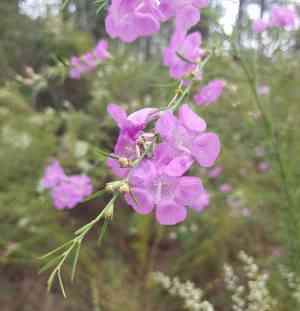
Beach false foxglove (Agalinis fasciculata)
Also known as: Fascicled gerardia
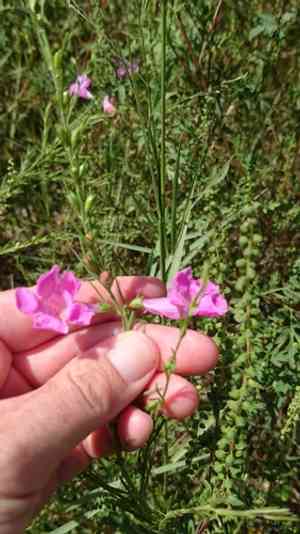
The beach false foxglove (Agalinis maritima) is a delicate, upright annual herb, showcasing clusters of tube-shaped, pink to purple blooms. Its narrow, feathery leaves are arranged densely along its stem. This plant flourishes in coastal habitats such as sandy soils, salt marshes, and dunes, needing plenty of sunlight. It is well-adapted to these environments through its salt tolerance and deep root systems, which help it anchor in sandy terrain and endure drought conditions.
In This Article
Attributes of Beach false foxglove
Lifespan
Annual
Plant Type
Herb
Plant Height
30 cm to 91 cm
Spread
N/A
Leaf Color
Green
Flower Size
1.5-2 cm
Flower Color
Pink
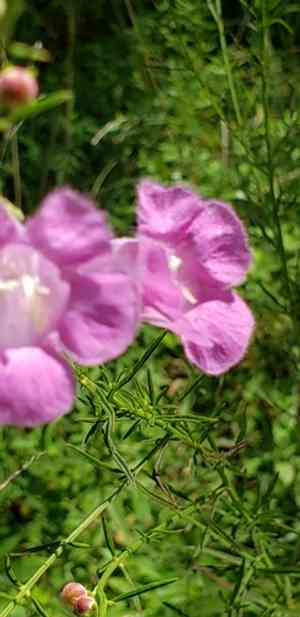
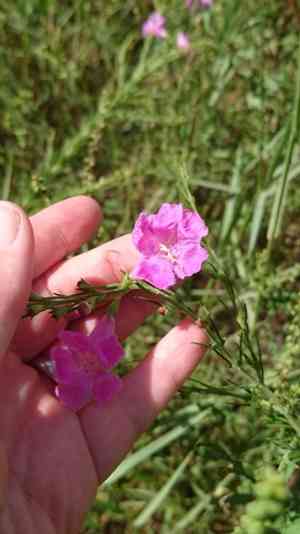
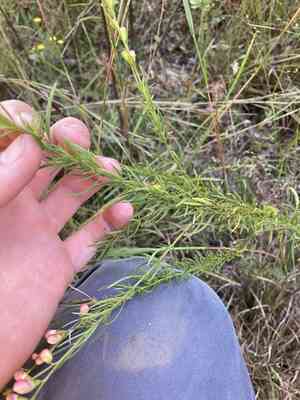
Images of Beach false foxglove
Quickly Identify Beach false foxglove
1
Agalinis fasciculata can be identified by its slender, branching stems and clusters of pink, tubular flowers. The leaves are narrow and opposite, and the plant typically grows between 30 to 90 cm in height.
Scientific Classification of Beach false foxglove
Phylum
Vascular plants
Class
Dicotyledons
Order
Lamiales
Family
Broomrape
Genus
False foxgloves
Species
Beach false foxglove
Planting and Growing of Beach false foxglove
Care Difficulty
Hard
Watering Schedule
Every 4 days
Sunlight Requirements
Full sun
Sunshine Duration
4-6 hours
Ideal Temperature
75-85℉
Soil Type
Potting Mix, Peat Mix
Soil pH
6.5-7.5
Fertilizer Type
Balanced
Pruning Season
Spring, Summer
Pruning Area
Leaves, Branches
Pruning Frequency
2 times a year
Repotting Season
Spring
Pot Type
Plastic, Ceramic
 How to Water Beach false foxglove?
For Agalinis fasciculata, it's essential to provide a watering amount of approximately 250 milliliters at each session. The soil should be evenly moist but not waterlogged. You should let the top inch of the soil dry out between watering sessions, ensuring that the roots maintain access to adequate moisture without suffocating in excess water.
What are the symptoms of an underwatered Beach false foxglove?
›
What should I do if my Beach false foxglove is not getting enough water?
›
What are the symptoms of an overwatered Beach false foxglove?
›
How to save an overwatered Beach false foxglove?
›
 What Are the Sunlight Requirements for Beach false foxglove?
Agalinis fasciculata prefers full to partial sun, benefiting from 6 to 8 hours of light. This exposure encourages healthy flowering and vigorous growth, maintaining the plant’s ecological role and beauty.
What is the ideal lighting for Agalinis fasciculata?
›
How do you ensure Agalinis fasciculata receives its ideal light?
›
What are the benefits of proper lighting for Agalinis fasciculata?
›
 What Is the Ideal Temperature Range for Beach false foxglove?
Agalinis fasciculata thrives best in a warm environment where the temperatures range from 75°F to 85°F. This range facilitates optimal physiological activities such as photosynthesis and nutrient uptake, fostering healthy growth and flowering. Maintaining these ideal conditions during the growing season encourages vigorous blooming and enhances the plant's overall vitality.
 What Soil is Best for Beach false foxglove?
Agalinis fasciculata thrives in well-draining soils, preventing root rot and allowing necessary air circulation. This condition supports the plant's robust growth and reduces susceptibility to waterlogging. This plant does not require incredibly rich soil; moderate nutrient levels suffice. The balance helps prevent excessive foliage growth at the expense of flowering, ensuring the plant's energy is directed towards blooms. Since Agalinis fasciculata prefers full sunlight, the soil should not be overly dense. Loose soil allows better warming from the sun's rays, enhancing plant growth and flowering efficiency.
 How to Fertilize Beach false foxglove?
For Agalinis fasciculata, use a balanced liquid fertilizer at half strength. Generally, apply 10 ml of liquid fertilizer diluted in 1 liter of water each time. Ensure the soil is moist before fertilization to prevent root burn.
 How to Prune Beach false foxglove?
Begin by inspecting the plant for any dead or damaged stems. Use sharp pruners to remove these parts at their base, as this helps in stimulating new growth and prevents potential disease from spreading. To maintain a pleasing shape, gently trim back overgrown stems. Focus on cutting at angles just above leaf nodes to encourage a bushier appearance and support better airflow within the foliage. Pinch back some of the flowering stems to promote further blooming and enhance the density of flowers. Monitor how the plant responds and adjust the extent of trimming to balance growth and flowering.
More About Pruning Techniques→
 How to Propagate Beach false foxglove plant?
1
Begin by filling seed trays with a suitable potting mix. Sow Agalinis fasciculata seeds on the surface, pressing them gently into the soil. Do not cover the seeds, as they require light for germination. Water the seeds lightly to keep the soil moist but not soggy.
2
Place the seed trays in a location with bright, indirect sunlight. Maintain a consistent temperature of about 68°F (20°C) to encourage germination, which typically occurs within two to four weeks.
3
Once the seedlings have developed at least two true leaves, they can be transplanted to individual pots. Ensure the new location has similar lighting conditions and gradually acclimate them to outdoor conditions if they are to be planted outside.
 How to Repot Beach false foxglove plant?
1
Agalinis fasciculata often signals the need for repotting when its roots start to emerge from the drainage holes or when it's visibly struggling to retain moisture longer than usual. Spring is the ideal time to repot, as the plant is actively growing and can quickly acclimate to its new environment.
2
Choosing the right pot for Agalinis fasciculata is crucial. Opt for a pot that is 1 to 2 inches larger in diameter than the current one. This ensures enough room for root expansion without overwhelming the plant with too much soil, which can retain excess moisture.
3
Select a sandy loam, well-draining soil mix for Agalinis fasciculata. This type of soil allows sufficient aeration and drainage, preventing the roots from sitting in water, which could lead to root rot. A little perlite can also enhance soil drainage.
Learn More About Beach false foxglove Diseases
Anthracnose
Bacterial Leaf Spot
Bacterial Wilt
Crown Gall
Cyst Nematode
Damping-off
Downy Mildew
Drought Stress
Fusarium Wilt
Gray Mold
Leaf Spot
Mosaic
Nutrient Deficiency
Nutrient Toxicity
Powdery Mildew
Root Rot
Root-knot Nematode
Rusts
Sooty Mold
Spider Mites
Temperature Stress
Thrips Damage
White Mold



