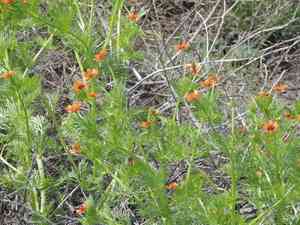
Pheasant's eye (Adonis aestivalis)
Also known as: Summer adonis
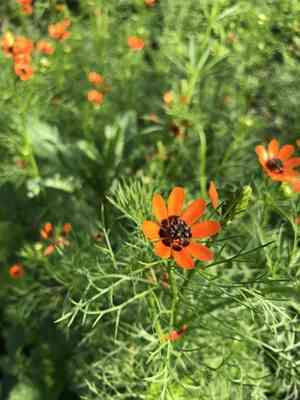
Pheasant's eye, or Adonis aestivalis, belongs to the buttercup family and is recognized for its striking orange-red petals with a central dark purple ring. Native to Southern Europe, it has spread extensively in American pastures. This plant is toxic to pigs and horses.
In This Article
Attributes of Pheasant's eye
Lifespan
Annual, Perennial, Biennial
Plant Type
Herb
Plant Height
20 cm to 1 m
Spread
15 cm to 20 cm
Leaf Color
Green
Flower Size
1.5 cm to 3.5 cm
Flower Color
Red
Images of Pheasant's eye
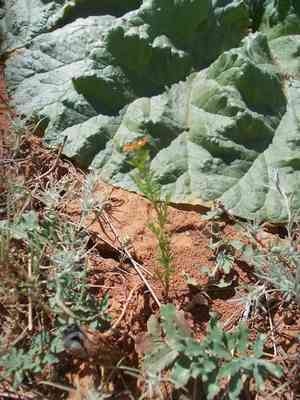
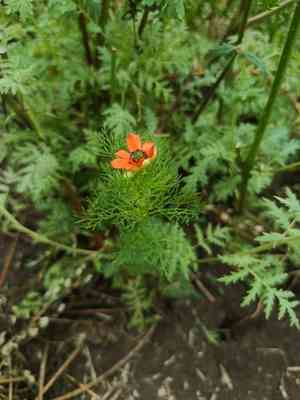
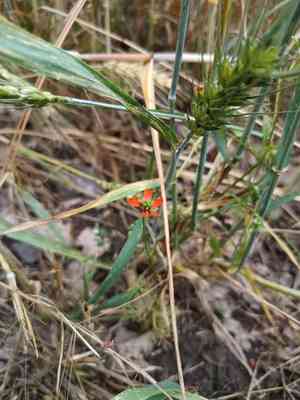
Quickly Identify Pheasant's eye
1
Vivid red flowers with a dark basal spot resembling a pheasant's eye.
2
Feathery, finely dissected foliage giving a delicate appearance.
3
Buttercup-like waxy petals in red-purple, scarlet, orange, or yellow.
4
Distinctive purple-black anthers in 1-2 inch (2.5-5 cm) diameter flowers.
5
Erect, elongated cluster of green, cone-shaped seed pods with 10-15 achenes.
Scientific Classification of Pheasant's eye
Phylum
Vascular plants
Class
Dicotyledons
Order
Ranunculales
Family
Buttercup
Genus
Pheasant's eyes
Species
Pheasant's eye
Planting and Growing of Pheasant's eye
Care Difficulty
Easy
Watering Schedule
Every 2 days
Sunlight Requirements
Full sun
Sunshine Duration
6-10 hours
Ideal Temperature
60-75℉
Soil Type
Potting Mix, Peat Mix
Soil pH
6.5-7.5
Fertilizer Type
Balanced
Pruning Season
Spring, Summer
Pruning Area
Branches, Leaves
Pruning Frequency
2 times a year
Repotting Season
Spring
Pot Type
Plastic, Ceramic
 How to Water Pheasant's eye?
For Adonis aestivalis, ensure that the soil is saturated but does not become waterlogged. Typically, around 200 milliliters should suffice for each watering session, allowing the soil to partially dry out between waterings, thereby maintaining optimal moisture levels.
What are the symptoms of an underwatered Pheasant's eye?
›
What should I do if my Pheasant's eye is not getting enough water?
›
What are the symptoms of an overwatered Pheasant's eye?
›
How to save an overwatered Pheasant's eye?
›
 What Are the Sunlight Requirements for Pheasant's eye?
For Adonis aestivalis, providing 6 to 8 hours of full to partial sun is ideal. This range ensures the plant achieves optimal energy for blooming and sustaining its health.
More About Sunlight Requirements Techniques→
How should Adonis aestivalis be positioned for optimal growth?
›
What are the ideal hours of sunlight for Adonis aestivalis?
›
How can I adjust the light conditions for Adonis aestivalis indoors?
›
 What Is the Ideal Temperature Range for Pheasant's eye?
The ideal temperature range for Adonis aestivalis is between 60°F and 75°F. This range facilitates optimal photosynthesis and growth, ensuring that the metabolic functions are carried out efficiently. Temperatures within this range promote healthy foliage and vibrant blooms, aligning with the plant's natural habitat.
 What Soil is Best for Pheasant's eye?
Adonis aestivalis thrives in well-draining soils since it prevents waterlogging which can cause root rot. Sandy soils or loams are ideal, allowing excess water to drain efficiently and providing the roots with ample oxygen. This plant prefers neutral to slightly alkaline soil conditions. Maintaining a pH between 6.5 and 7.5 ensures that the soil nutrients are available and easily absorbed by the plant, promoting healthy growth and vibrant blooms. To support its growth and flowering, Adonis aestivalis benefits from nutrient-rich soil. Organic matter and compost can be added to enhance soil fertility, ensuring the plant receives essential nutrients for thriving.
 How to Fertilize Pheasant's eye?
For Adonis aestivalis, use a balanced fertilizer with a ratio of 10-10-10. If opting for liquid fertilizer, dilute it to half strength and apply it lightly to avoid overwhelming the roots.
 How to Prune Pheasant's eye?
Begin by examining your Adonis aestivalis for any dead or damaged stems. Using clean, sharp pruning shears, gently clip these at their base. Pruning should focus on removing any brown or faded flowers to encourage new blooms. Always cut at an angle to prevent water accumulation, which can lead to rot. After the initial removal of dead growth, consider shaping the plant for better aesthetics. Aim to keep the plant open, which allows sunlight and air to penetrate it, promoting healthier growth. Trim the outer branches symmetrically for a balanced appearance.
More About Pruning Techniques→
 How to Propagate Pheasant's eye plant?
1
Begin by filling the seed tray with a well-draining potting mix. Sow Adonis aestivalis seeds thinly across the surface, lightly pressing them into the soil rather than covering them too deeply. Water gently to moisten.
2
After sowing, ensure the seeds remain consistently moist. Covering the tray with a plastic lid or cling film could help retain humidity, crucial for germination, but avoid excessive watering which could lead to rot.
3
Place the seed tray in a bright area, but out of direct sunlight which could scorch the seedlings. Light facilitates germination and helps seedlings develop into strong plants.
 How to Repot Pheasant's eye plant?
1
Adonis aestivalis should be repotted when you notice roots poking out of the drainage holes or the plant seems to be outgrowing its current pot. Spring and early summer are optimal times as the plant is in active growth and can recover quickly from transplanting.
2
Select a pot that is one size larger than its current container, ensuring it has adequate drainage holes. Opt for a material like terracotta, which allows for good airflow. This prevents water logging and promotes healthy root development.
3
Choose a well-draining, sandy loam soil that replicates the plant's natural habitat. This type of soil prevents root rot and ensures necessary nutrients are available during the growing seasons.
Toxicity
Ingestion
WARNING
The judgment on toxicity and danger is for reference only. We DO NOT GUARANTEE any accuracy of such judgment. Therefore, you SHALL NOT rely on such judgment. It is IMPORTANT TO SEEK PROFESSIONAL ADVICE in advance when necessary.
Learn More About Pheasant's eye Diseases
Anthracnose
Bacterial Leaf Spot
Bacterial Wilt
Chemical Injury
Damping-off
Downy Mildew
Drought Stress
Fusarium Wilt
Gray Mold
Leaf Curl
Leaf Spot
Mosaic
Nutrient Deficiency
Nutrient Toxicity
Powdery Mildew
Root Rot
Root-knot Nematode
Rusts
Sooty Mold
Spider Mites
Temperature Stress
Thrips Damage
White Mold



