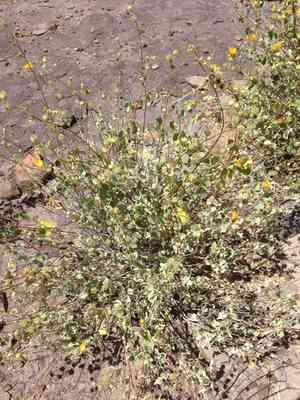
Palmer's indian mallow (Abutilon palmeri)
Also known as: Palmer's Indian mallow
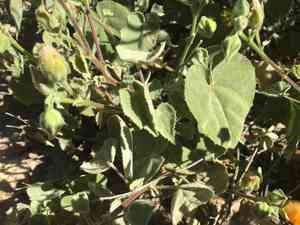
Abutilon palmeri is a semi-evergreen shrub that typically reaches heights of 91 to 244 cm and spreads 61 to 152 cm wide. The branches and stems exhibit a green to reddish-brown color and are covered in fine hairs. The leaves are alternately arranged, heart-shaped (cordate), and have a velvety texture. They feature serrated edges and are densely covered in woolly hairs, resulting in a bluish, gray-green appearance.
In This Article
Attributes of Palmer's indian mallow
Lifespan
Perennial
Plant Type
Shrub
Plant Height
1.5 m
Spread
1.5 m
Leaf Color
Green Gray
Flower Size
1-2 inches (2.5-5 cm)
Flower Color
Yellow Orange
Images of Palmer's indian mallow
Quickly Identify Palmer's indian mallow
1
Dense growth of soft, silvery heart-shaped leaves with velvety texture.
2
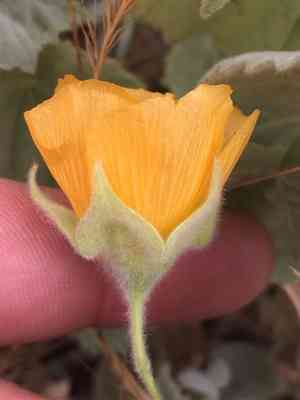
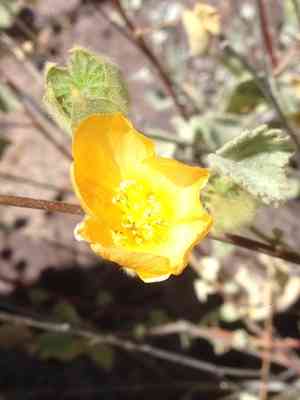
Persistent gold to apricot cupped flowers, about 1 inch (2.5 cm) across.
3
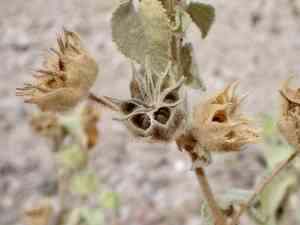
Fuzzy sepals enveloping developing fruit after flowering.
Scientific Classification of Palmer's indian mallow
Phylum
Vascular plants
Class
Dicotyledons
Order
Malvales
Family
Mallow
Genus
Indian mallows
Species
Palmer's indian mallow
Planting and Growing of Palmer's indian mallow
Care Difficulty
Easy
Watering Schedule
Every 2 days
Sunlight Requirements
Full sun
Sunshine Duration
6-12 hours
Ideal Temperature
70-85℉
Soil Type
Potting Mix, Peat Mix
Soil pH
6.5-7.5
Fertilizer Type
Balanced
Pruning Season
Spring, Summer
Pruning Area
Branches, Leaves
Pruning Frequency
2 times a year
Repotting Season
Spring
Pot Type
Plastic, Ceramic
 How to Water Palmer's indian mallow?
Abutilon palmeri prefers a measured approach to watering. It's vital to water deeply, but infrequently, allowing the soil to almost completely dry out between waterings. A good soak of about 250 milliliters per session suffices to replenish the plant roots without waterlogging them.
What are the symptoms of an underwatered Palmer's indian mallow?
›
What should I do if my Palmer's indian mallow is not getting enough water?
›
What are the symptoms of an overwatered Palmer's indian mallow?
›
How to save an overwatered Palmer's indian mallow?
›
 What Are the Sunlight Requirements for Palmer's indian mallow?
Abutilon palmeri thrives in full sun, ideally requiring 6 to 8 hours of sunlight. This exposure encourages profuse flowering and healthy foliage, enhancing its natural beauty.
What is the perfect amount of sunlight for Abutilon palmeri?
›
How can we ensure Abutilon palmeri gets this sunlight?
›
What benefits does Abutilon palmeri derive from optimal sunlight exposure?
›
 What Is the Ideal Temperature Range for Palmer's indian mallow?
The range of 70-85°F provides the optimal warmth for Abutilon palmeri, mimicking its natural desert habitat. This temperature range ensures active growth, vibrant foliage, and prolific flowering. Appropriately warm conditions facilitate efficient photosynthesis and metabolism, allowing the plant to flourish and maintain its health. Consistent warmth within this range also aids in nutrient uptake and prevents temperature-related stress.
 What Soil is Best for Palmer's indian mallow?
Abutilon palmeri thrives in well-drained soil that prevents waterlogging, ensuring the roots get adequate oxygen and avoid rot. This condition mimics its native arid environment, promoting healthy growth and flowering. This plant can tolerate nutrient-poor soils, reducing competition with weeds that thrive in richer environments. Its adaptation to less fertile soil means less frequent fertilization, making it a low-maintenance choice. Even though Abutilon palmeri prefers well-drained soils, having some materials in the soil that retain moisture can be beneficial during dry periods, ensuring the plant does not completely dry out.
 How to Fertilize Palmer's indian mallow?
When fertilizing Abutilon palmeri, it is important to use a balanced fertilizer with equal parts nitrogen, phosphorus, and potassium, such as a 10-10-10 mix. Each application should be about half the recommended dose on the fertilizer package to avoid nutrient burn.
 How to Prune Palmer's indian mallow?
Over-pruning can result in reduced flowering and can stress the plant, making it more susceptible to diseases. It's essential to prune with moderation, removing no more than one-third of the plant's total volume at a time. If you notice the plant isn't responding well to the current pruning schedule, adapt accordingly. Ensure that you’re pruning in the recommended seasons to avoid cutting during its peak growth or rest phases, which can impact its health.
More About Pruning Techniques→
 How to Propagate Palmer's indian mallow plant?
1
Harvest seeds from mature Abutilon palmeri pods when they begin to turn brown, indicating readiness. Allow them to dry completely in a well-ventilated area to prevent mold and ensure they remain viable.
2
Prepare a well-draining potting mix composed of equal parts peat, perlite, and coarse sand. This mix retains enough moisture for seed germination while preventing waterlogging, which can cause rot.
3
Select healthy, semi-hardwood stems for cuttings, typically taken in spring. Cut at an angle just below a node. Remove lower leaves to reduce transpiration and dip the base in rooting hormone for better root initiation.
 How to Repot Palmer's indian mallow plant?
1
Look for signs like roots creeping out of the drainage holes, the plant appearing stunted, or if the soil dries out faster than usual. These signals indicate that your Abutilon palmeri needs more room to grow and it's time for repotting.
2
Select a pot that is 1-2 inches larger in diameter than the current one. Ensure it has good drainage to prevent waterlogging, which could lead to root rot. A breathable material like terracotta is favorable, as it helps evaporate excess moisture.
3
Opt for a well-draining potting mix designed for succulents or cactus plants. This ensures proper aeration and prevents water retention, supporting healthy root growth by mimicking the plant's natural arid environments.
Learn More About Palmer's indian mallow Diseases
Anthracnose
Bacterial Leaf Spot
Bacterial Wilt
Crown Gall
Cyst Nematode
Damping-off
Downy Mildew
Drought Stress
Fusarium Wilt
Gray Mold
Leaf Curl
Leaf Spot
Mosaic
Nutrient Deficiency
Nutrient Toxicity
Powdery Mildew
Root Rot
Root-knot Nematode
Rusts
Sooty Mold
Spider Mites
Temperature Stress
Thrips Damage
White Mold



