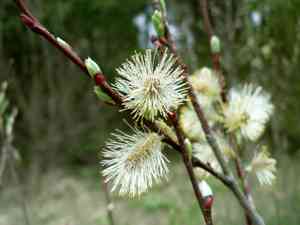
Sharp-leaved willow (Salix acutifolia)
Also known as: Long-leaved violet willow
The specific epithet "acutifolia" in the Latin name Salix acutifolia translates to "sharp-leaved," highlighting the pointed shape of its leaves. This willow species is notable for its nectar-rich flowers, which attract bees in small gardens. Historically, it has served as a source of both medicine and food. The willow is grown in regions such as North America and Middle Asia, where its inner bark and young shoots are also consumed by birds.
In This Article
Attributes of Sharp-leaved willow
Lifespan
Perennial
Plant Type
Tree
Plant Height
10 m
Spread
12 m
Leaf Color
Green
Flower Size
2.5 cm
Flower Color
White Yellow Gray Silver
Images of Sharp-leaved willow
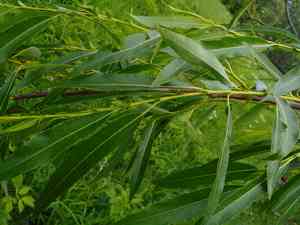
Quickly Identify Sharp-leaved willow
1
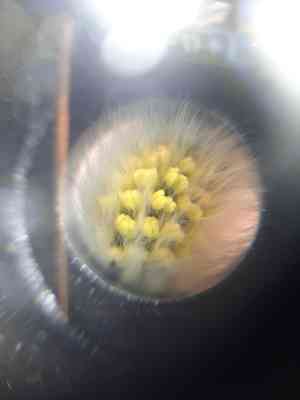
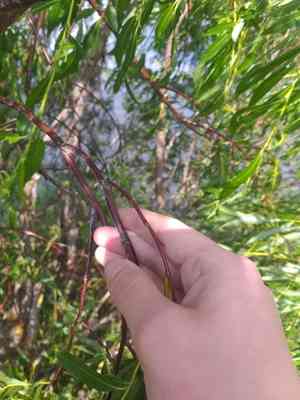
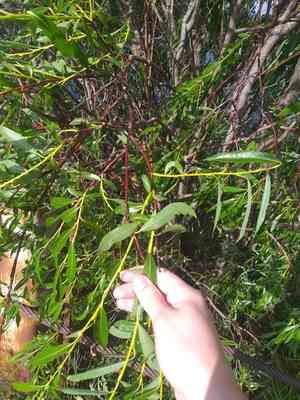
Identify Salix acutifolia by its long, narrow, lance-shaped leaves which are finely serrated at the edges. In the spring, look for its distinctive catkins which appear before the leaves.
Scientific Classification of Sharp-leaved willow
Phylum
Vascular plants
Class
Dicotyledons
Order
Malpighiales
Family
Willow
Genus
Willows
Species
Sharp-leaved willow
Planting and Growing of Sharp-leaved willow
Care Difficulty
Easy
Watering Schedule
Every 8 days
Sunlight Requirements
Full sun
Sunshine Duration
4-8 hours
Ideal Temperature
40-75℉
Soil Type
Potting Mix, Peat Mix
Soil pH
6.5-7.5
Fertilizer Type
Balanced
Pruning Season
Spring, Summer
Pruning Area
Branches, Leaves
Pruning Frequency
2 times a year
Repotting Season
Spring
Pot Type
Plastic, Ceramic
 How to Water Sharp-leaved willow?
When watering Salix acutifolia, ensure that the soil is thoroughly soaked, allowing it to permeate to the root depth. This tree appreciates a generous soak rather than light sprinklings, making sure the water seeps at least 10 inches deep. Good drainage is crucial to prevent waterlogging.
What are the symptoms of an underwatered Sharp-leaved willow?
›
What should I do if my Sharp-leaved willow is not getting enough water?
›
What are the symptoms of an overwatered Sharp-leaved willow?
›
How to save an overwatered Sharp-leaved willow?
›
 What Are the Sunlight Requirements for Sharp-leaved willow?
Salix acutifolia prefers a mix of full sun to partial sun conditions. This balance helps ensure vibrant growth and abundant flowering, while minimizing the risk of stress due to excessive heat or prolonged sun exposure.
More About Sunlight Requirements Techniques→
How much sunlight does Salix acutifolia need?
›
What are the solutions to achieve ideal lighting?
›
What benefits does proper lighting provide?
›
 What Is the Ideal Temperature Range for Sharp-leaved willow?
The ideal temperature range for the growth of Salix acutifolia is between 40°F and 75°F. This temperature range provides an optimal environment that encourages robust growth and development, minimizing stress-induced conditions such as wilting or leaf drop. At these temperatures, photosynthesis and other metabolic processes occur efficiently, promoting the overall health and vigor of the plant.
 What Soil is Best for Sharp-leaved willow?
Salix acutifolia thrives best in well-drained soil, which prevents waterlogging around the plant's roots. This requirement ensures healthy root growth and reduces the risk of root rot, enhancing the plant's overall health. The plant prefers a nutrient-rich substrate that supports robust growth. Fertile soil supplies essential nutrients, promoting vibrant foliage and strong stems, which is crucial for its survival in varied climates. While Salix acutifolia enjoys moisture, the soil should not be overly saturated. Maintaining moderate moisture levels helps the plant sustain its growth without risking fungal infections, especially in humid climates.
 How to Fertilize Sharp-leaved willow?
For Salix acutifolia, it is recommended to use a balanced fertilizer with equal parts nitrogen, phosphorus, and potassium. During the growing season, apply a 10-10-10 NPK fertilizer at a rate of 1/2 lb per inch of trunk diameter.
 How to Prune Sharp-leaved willow?
Begin by inspecting the Salix acutifolia for any dead or damaged branches and remove these first. Hold your pruning shears at a slight angle to prevent water from accumulating on the cuts. Follow the natural shape of the tree, cutting just above a healthy bud to encourage new shoots. For more advanced shaping, consider the overall structure and desired size of the tree. Thin out the center to increase air circulation, which can help prevent fungal diseases. Ensure that remaining branches are evenly spaced and not crossing each other.
More About Pruning Techniques→
 How to Propagate Sharp-leaved willow plant?
1
Select a healthy, disease-free branch and cut a section about 6-8 inches long. Make sure it includes several nodes as these are the points where roots will form. Remove any leaves from the lower half of the cutting.
2
Dip the cut end of the Salix acutifolia cutting into the rooting hormone. This step helps increase the likelihood that roots will develop by stimulating root growth hormones in the plant tissues.
3
Place the prepared cutting in a pot filled with a well-draining soil mix. Ensure the cutting is planted deeply enough so that the nodes are below the soil surface, which will support root development.
 How to Repot Sharp-leaved willow plant?
1
Look for signals like roots poking out of the drainage holes or stunted growth. These indicate your Salix acutifolia needs a fresh potting environment. Spring is optimal because it aligns with the plant's natural growth cycle, fostering better root acclimatization.
2
Select a pot that is roughly 2-3 inches wider in diameter than the current one. This ensures sufficient space for root growth while not overwhelming the plant, facilitating controlled and healthy expansion in its new habitat.
3
Opt for moisture-retentive loam soil rich in nutrients. This soil provides excellent drainage and retains adequate moisture, crucial for Salix acutifolia's growth. The loamy consistency ensures roots access both air and water effectively, promoting vigorous health.



