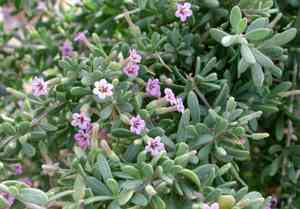
Fremont's desert-thorn (Lycium fremontii)
Also known as: Fremont's Desert Thorn, Desert Wolfberry
Fremont's desert-thorn is a hardy deciduous shrub native to desert areas, featuring silver-green leaves that minimize water loss. In spring, it produces delicate purple flowers, which later turn into red-orange berries that provide food for wildlife. Its spiny branches offer protection from herbivores, while its deep roots access scarce water, ensuring its survival in extreme conditions.
In This Article
Attributes of Fremont's desert-thorn
Lifespan
Perennial
Plant Type
Shrub
Plant Height
1 to 3 meters
Spread
1 to 2 meters
Leaf Color
Green to gray-green
Flower Size
1 to 1.5 cm
Flower Color
White to pinkish
Images of Fremont's desert-thorn
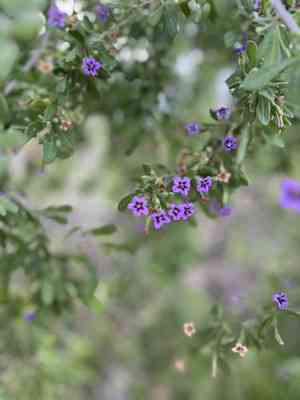
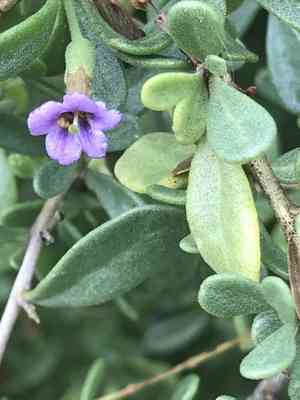
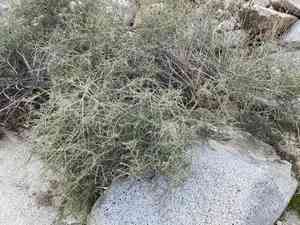
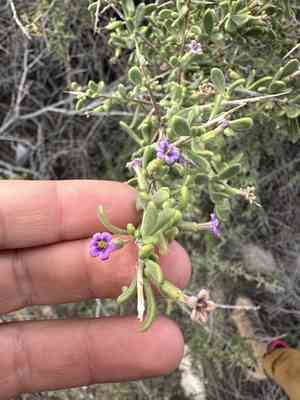
Quickly Identify Fremont's desert-thorn
1
Lycium fremontii can be recognized by its thorny, twiggy branches, small narrow leaves, and tubular flowers that are typically white or pinkish. The plant also produces small, red to orangish berries.
Scientific Classification of Fremont's desert-thorn
Phylum
Vascular plants
Class
Dicotyledons
Order
Solanales
Family
Nightshade
Genus
Box-thorns
Species
Fremont's desert-thorn
Planting and Growing of Fremont's desert-thorn
Care Difficulty
Easy
Watering Schedule
Every 2 days
Sunlight Requirements
Full sun
Sunshine Duration
6-10 hours
Ideal Temperature
60-85℉
Soil Type
Potting Mix, Peat Mix
Soil pH
6.5-7.5
Fertilizer Type
Balanced
Pruning Season
Spring, Summer
Pruning Area
Branches, Leaves
Pruning Frequency
2 times a year
Repotting Season
Spring
Pot Type
Plastic, Ceramic
 How to Water Fremont's desert-thorn?
Lycium fremontii prefers moderate watering, which means around 500 ml of water per session. The principle here is to keep the soil consistently damp but never waterlogged. Ensure that the water reaches deep enough to support its root system but avoid water standing at the bottom of the pot.
What are the symptoms of an underwatered Fremont's desert-thorn?
›
What should I do if my Fremont's desert-thorn is not getting enough water?
›
What are the symptoms of an overwatered Fremont's desert-thorn?
›
How to save an overwatered Fremont's desert-thorn?
›
 What Are the Sunlight Requirements for Fremont's desert-thorn?
Lycium fremontii ideally benefits from full sun exposure, which not only supports its growth and flowering but also enhances its resistance to pests and diseases.
Question: What is the ideal lighting condition for Lycium fremontii?
›
 What Is the Ideal Temperature Range for Fremont's desert-thorn?
For Lycium fremontii, the ideal temperature range falls between 60 to 85 degrees Fahrenheit. This range supports optimal metabolic processes, allowing the plant to photosynthesize effectively, maintain proper hydration, and grow robustly. Below 60 degrees, metabolic processes slow, while above 85 degrees, water stress may occur.
 What Soil is Best for Fremont's desert-thorn?
Lycium fremontii thrives in well-drained soil to prevent root rot and other related issues. Proper drainage ensures that roots have access to air and crucial nutrients, supporting healthy growth and vitality. This plant prefers soil with moderate fertility. While it doesn't require highly nutrient-rich soil, balanced fertility helps in providing essential nutrients, thereby promoting robust growth and blooming. Tolerant of dry conditions, Lycium fremontii adapts well to soil types that don't retain water for long periods. This characteristic makes it ideal for regions with sporadic rainfall and promotes deep root development.
 How to Fertilize Fremont's desert-thorn?
For Lycium fremontii, generally use a balanced 10-10-10 liquid fertilizer at half the recommended strength. This plant thrives in moderately nutrient-rich soil, so be cautious not to over-fertilize, which can lead to leaf burn and root damage.
 How to Prune Fremont's desert-thorn?
Begin by examining the Lycium fremontii for any damaged or dead branches. These should be the first to be removed to maintain the health of the plant. Trim the plant to maintain its desired shape, usually aiming for a balanced and open structure to help sunlight reach the inner branches. To encourage new growth, prune back about one-third of the older branches. This stimulates the plant and promotes a robust flowering season.
More About Pruning Techniques→
 How to Propagate Fremont's desert-thorn plant?
1
Start by sowing seeds in a well-draining potting mix. Ensure you lightly cover the seeds with the mix, maintaining a gentle pressure to secure them in place while allowing free airflow around them.
2
Initial watering should be done with a fine mist to prevent dislodging seeds. Maintaining consistent humidity levels is critical, so mist the seedling trays regularly to keep the soil moist but not waterlogged.
3
Select healthy branches and cut them at an angle using pruning shears. Cuttings should be around 4-6 inches long, with lower leaves removed to focus energy on root development.
 How to Repot Fremont's desert-thorn plant?
1
Lycium fremontii shows signs of needing a repot when it outgrows its container, roots start coming out of the drainage holes, or soil is compacted and dries quickly. These signs usually appear every couple of years, indicating the plant's roots need more room to grow and proper aeration.
2
Select a pot that is one size larger than the current one, with excellent drainage holes. This prevents root rot and encourages healthy root growth by allowing excess water to flow out freely and preventing water logging.
3
Opt for a well-draining, loamy soil mix, enriched with organic matter. This composition prevents water stagnation around the roots, providing proper air circulation and moisture balance, which is critical for the plant's vitality and growth.
Learn More About Fremont's desert-thorn Diseases
Anthracnose
Bacterial Leaf Spot
Bacterial Wilt
Crown Gall
Cyst Nematode
Damping-off
Downy Mildew
Drought Stress
Fusarium Wilt
Gray Mold
Leaf Curl
Leaf Spot
Mosaic
Nutrient Deficiency
Nutrient Toxicity
Powdery Mildew
Root Rot
Root-knot Nematode
Rusts
Sooty Mold
Spider Mites
Temperature Stress
Thrips Damage
White Mold



