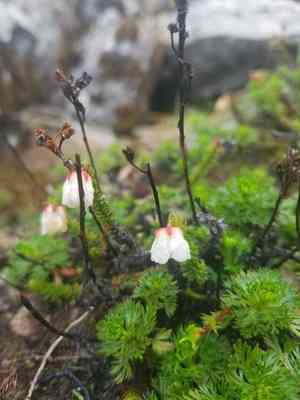
Alaska bellheather (Harrimanella stelleriana)
Also known as: Steller's cassiope, Steller's heather
The Alaska bellheather (Harrimanella stelleriana) is a hardy, low-growing perennial that features small, bell-shaped flowers in shades of white to pink. This plant forms dense, cushion-like mats of evergreen foliage, which help it thrive in its native subalpine and alpine environments. Its compact growth habit is an adaptation that reduces wind exposure and helps retain warmth, allowing it to survive in cold, harsh habitats. Typically found in tundra and rocky areas, it prefers well-drained, acidic soils and can flourish in both full sun and partial shade.
In This Article
Attributes of Alaska bellheather
Lifespan
Perennial
Plant Type
Herb
Plant Height
5-15 cm
Spread
N/A
Leaf Color
Green
Flower Size
0.5-1 cm
Flower Color
White
Images of Alaska bellheather
Quickly Identify Alaska bellheather
1
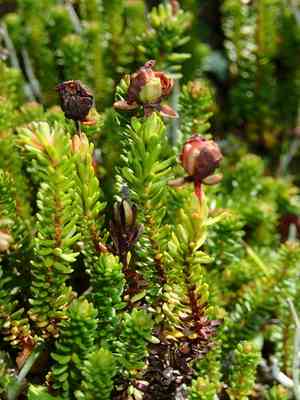
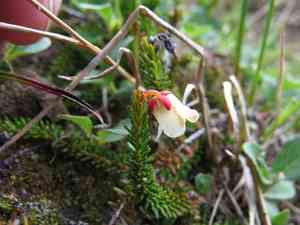
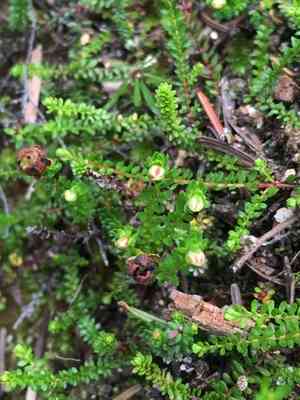
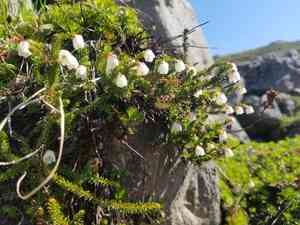
Harrimanella stelleriana can be identified by its small, white, bell-shaped flowers and fine, needle-like leaves. It typically forms low, matted patches on the ground.
Scientific Classification of Alaska bellheather
Phylum
Vascular plants
Class
Dicotyledons
Order
Ericales
Family
Heath
Genus
Harrimanella
Species
Alaska bellheather
Planting and Growing of Alaska bellheather
Care Difficulty
Hard
Watering Schedule
Every 2 days
Sunlight Requirements
Partial sun
Sunshine Duration
4-8 hours
Ideal Temperature
55-75℉
Soil Type
Potting Mix, Peat Mix
Soil pH
5-6.5
Fertilizer Type
Balanced
Pruning Season
Spring, Summer
Pruning Area
Branches, Leaves
Pruning Frequency
2 times a year
Repotting Season
Spring
Pot Type
Plastic, Ceramic
 How to Water Alaska bellheather?
When watering Harrimanella stelleriana, aim for an amount that ensures the soil remains moist but not soggy. Approximately 100 milliliters per watering is ideal, as the plant thrives in consistently damp conditions without waterlogging. The key is to let the top layer of soil start to dry before the next watering session.
What are the symptoms of an underwatered Alaska bellheather?
›
What should I do if my Alaska bellheather is not getting enough water?
›
What are the symptoms of an overwatered Alaska bellheather?
›
How to save an overwatered Alaska bellheather?
›
 What Are the Sunlight Requirements for Alaska bellheather?
Partial sun to full sun is ideal for Harrimanella stelleriana, ensuring robust leaf color and optimal growth. These conditions help in achieving consistent photosynthetic activity, allowing the plant to flourish healthily.
How much light does Harrimanella stelleriana need?
›
What solutions ensure optimal lighting for Harrimanella stelleriana?
›
What benefits does ideal lighting provide Harrimanella stelleriana?
›
 What Is the Ideal Temperature Range for Alaska bellheather?
The ideal temperature range for Harrimanella stelleriana to thrive is between 55°F and 75°F. This range ensures that the plant's metabolic processes operate efficiently, promoting healthy growth and robust flowering.
 What Soil is Best for Alaska bellheather?
Harrimanella stelleriana thrives in soil that offers excellent drainage. Such conditions prevent root rot by not allowing excess water to sit around the roots, thereby ensuring that the plant remains healthy and vigorous. This plant benefits from a soil enriched with organic matter. A nutrient-rich substrate supports its growth and flowering, resulting in a more robust and visually appealing plant. Preferring slightly acidic soil with a pH range of 5.0 to 6.5, Harrimanella stelleriana absorbs nutrients efficiently, which fosters optimal growth and development.
 How to Fertilize Alaska bellheather?
For Harrimanella stelleriana, it is important to use a diluted fertilizer solution—about half-strength compared to what is suggested on commercial labels. This ensures the roots are not burned and the plant receives nutrients at a manageable pace suitable for its growth habits.
 How to Prune Alaska bellheather?
Start by removing any dead or damaged branches to keep the plant healthy. Next, trim back any leggy growth to encourage a bushier shape. Make your cuts just above a leaf node, angling your cut slightly away to prevent water from accumulating on the cut surface. Apply a balanced fertilizer after pruning to boost recovery and growth. Water the plant deeply and ensure good air circulation to avoid fungal diseases.
More About Pruning Techniques→
 How to Propagate Alaska bellheather plant?
1
Sow Harrimanella stelleriana seeds in a seed tray filled with well-draining soil. Ensure seeds are not buried too deep, as complete darkness can hinder germination.
2
Select healthy stems and use pruning shears to cut them at a length of about 4-6 inches. Remove the lower leaves to leave a clean stem for placing in the soil.
3
Carefully separate a mature plant into smaller sections, making sure each division has a healthy root system. Plant these divisions immediately to avoid root damage.
 How to Repot Alaska bellheather plant?
1
Harrimanella stelleriana shows signs of needing repotting when its roots start peeking out of the drainage holes. Additionally, if you notice the soil is compacted or not retaining moisture, it's time to refresh its environment. Choose to repot during mutually comfortable seasons like spring or autumn, allowing smooth acclimatization to its fresh home.
2
Selecting a pot for Harrimanella stelleriana involves picking one that is just one size larger than its current home. Ensure the pot has sufficient drainage holes to prevent water logging, which could lead to root rot. Opting for a slightly unglazed terracotta pot can help wick away excess moisture, mimicking its natural preference for drier environments.
3
Aim for a soil that provides excellent drainage combined with the ability to retain just enough moisture. An acidic mix with added sand or perlite is ideal as it replicates the native soil conditions and provides air pockets for the roots to breathe, encouraging healthy growth.
Learn More About Alaska bellheather Diseases
Anthracnose
Bacterial Leaf Spot
Bacterial Soft Rot
Bacterial Wilt
Black Spot
Chemical Injury
Crown Gall
Cyst Nematode
Damping-off
Downy Mildew
Drought Stress
Fusarium Wilt
Gray Mold
Leaf Spot
Mosaic
Nutrient Deficiency
Nutrient Toxicity
Powdery Mildew
Root Rot
Root-knot Nematode
Rusts
Sooty Mold
Spider Mites
Temperature Stress
Thrips Damage
White Mold



