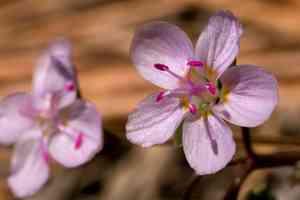
Western springbeauty (Claytonia rosea)
Also known as: Western Spring Beauty, Pink Spring Beauty
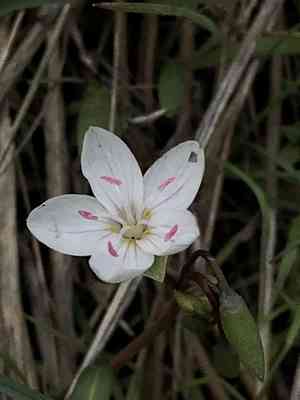
Western springbeauty is a delightful wildflower known for its clusters of delicate pink flowers. Its thick, spoon-shaped leaves help conserve moisture, making it adaptable to different conditions. This plant flourishes in cool, shaded areas, often found beneath forest canopies where it benefits from filtered sunlight, adding a vibrant touch to the forest floor.
In This Article
Attributes of Western springbeauty
Lifespan
Perennial
Plant Height
10-30 cm
Spread
Not applicable as it is a herbaceous plant
Leaf Color
Green to dark green
Flower Size
1-1.5 cm
Flower Color
Pink to rose
Images of Western springbeauty
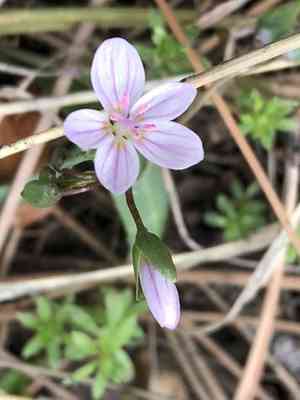
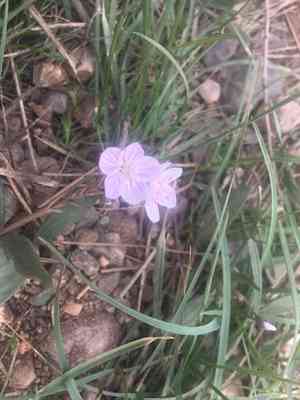
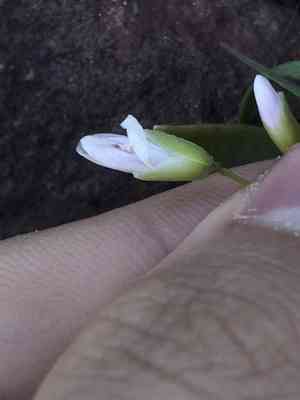
Quickly Identify Western springbeauty
1
Look for small rosettes of fleshy leaves at the base and clusters of star-shaped pink flowers, typically blooming in early spring. The flowers will have five petals.
Scientific Classification of Western springbeauty
Phylum
Vascular plants
Class
Dicotyledons
Order
Caryophyllales
Family
Pussypaw
Genus
Spring beauty
Species
Western springbeauty
Planting and Growing of Western springbeauty
Care Difficulty
Easy
Watering Schedule
Every 4 days
Sunlight Requirements
Partial sun
Sunshine Duration
6-10 hours
Ideal Temperature
50-60℉
Soil Type
Potting Mix, Peat Mix
Soil pH
6.5-7.5
Fertilizer Type
Balanced
Pruning Season
Spring, Summer
Pruning Area
Branches, Leaves
Pruning Frequency
2 times a year
Repotting Season
Spring
Pot Type
Plastic, Ceramic
 How to Water Western springbeauty?
Claytonia rosea, also known as pink springbeauty, prefers a steady but moderate watering schedule. During the growing season, which is usually the warmer months, it benefits most from around 200ml of water per session. The soil should remain consistently moist but not waterlogged, mimicking its native habitats of moist woodlands and meadows.
What are the symptoms of an underwatered Western springbeauty?
›
What should I do if my Western springbeauty is not getting enough water?
›
What are the symptoms of an overwatered Western springbeauty?
›
How to save an overwatered Western springbeauty?
›
 What Are the Sunlight Requirements for Western springbeauty?
Claytonia rosea prefers a light range of partial sun to full shade. This range aids in maintaining its natural habitat conditions, supporting vibrant growth and foliage density.
What is the best type of sunlight for Claytonia rosea?
›
How can I ensure my Claytonia rosea gets ideal lighting?
›
What are the benefits of ideal lighting for Claytonia rosea?
›
 What Is the Ideal Temperature Range for Western springbeauty?
Claytonia rosea thrives best in a temperature range between 50°F and 60°F. This range allows for healthy growth and development as it mimics the plant's native habitat conditions. Maintaining temperatures within this range ensures robust flowering and foliage.
 What Soil is Best for Western springbeauty?
Claytonia rosea thrives in well-draining soil conditions, which prevent water accumulation around the roots, reducing the risk of root rot and promoting healthier growth. This plant benefits significantly from soils rich in organic matter, as it provides essential nutrients for optimal growth and enhances root development. While Claytonia rosea appreciates consistent moisture, it requires a balance to avoid water stress. Ensuring moderate moisture levels aids in steady plant growth without the drawbacks of over or underwatering.
 How to Fertilize Western springbeauty?
For Claytonia rosea, use a balanced, all-purpose liquid fertilizer typically diluted to half strength. Apply about 100 ml per plant each time. Solid fertilizers should be used with caution; around 20 grams per square meter annually ensures steady growth without overwhelming the plant.
 How to Prune Western springbeauty?
Prune Claytonia rosea in spring or early summer when the flowers have faded. This will stimulate new growth and prevent the plant from becoming too leggy. Use sharp, sterilized pruning shears to make clean cuts. Wearing gloves is recommended to protect your hands from any sap or sharp edges. Focus on cutting back any leggy or overgrown stems. Make your cuts just above a pair of leaves or a node to encourage branching. Remove any dead or yellowing leaves as these can attract pests or fungi. This tidies up the plant and keeps it healthy.
More About Pruning Techniques→
 How to Propagate Western springbeauty plant?
1
First, collect seeds from Claytonia rosea after the flowering period. Ensure the seeds are dry and free from any plant debris. Store them in a cool, dry place until you're ready to plant.
2
Sow the seeds in trays or pots filled with well-drained soil mix. Lightly cover them with soil, ensuring they receive adequate sunlight and moisture for germination.
3
In the spring, divide mature Claytonia rosea plants. Use a sharp tool to split the plant clumps, ensuring each section has both roots and foliage. Replant immediately in desired locations.
 How to Repot Western springbeauty plant?
1
Repot your Claytonia rosea when you notice roots coming out of the drainage holes, the soil dries out too quickly, or the growth seems stunted. These signs indicate that the plant has outgrown its current pot and needs more space to thrive.
2
Select a pot slightly larger than the current one, with sufficient drainage holes. The right pot will prevent waterlogging and provide enough room for root expansion, encouraging healthier and more robust growth.
3
Opt for a well-draining potting mix that replicates the plant's natural habitat. A high-quality mix ensures proper aeration and drainage, minimizing the risk of root rot and promoting vigorous plant health.
Learn More About Western springbeauty Diseases
Anthracnose
Bacterial Leaf Spot
Bacterial Soft Rot
Chemical Injury
Damping-off
Downy Mildew
Drought Stress
Fusarium Wilt
Gray Mold
Leaf Spot
Mosaic
Nutrient Deficiency
Nutrient Toxicity
Powdery Mildew
Root Rot
Root-knot Nematode
Rusts
Sooty Mold
Spider Mites
Temperature Stress
Thrips Damage
White Mold



