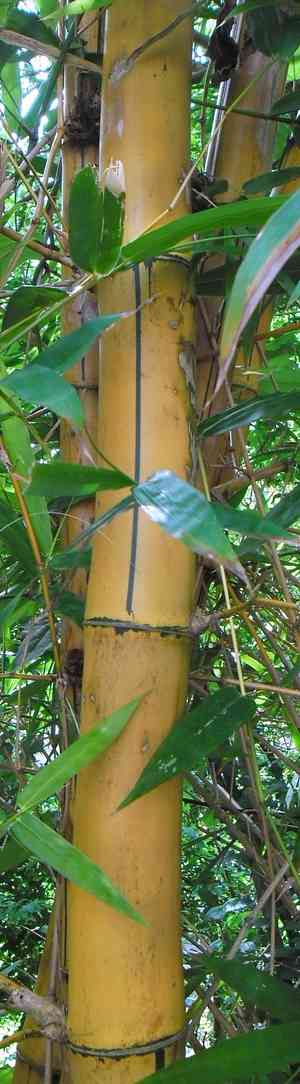
Common bamboo (Bambusa vulgaris)
Also known as: Green-stripe common bamboo, Wamin bamboo
Common bamboo is a highly versatile and recognizable species, often forming loose clusters that can easily be propagated through clump division or rhizomes. Its practical applications in light construction and crafting are numerous due to its strength and rapid growth.
1. **Construction**:
- **Scaffolding**: Utilized extensively in Asia for its robust and flexible nature.
- **Fencing**: Provides a durable, eco-friendly fencing solution.
- **Panels**: Used for creating lightweight, sturdy wall and floor panels.
2. **Crafting**:
- **Furniture**: Ideal for making chairs, tables, and storage units.
- **Decorative Items**: Suitable for crafting picture frames, lampshades, and wall decor.
- **Baskets**: Excellent for creating strong, flexible baskets for various uses.
Bamboo’s rapid growth and renewability make it an excellent choice for sustainable construction and crafting endeavors.
Attributes of Common bamboo
Images of Common bamboo

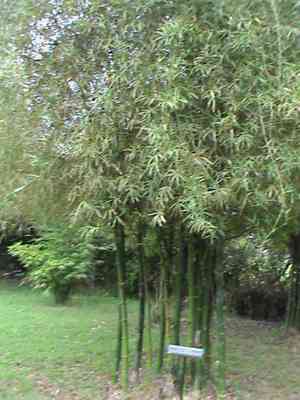
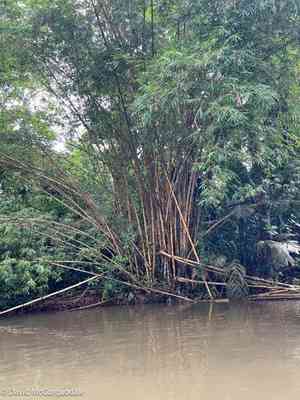
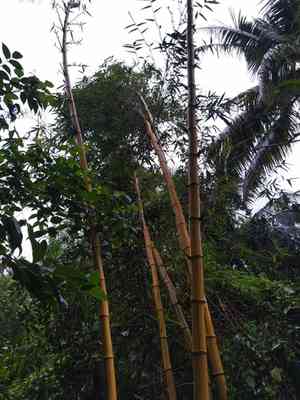
Quickly Identify Common bamboo
Scientific Classification of Common bamboo
Planting and Growing of Common bamboo
 How to Water Common bamboo?
 What Are the Sunlight Requirements for Common bamboo?
 What Is the Ideal Temperature Range for Common bamboo?
 What Soil is Best for Common bamboo?
 How to Fertilize Common bamboo?
 How to Prune Common bamboo?
 How to Propagate Common bamboo plant?
 How to Repot Common bamboo plant?
Toxicity of Common bamboo
Is Common bamboo toxic to humans?
As a member of the *Bambusa* genus, commonly known as bamboo, it is important to note that this plant can be toxic if consumed without adequate preparation. Fresh bamboo has the potential to cause severe symptoms upon ingestion, and in substantial quantities, it may even result in fatal outcomes due to the presence of cyanide taxiphyllin within the plant. While all parts of the bamboo may carry toxicity, the shoots in particular are notorious for their heightened risk. Symptoms associated with the consumption of these parts include nausea, weakness, headaches, breathing difficulties, and confusion. In more serious cases, individuals may face unconsciousness, seizures, and cardiac arrest. There are instances where individuals harvesting and cooking fresh bamboo shoots may fail to prepare them correctly, leading to these adverse reactions.



