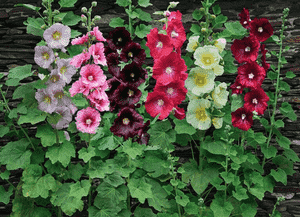
How Often Should You Water Your Common hollyhock?
1
Hydrate your Common hollyhock weekly to maintain steady moisture levels.
2
Assess soil wetness by inserting a finger two inches (5 cm) deep. If dry, irrigation is needed.
3
Applying mulch around your Common hollyhock aids in soil moisture retention, reducing how often you need to water.
Deciphering the Hydration Requirements of Common Hollyhock
The Significance of Adequate Moisture
Sufficient moisture is essential for the robust development of Common hollyhock. These stately plants, often adorning quaint gardens, depend on ample water to sustain their expansive root systems and profuse blossoms. By ensuring consistent soil dampness, you can avert stress and encourage continuous blooming. Hydration influences nutrient absorption, photosynthesis, and overall plant immunity, making it vital for vigorous, disease-resistant specimens.
Indicators of Excessive and Insufficient Watering
Maintaining a proper moisture balance is key to preventing both overwatering and underwatering your Common hollyhock. Over-saturation can lead to yellowing foliage, root decay, and fungal growth, whereas too little water may cause the plant to droop, with leaves becoming arid and brittle. Watch for these cues and adjust your irrigation schedule accordingly. Observing the plant's leaves and soil offers valuable insight into its hydration needs.
Optimal Hydration Practices for Common Hollyhock
Timing Your Watering: Daily Period and Weather Considerations
Providing water to your Common hollyhock at the opportune time of day can significantly impact its health. It is advisable to irrigate in the early morning or late afternoon when temperatures are lower and solar intensity is not at its peak. This practice minimizes water loss through evaporation and allows the soil to absorb moisture more efficiently. Additionally, be mindful of climatic conditions; during rainy spells, you may need to modify your watering routine to prevent waterlogging.
How Much Water to Apply: Methods for Gauging Soil Dampness
Determining the correct quantity of water can be tricky but is fundamental for the thriving growth of Common hollyhock. An effective technique involves checking soil moisture by inserting your finger approximately 5 centimeters (2 inches) into the earth. If it feels parched, it's time to water. Aim to keep the soil consistently moist but not saturated. Alternatively, moisture sensors can provide precise readings of soil humidity levels, aiding in better water management.
Cultivating Soil Health for Efficient Watering
Selecting the Appropriate Soil Blend
The soil mixture plays a crucial role in water retention and root vitality for Common hollyhock. These plants thrive in well-draining soil enriched with organic matter. A suitable blend might incorporate garden soil, compost, and a small amount of sand to enhance drainage while still retaining adequate moisture. Ensuring the right soil texture helps plants access necessary water while preventing root rot from stagnant water.
Mulching for Moisture Preservation
Applying mulch around your Common hollyhock can substantially improve the soil's ability to retain moisture. Organic mulches such as straw, wood chips, or compost can help decrease water evaporation, regulate soil temperature, and inhibit weed proliferation. Strive to maintain a mulch layer roughly 5 to 7 centimeters (2 to 3 inches) thick, keeping it clear of the plant's stem to avoid rot and ensure proper air circulation.
Advanced Irrigation Methods for Common Hollyhock
Drip Irrigation: System Installation
For more precise watering, consider implementing a drip irrigation system for your Common hollyhock. This technique delivers water directly to the soil, minimizing evaporation and runoff. To set it up, position the drip lines on the soil surface or beneath the mulch, ensuring they reach the root zone. Drip irrigation is particularly effective during dry periods or in areas with water restrictions, promoting efficient water use and healthier plants.
Deep Watering for Robust Root Development
Deep watering promotes strong root growth, which is vital for the stability and development of Common hollyhock. Instead of frequent, shallow irrigation, apply water less often but deeply, ensuring it penetrates the soil to a minimum depth of 20 centimeters (8 inches). This approach encourages roots to grow deeper, enhancing the plant's drought resistance and improving nutrient absorption. Combining deep watering with well-draining soil and mulch will create an optimal growing environment for your plants.



