How to Prune Perennial knawel?
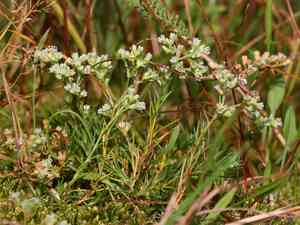
A compact, ground-covering evergreen, perennial knawel needs little trimming to preserve its rounded form and foster robust development. Lightly shear after blooming in summer to eliminate faded flower stalks and encourage fuller leaves. Refrain from severe cutting to avoid sparse areas. Optimal pruning occurs in spring or early autumn, allowing recuperation before harsh weather. Trimming boosts plant health and visual appeal. Disinfect implements to avert pathogen transmission.
What Are the Benefits of Pruning Perennial Knawel?
What Are the Benefits of Pruning Perennial Knawel?
Trimming perennial knawel is essential for maintaining its compact shape and promoting robust development. Strategic cuts help stimulate new growth, ensuring the plant stays dense and visually appealing, while also potentially lowering disease risk by enhancing air circulation within its foliage.
What Is the Best Time for Pruning Perennial Knawel?
What Is the Best Time for Pruning Perennial Knawel?
Pruning perennial knawel in spring coincides with the start of the growing season, allowing the plant to recover quickly and direct energy towards new growth. Early summer pruning is effective for shaping the plant and managing its size, leveraging the active growth phase. Fall pruning is beneficial as it prepares perennial knawel for winter by removing dead or diseased parts, though care should be taken not to prune too late, which can trigger new growth vulnerable to frost damage.
What Tools Do I Need to Prune Perennial Knawel?
Bypass Pruners
Perennial knawel often requires precise cuts to maintain its mounded form. Bypass pruners are recommended as they create a clean cut that heals rapidly, reducing disease risk. Their sharp, scissor-like action is ideal for cutting through the slender stems of perennial knawel without crushing them.
Micro-Tip Snips
Given the small size and dense growth habit of perennial knawel, micro-tip snips are an excellent tool for snipping away dead or unwanted stems without disturbing the rest of the plant. Their precise blades allow for careful cutting, which is crucial for the intricate work needed on perennial knawel.
Small Pruning Shears
For general shaping of perennial knawel, small pruning shears are suitable. They offer more control than larger shears and are comfortable for cutting the slender stems characteristic of perennial knawel. These can be used to create a uniformly rounded shape by snipping off stray stems.
How to Prune Perennial Knawel
Disinfect tools
Before starting, sanitize all pruning tools to prevent the spread of disease to or from perennial knawel. Use a solution of one part bleach to nine parts water or rubbing alcohol to clean the blades.
Remove diseased leaves
Carefully inspect perennial knawel for any diseased leaves. Using your disinfected shears, snip off the diseased leaves at their base where they meet the stem or branch. Ensure you make a clean cut to prevent damage to the plant's tissue.
Trim withered leaves
Identify any withered or dead leaves on perennial knawel. Remove these by cutting them at the base of each leaf's attachment point, similar to diseased leaves, to promote healthier growth and reduce the risk of disease or pest infestation.
Cut dead branches
Locate and remove any dead branches by making cuts at a 45-degree angle, just above a living node or lateral shoot. This encourages perennial knawel to direct energy to healthy growth and maintains proper air circulation within the plant.
Prune diseased branches
If perennial knawel has diseased branches, trim them away by cutting at least several inches below the diseased portion into healthy, green tissue. This step is crucial to halt the spread of any infection within the plant.
Common Pruning Mistakes with Perennial Knawel
Overpruning
Removing too much foliage at once can stress perennial knawel, hindering its ability to thrive. Aim to remove only what is necessary to shape the plant and eliminate dead or unhealthy stems.
Imprecise cuts
Making jagged or torn cuts can create entry points for pests and diseases. Clean, sharp cuts are crucial for the health of perennial knawel.
Neglecting tool hygiene
Failing to disinfect tools before use can spread pathogens to perennial knawel. Clean cutting tools with alcohol or a bleach solution to prevent disease transmission.
Pruning healthy growth
Unnecessarily cutting away healthy stems can limit the plant's growth and vitality. Focus on removing only the parts of perennial knawel that are damaged, diseased, or overcrowding.
Ignoring plant structure
Random or uninformed cutting without understanding the growth pattern of perennial knawel can result in a poor plant shape and reduced vigor. Understand perennial knawel's natural form before pruning.
Common Pruning Tips for Perennial Knawel
Selective thinning
Remove selected stems to improve air circulation and light penetration. This encourages a healthier, more robust growth in perennial knawel.
Regular deadheading
Regularly removing faded flowers promotes further blooming and prevents perennial knawel from expending energy on seed production.
Maintaining shape
Lightly trim perennial knawel to maintain its natural mound shape. This aesthetic upkeep should be complemented with periodic removal of straggly stems.
Gentle rejuvenation
Gradually rejuvenate older perennial knawel plants by removing only a small portion of the oldest stems each year, allowing for continuous growth and rejuvenation.
Post-flowering pruning
Prune back the flowering stems after blooming has concluded to tidy the plant and potentially encourage a second flush of flowers. This is specific to perennial knawel and should be undertaken cautiously.



