How to Prune Lake quillwort?
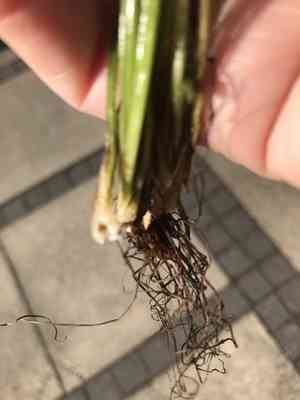
A distinctive aquatic fern relative, lake quillwort thrives entirely underwater. Trimming should be performed in early spring or during winter when the plant is inactive. Remove any lifeless or ailing foliage at its base to sustain vitality and avert decomposition. Proper trimming improves water circulation and light access, which are vital for lake quillwort's development. Guarantee negligible disruption to the aquatic habitat during trimming to safeguard its fragile ecosystem.
What Are the Benefits of Pruning Lake Quillwort?
What Are the Benefits of Pruning Lake Quillwort?
Trimming lake quillwort promotes more robust development by eliminating dead or congested tissue, thereby enhancing nutrient circulation. Careful shaping helps preserve the plant's form and visual appeal.
What Is the Best Time for Pruning Lake Quillwort?
What Is the Best Time for Pruning Lake Quillwort?
Pruning lake quillwort is ideally performed in early spring or winter due to several factors related to its growth and dormancy. In early spring, the plant is just emerging from its dormant winter phase, meaning that cutting back foliage can stimulate new growth without stressing the plant, as energy reserves are high for initiating new shoots. Winter, when the plant is dormant and has reduced metabolic activity, is also an appropriate time to prune because there is less chance of causing stress or shock to lake quillwort. Furthermore, during this period, the absence of active growth makes it easier to discern the plant's structure, allowing for more precise and effective pruning. These seasons avoid disrupting the active growth and reproductive cycles that typically occur during warmer months.
What Tools Do I Need to Prune Lake Quillwort?
Fine-tipped Aquascaping Scissors
Given the aquatic environment and delicate structure of lake quillwort, fine-tipped aquascaping scissors are perfect for precise trimming of its slender, quill-like leaves. Their sharp, narrow blades enable careful pruning without disturbing the surrounding water or plant bases.
Spring-loaded Pruning Snips
These tools are suitable for gently snipping lake quillwort leaves at or above the water's surface. The spring mechanism reduces hand fatigue, especially during extensive pruning sessions, and allows for quick, clean cuts on small-scale plants.
Long-Handled Pond Scissors
For gardeners who need to reach into deeper water without disturbing lake quillwort, long-handled pond scissors provide the necessary reach and control. Their length ensures minimal disruption to the water and the plant's root system.
How to Prune Lake Quillwort
Clean tools
Sanitize pruning tools using a solution of 1 part bleach to 9 parts water to prevent the spread of disease to lake quillwort.
Healthy growth
Identify healthy-looking foliage of lake quillwort by examining the color and firmness of the leaves.
Remove diseased
Gently prune diseased leaves from lake quillwort by cutting at the base of the leaf where it meets the stem, avoiding damage to the plant's crowns or remaining healthy foliage.
Trim withered
Trim withered leaves by snipping them off at the base to encourage new growth and maintain the aesthetic appearance of lake quillwort.
Care post prune
After pruning, carefully dispose of all removed material away from healthy lake quillwort plants to prevent potential spread of any disease.
Common Pruning Mistakes with Lake Quillwort
Over-pruning
Removing too many leaves or quills of lake quillwort can severely stress the plant and hinder its ability to photosynthesize, which is crucial for its growth and health.
Imprecise cuts
Making jagged or torn cuts on lake quillwort's foliage can leave the plant susceptible to disease and pests. Clean, precise cuts are necessary to maintain plant health.
Pruning live quills
Unnecessarily cutting live quills can diminish lake quillwort's vitality. Only remove quills that are brown or decayed to avoid stressing the plant.
Ignoring plant structure
Pruning without understanding lake quillwort's natural growth pattern can result in a weakened structure or irregular growth, which can affect its overall health and appearance.
Common Pruning Tips for Lake Quillwort
Use right tools
Employ sharp, sterile scissors or pruning shears to make clean cuts on lake quillwort, which will help prevent infection and encourage quicker healing.
Prune dead quills
Target only the brown, dead, or decaying quills of lake quillwort to prune, aiding the plant in directing its energy towards new, healthy growth.
Minimalist approach
Take a conservative approach when pruning lake quillwort, as it is a plant that does not require extensive cutting back. A light touch is often all that is needed.
Aerate substrate
Lake quillwort is an aquatic plant; thus, consider aerating around the base to facilitate better water and nutrient uptake. This is not pruning but an important aspect of overall grooming.



