How to Prune Large leather-root?
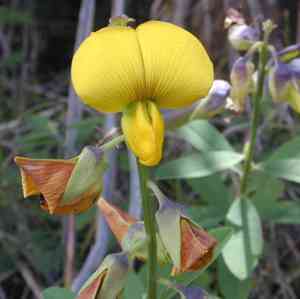
A blooming perennial featuring thick groupings, large leather-root flourishes with periodic trimming to foster well-being and regulate expansion. Optimal trimming periods extend from springtime to autumn. Cutting back after flowering boosts strength and might stimulate a subsequent bloom. Trimming in early spring encourages vigorous new development, whereas autumn pruning prevents unwanted self-propagation and tidies the plant. Pruning additionally aids in pest management and enhances air circulation, crucial for preserving large leather-root's health and visual attractiveness.
What Are the Advantages of Trimming Large Leather-root?
What Are the Advantages of Trimming Large Leather-root?
Trimming large leather-root promotes more vigorous development and helps maintain its form for visual appeal and garden consistency.
When Is the Optimal Time for Trimming Large Leather-root?
When Is the Optimal Time for Trimming Large Leather-root?
Trimming in Spring is ideal as it aligns with large leather-root's growth cycle when the plant is beginning to grow actively after winter dormancy, allowing for robust recovery and vigorous growth. Early Summer trimming ensures that any growth from the Spring can be shaped and managed before the plant directs energy into flowering or seed production. Late Fall trimming is suitable after large leather-root has flowered and entered dormancy; this timing prevents unnecessary stress on the plant and reduces the risk of disease infection during the wetter, cooler months. These seasons are chosen to maintain large leather-root's health, optimize its growth, and ensure it does not interfere with its natural flowering or fruiting periods.
What Tools Are Required to Trim Large Leather-root?
Hand Pruners
Suitable for cutting through stems and branches less than 1 inch in diameter. Large leather-root may have such branches, and hand pruners will allow precise cuts without damaging the plant.
Lopping Shears
Perfect for cutting thicker branches, typically up to 1.5-2 inches in diameter. If large leather-root has more substantial growth, lopping shears can provide the leverage needed for a clean cut.
Pruning Saw
For the largest branches over 2 inches in diameter, a pruning saw is essential. This ensures that when large leather-root's stems are too thick for loppers, they can still be removed efficiently without tearing the bark or causing undue stress to the plant.
Gardening Gloves
Protection for the gardener's hands, as large leather-root may have rough or sharp edges that could cause injury during the trimming process.
Pruning Scissors
For fine-tuning and shaping large leather-root, or for trimming smaller, more delicate growth where hand pruners are too large or cumbersome.
How to Trim Large Leather-root
Disinfect tools
Before starting, sterilize all trimming tools with either rubbing alcohol or a 10% bleach solution to prevent the spread of diseases during trimming of large leather-root.
Remove diseased leaves
Carefully remove any leaves showing signs of disease. Use clean, sharp trimming shears, and perform precise cuts to avoid damage to the healthy parts of large leather-root. Dispose of diseased material properly to avoid contamination.
Trim withered leaves
Identify and trim back any withered or old leaves that are no longer vibrant, to direct more of large leather-root's energy toward new growth. Make sure to cut at the base of the leaf stem, without harming adjacent healthy foliage.
Cut dead branches
Locate and remove dead branches by cutting them back to a healthy part of large leather-root. Dead branches can be identified by their brittle texture and lack of green inside the bark when scratched. Trim these branches flush with the trunk or main stem, without leaving stubs.
Eliminate diseased branches
If diseased branches are present, cut them off at least several inches below the affected area to ensure removal of all diseased tissue. This step is crucial for maintaining the overall health and vigor of large leather-root.
Common Trimming Errors with Large Leather-root
Over-trimming
Removing too much foliage at once can stress large leather-root, hindering its growth and ability to store energy. Aim to remove no more than one-third of the plant at a time.
Incorrect cutting
Cutting too close to the main stem or too far from the bud can lead to disease and poor regrowth. Make clean cuts at a 45-degree angle about 1/4 inch above the bud.
Using dull tools
Dull trimming tools can cause jagged cuts, damaging large leather-root and making it susceptible to pests and diseases. Always use sharp, clean tools for trimming.
Neglecting dead material
Failure to remove dead or diseased wood can inhibit large leather-root's growth and leave it vulnerable to further disease and infestation.
Ignoring plant structure
Not considering the natural shape and structure of large leather-root can result in an unsightly appearance and poor growth form. It's essential to maintain the structural integrity while trimming.
General Trimming Advice for Large Leather-root
Sanitation
Before and after trimming large leather-root, sterilize your tools with a solution of 1 part bleach to 9 parts water to prevent the spread of disease.
Selective trimming
Remove only the necessary parts of large leather-root, including dead, diseased, or crossing branches, to promote healthy growth and air circulation.
Timing of cuts
Make trimming decisions based on the growth cycle of large leather-root, avoiding periods when cuts may interfere with natural growth or flowering stages.
Maintenance trimming
Regularly trim large leather-root to maintain its shape and health, but avoid excessive cutting back, which can stress the plant.
Detailing
Pinch back new growth to encourage branching and a fuller shape for large leather-root, ensuring the plant's energy is directed towards robust development.



