How to Prune Indian spurgetree?
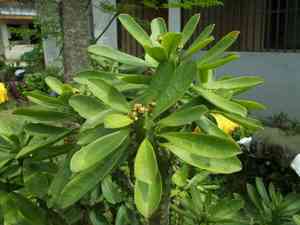
A succulent bush featuring plump, verdant foliage and stems adorned with thorns, indian spurgetree flourishes with judicious trimming. Eliminate deceased or ailing branches to foster robust development. Cut back excessive growth during winter, its period of inactivity, to preserve its form and stimulate springtime vitality. Pruning additionally encourages branching, improves air circulation, and averts congestion. Always don protective gloves to guard against indian spurgetree's sap, which can be an irritant.
Advantages of Trimming Indian Spurgetree
Advantages of Trimming Indian Spurgetree
Trimming indian spurgetree promotes robust development by reallocating energy to emerging sections, ensuring a thick, well-formed shape. This helps maintain its decorative appeal and manage its size, contributing to garden aesthetics and plant vitality.
Optimal Time for Trimming Indian Spurgetree
Optimal Time for Trimming Indian Spurgetree
Trimming indian spurgetree in late winter reduces the chance of cold damage to fresh cuts and allows for effective shaping as the structure is more visible without leaves. This timing also stimulates vigorous spring growth, as the plant exits dormancy and redirects energy to new shoots. Avoiding pruning during active growth and flowering in spring and summer prevents stress and potential loss of blooms or growth for that year. Additionally, fall pruning can result in tender new growth vulnerable to winter temperatures. Thus, late winter is the best time for trimming indian spurgetree to ensure strong health and optimal development.
Tools Required for Trimming Indian Spurgetree
Bypass Pruners
Indian spurgetree is a succulent with relatively thin stems that are typically easy to cut. Therefore, bypass pruners are ideal for making clean cuts on live wood without crushing the tissues.
Pruning Saw
For thicker, mature branches of indian spurgetree that bypass pruners cannot manage, a pruning saw is essential. Its sharp teeth can easily cut through denser wood.
Long-Handled Loppers
Indian spurgetree may have some hard-to-reach branches. Long-handled loppers provide the extra reach and leverage needed for cleanly cutting these branches.
Gloves
Indian spurgetree contains a milky sap that can irritate the skin and is toxic if ingested. Wearing gloves protects the skin from potential irritation during pruning.
Eye Protection
When trimming indian spurgetree, it's crucial to shield the eyes from the plant's sap, which may spurt when branches are cut. Safety goggles will help protect the eyes from any splashes.
How to Trim Indian Spurgetree
Safety
Before beginning, wear protective gloves and eyewear to guard against the sap of indian spurgetree, which can irritate skin and eyes.
Inspection
Examine indian spurgetree for dead or diseased branches, looking for signs of discoloration, unusual growth patterns, or decay.
Clean Cut
Using sharp, clean pruning shears, make cuts on dead branches at a 45-degree angle just above a leaf node or branch junction. Avoid tearing the bark to promote better healing.
Disinfect
After each cut, sanitize the shears with alcohol or a 10% bleach solution to prevent the spread of disease to healthy parts of indian spurgetree.
Disposal
Remove the trimmed material from the area and dispose of it properly to prevent disease or pests from spreading to indian spurgetree or other plants.
Common Trimming Errors with Indian Spurgetree
Over-trimming
Removing too much foliage from indian spurgetree at once can stress the plant, potentially leading to weakened growth and reduced flowering.
Incorrect Tools
Using dull or dirty cutting tools can damage indian spurgetree's branches, leading to uneven cuts and increasing susceptibility to disease.
Neglecting Disease Control
Failing to sanitize tools between cuts, especially when trimming diseased branches, can spread pathogens throughout indian spurgetree.
Ignoring Plant Structure
Cutting without understanding indian spurgetree's growth pattern can result in undesirable shaping and may inhibit the plant's natural form.
Random Cutting
Randomly cutting branches without a plan can lead to a misshapen appearance and might remove new buds or flowering sites on indian spurgetree.
Flush Cutting
Making flush cuts against the trunk or main branches of indian spurgetree can damage the plant's natural healing collar and slow down the healing process.
General Trimming Advice for Indian Spurgetree
Sharp Clean Tools
Use sharp, clean pruning shears or knives to ensure clean cuts that heal quickly, minimizing stress and disease risk for indian spurgetree.
Sterilize Tools
Disinfect tools before and after trimming indian spurgetree to prevent the spread of disease, using alcohol or a bleach solution.
Observe Growth
Before trimming, examine indian spurgetree to identify the location of buds and new growth to strategize cuts that promote preferred growth and flowering.
Prune For Structure
Focus on removing dead or overcrowded branches to maintain the natural shape of indian spurgetree and enhance airflow and light penetration.
Incremental Pruning
Trim indian spurgetree incrementally over several seasons if heavy pruning is necessary, rather than all at once, to avoid stressing the plant.
Angled Cuts
Make cuts at a 45-degree angle just above a leaf node or bud to encourage healthy new growth in indian spurgetree and prevent water accumulation on the cut surface.



