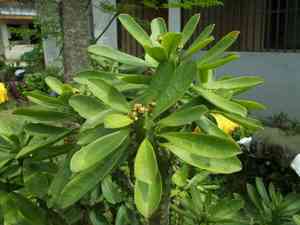
Indian spurgetree (Euphorbia neriifolia)
Also known as: Hedge euphorbia
The plant known as milk bush, pencil tree, and firestick is *Euphorbia tirucalli*. This flowering species belongs to the extensive Euphorbia genus, commonly referred to as spurges. Native to Southern Africa, *Euphorbia tirucalli* is frequently used as an ornamental plant due to its unique appearance.
Attributes of Indian spurgetree
Images of Indian spurgetree
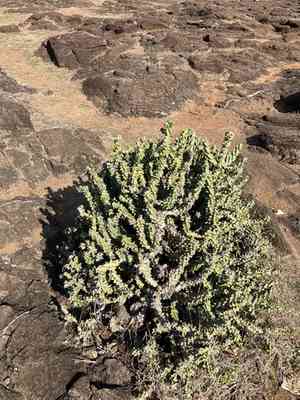
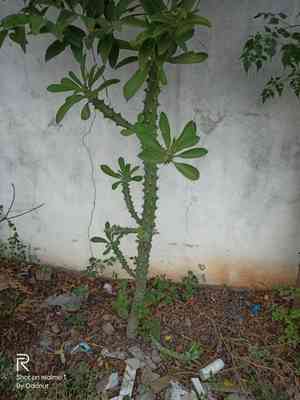
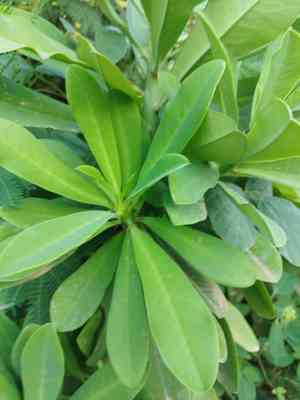
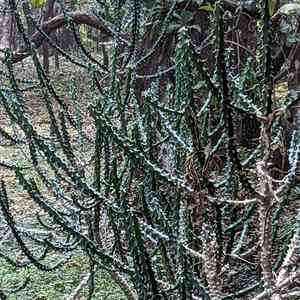
Quickly Identify Indian spurgetree
Scientific Classification of Indian spurgetree
Planting and Growing of Indian spurgetree
 How to Water Indian spurgetree?
 What Are the Sunlight Requirements for Indian spurgetree?
 What Is the Ideal Temperature Range for Indian spurgetree?
 What Soil is Best for Indian spurgetree?
 How to Fertilize Indian spurgetree?
 How to Prune Indian spurgetree?
 How to Propagate Indian spurgetree plant?
 How to Repot Indian spurgetree plant?
Toxicity of Indian spurgetree
Is Indian spurgetree toxic to humans?
Poisonings from the Indian spurgetree predominantly impact the skin and eyes due to the presence of a highly poisonous sap within the plant. This sap poses a significant threat to ocular health, leading to symptoms that can range from conjunctivitis to complete vision loss. While the reactions on the skin may be milder, they still include redness and blister formation. Ingesting the plant can trigger a range of gastrointestinal issues including vomiting, diarrhea, and abdominal pain, with severe cases potentially resulting in coma and convulsions. The likelihood of accidental poisoning from consuming the Indian spurgetree is quite low, as it bears minimal resemblance to edible plants and is safeguarded by its spiky surface.



