How to Prune Compact prairie clover?
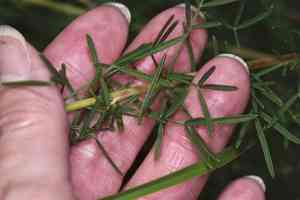
Dwarf prairie clover, recognized by its thick, clover-like blossoms, thrives with trimming mainly in the spring and early summer. Eliminate any lifeless or injured stalks to foster more vigorous development. Gently snip off faded flowers to stimulate ongoing flowering throughout the cultivation periods. Refrain from extensive cutting to preserve its inherent form. Trimming improves air circulation and light exposure, diminishing the likelihood of ailments. For peak outcomes, execute pruning precisely as fresh growth appears, guaranteeing dwarf prairie clover's lively presentation and sturdy well-being.
What Are the Benefits of Pruning Compact Prairie Clover?
What Are the Benefits of Pruning Compact Prairie Clover?
Trimming compact prairie clover promotes robust development and maintains its dense form, which is vital for its visual appeal. Regular cutting helps revitalize the plant, ensuring strong health and a neat look.
What Is the Best Time for Pruning Compact Prairie Clover?
What Is the Best Time for Pruning Compact Prairie Clover?
Pruning compact prairie clover during Spring and early Summer aligns with the plant's active growth phase, allowing it to recover and grow more vigorously after trimming. Spring pruning, ideally just after the last frost, helps remove any winter damage and prepares compact prairie clover for robust spring and summer growth. Early Summer pruning, on the other hand, is beneficial for shaping the plant and controlling its size, ensuring that energy is directed towards healthy growth and flower production rather than maintaining unnecessary foliage.
What Tools Do I Need to Prune Compact Prairie Clover?
Bypass Pruners
Perfect for making clean, precise cuts on the younger, softer stems of compact prairie clover, aiding in plant health and desired shape maintenance.
Snips
Useful for deadheading or removing spent blooms of compact prairie clover to promote further blooming and prevent self-seeding if not desired.
Gardening Gloves
Crucial for safeguarding the gardener's hands from potential scratches when pruning compact prairie clover due to its dense structure and possible nearby thorny plants.
Pruning Saw
Essential for removing thicker, woodier stems that may develop as compact prairie clover matures, ensuring cuts are clean to promote healthy regrowth.
How to Prune Compact Prairie Clover
Identify
Locate and identify any diseased or withered leaves on compact prairie clover. Carefully check for any signs of discoloration, spots, or decay that indicate poor health and need for removal.
Disinfect
Sanitize your pruning shears before and after use to prevent disease spread. Use a solution of one part bleach to nine parts water or an alcohol solution to sterilize your tools.
Trim leaves
Carefully remove the diseased and withered leaves from compact prairie clover. Make clean cuts close to the stem but ensure not to damage the stem or neighboring healthy leaves.
Identify stems
Examine compact prairie clover for diseased stems. Look for signs of rot, structural weakness, or extensive damage which can affect the health and aesthetic of the plant.
Trim stems
Prune the identified diseased stems using sterilized shears. Cut just above a healthy node or bud to encourage new growth. Make sure the cuts are clean and angled to prevent water accumulation.
Common Pruning Mistakes with Compact Prairie Clover
Overpruning
Removing too much foliage from compact prairie clover at once can stress the plant, leading to reduced vigor and sparse blooming. It's important to prune no more than one-third of the overall plant at a time.
Improper cuts
Cutting compact prairie clover without sharp tools or making jagged cuts can harm the plant by creating larger wounds. These improper cuts are more prone to disease and pest invasion.
Pruning live flowers
Cutting off live flower heads during the blooming period can prematurely end the flowering season of compact prairie clover and reduce its aesthetic value and pollinator attractiveness.
Common Pruning Tips for Compact Prairie Clover
Sharp tools
Always use clean, sharp pruning shears to make clean cuts. This minimizes damage and helps prevent infection and disease in compact prairie clover.
Selective pruning
Focus on removing only dead or diseased wood and thinning out crowded areas to improve air circulation. This keeps compact prairie clover healthy and promotes better flowering.
Post-bloom pruning
Once compact prairie clover has finished blooming, trim the plant to remove spent flower heads and shape the foliage. This encourages a compact, bushy growth form and prepares the plant for future growth cycles.



