How to Prune Big-fruit hawthorn?
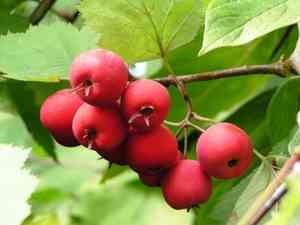
A notable characteristic of big-fruit hawthorn is its substantial fruit. Trim big-fruit hawthorn during late winter or early spring, prior to the emergence of new shoots. Initially, eliminate any lifeless or ailing branches, then thin out congested sections to improve light access and air movement. Decrease the length of excessively robust branches and sculpt the plant according to your preference. Consistent trimming encourages more robust, fruitful development and aids in preserving the plant's structural soundness, thereby reducing its vulnerability to pests and illnesses.
Advantages of Trimming Big-fruit Hawthorn
Advantages of Trimming Big-fruit Hawthorn
Trimming big-fruit hawthorn encourages robust development and helps maintain its desired form. Regular cutting fosters a strong framework, essential for supporting large fruits, and boosts overall plant vitality and visual appeal.
Optimal Time for Pruning Big-fruit Hawthorn
Optimal Time for Pruning Big-fruit Hawthorn
Late winter and early spring are ideal for pruning big-fruit hawthorn as these periods align with the plant's dormant stage, just before new growth begins. Pruning during dormancy minimizes stress on big-fruit hawthorn and lowers the risk of disease transmission, as fewer pathogens are active at this time of year. Additionally, with leaves absent, the plant's structure is more visible, allowing for more accurate cuts. This timing also supports vigorous spring growth, enabling the plant to direct energy into new development, enhancing both flower and fruit production.
Required Tools for Pruning Big-fruit Hawthorn
Hand Pruners
Hand pruners are perfect for cutting thinner branches and twigs of big-fruit hawthorn, ensuring precision and minimal plant damage. This tool is especially suited for shaping and removing dead or diseased branches.
Lopping Shears
Lopping shears feature long handles, providing the extra leverage needed to cut through thicker branches of big-fruit hawthorn up to approximately 1.5 inches in diameter. This tool is crucial for managing size and improving air circulation within the canopy.
Pruning Saw
For the thickest branches of big-fruit hawthorn, a sharp, curved pruning saw is appropriate. It allows for clean cuts on branches exceeding 1.5 inches in diameter, vital for maintaining the plant's health and structural integrity.
Hedge Shears
Hedge shears are useful for trimming and shaping big-fruit hawthorn when dealing with numerous small branches and twigs, particularly for achieving a uniform look.
How to Prune Big-fruit Hawthorn
Clean tools
Before beginning the pruning process on big-fruit hawthorn, ensure all pruning tools like shears and saws are clean and sharp. This prevents disease spread and guarantees cleaner cuts, which aid in faster healing of pruned areas.
Identify parts
Inspect big-fruit hawthorn thoroughly to locate dead or diseased branches. Dead branches often have dry, brittle bark and no leaves, while diseased branches may show unusual coloration, growths, or visible damage.
Cut diseased branches
Using the correct tools, carefully remove diseased branches from big-fruit hawthorn. Make each cut at the branch collar (the swollen area where the branch meets the trunk or another branch) to promote proper healing. Dispose of these branches far from healthy plants to prevent disease spread.
Cut dead branches
Similarly, remove any dead branches. Cut each branch at the branch collar, ensuring not to tear the bark or leave stubs, as these can attract pests or decay.
Sanitize tools
After pruning big-fruit hawthorn, clean and sanitize all pruning tools. This step is essential to prevent the transfer of disease agents to other plants during subsequent tool uses.
Common Pruning Errors with Big-fruit Hawthorn
Over-pruning
Removing too much foliage at once can stress big-fruit hawthorn, leading to reduced vigor and sparse blooming. It's crucial not to remove more than one-third of the plant in a single session.
Improper cut placement
Cuts made too far from a bud can result in dead stubs, while cuts too close can harm the bud itself. Ensure cuts are made at a 45-degree angle just above a bud, about 1/4 inch above it to encourage healthy growth.
Neglecting diseased branches
Failing to remove diseased or damaged branches can allow infections to spread throughout big-fruit hawthorn. Such branches should be prioritized during pruning to maintain plant health.
Pruning without a purpose
Random or unnecessary cuts can harm the overall structure and aesthetics of big-fruit hawthorn. Always prune with a specific goal, such as shaping the plant or removing dead wood.
General Pruning Advice for Big-fruit Hawthorn
Selective thinning
Focus on removing only the most essential branches to prevent overcrowding and promote better air circulation and light penetration. This encourages stronger, more vigorous growth from big-fruit hawthorn.
Maintaining shape
Periodically shaping big-fruit hawthorn enhances not only its visual appeal but also the plant's overall health. Aim for a natural, balanced shape rather than over-manipulating its structure.
Tool cleanliness
Always use clean, sharp pruning tools to make precise cuts. This prevents the introduction and spread of disease and ensures that cuts heal cleanly, minimizing stress on big-fruit hawthorn.
Follow growth patterns
Observe and understand the growth patterns of big-fruit hawthorn to make informed pruning decisions that encourage flowering and healthy branching. Cutting near outward-facing buds directs growth outward, improving the plant's form.



